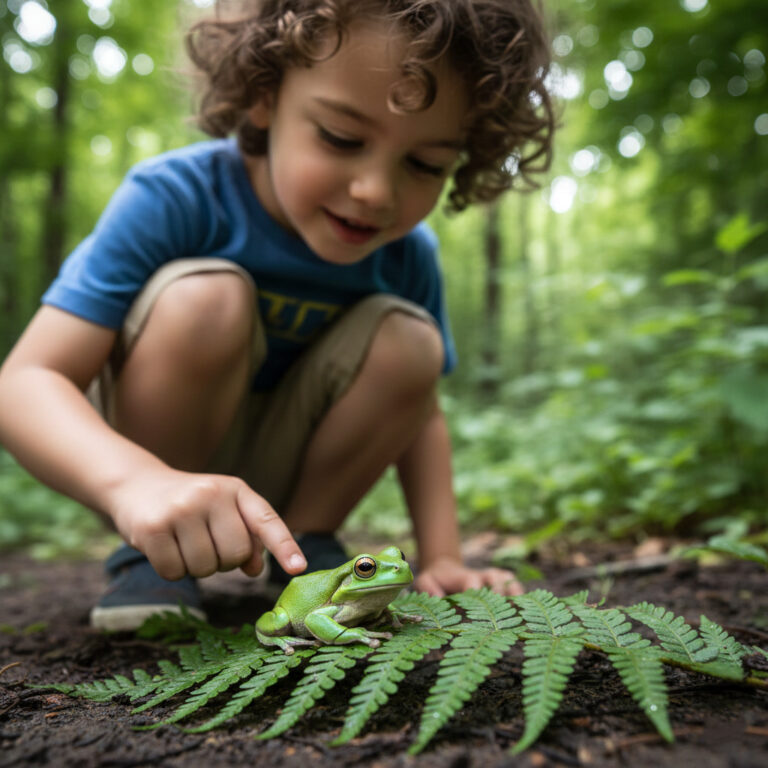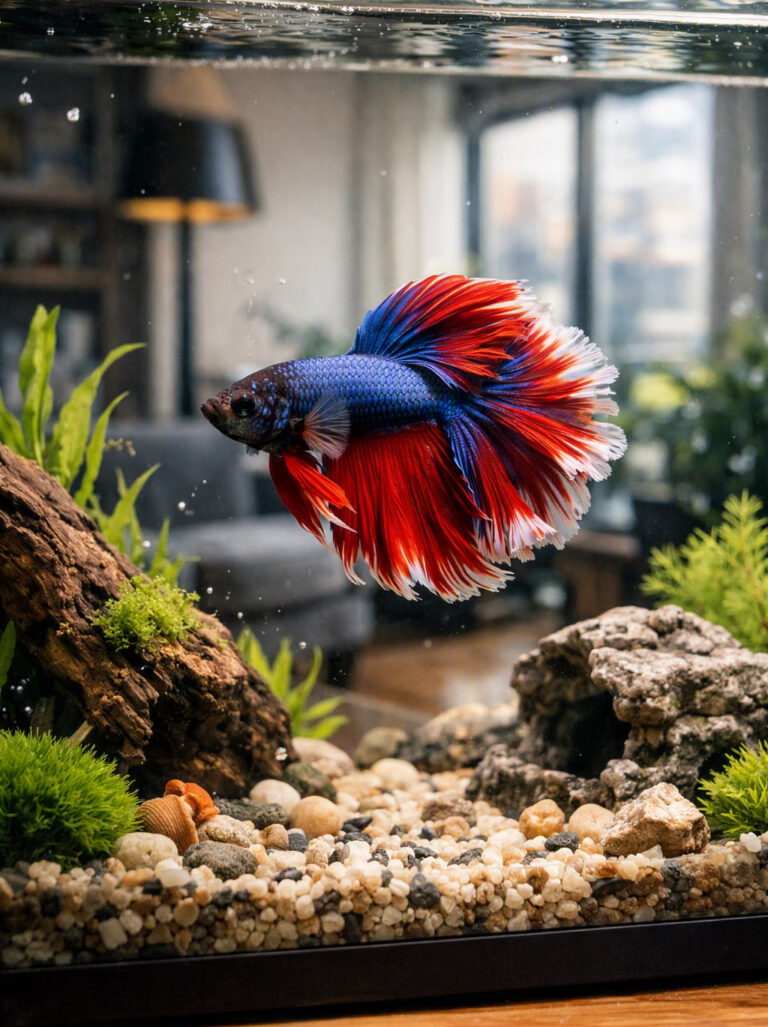
The best frog breeds for elementary students are ones that are simple to maintain, safe to watch, and engaging for kids. Frogs are great starter pets because they teach basic science, responsibility, and appreciation for nature in a low-effort, low-maintenance way. For instance, an African Dwarf Frog in an aquarium can help children learn about aquatic habitats, while a White’s Tree Frog perched on a branch highlights how animals adapt to their surroundings.
Because frogs are calm, low-noise pets that typically take less daily work than many alternatives, they’re well suited to both classrooms and households. Species such as the Pacman Frog (known for sitting still much of the time) can still encourage patience and careful watching. Choosing the best frog breeds for elementary students allows kids to enjoy a fun and educational experience while learning how to care for a living creature responsibly.
Why Frogs Are Great Pets for Kids
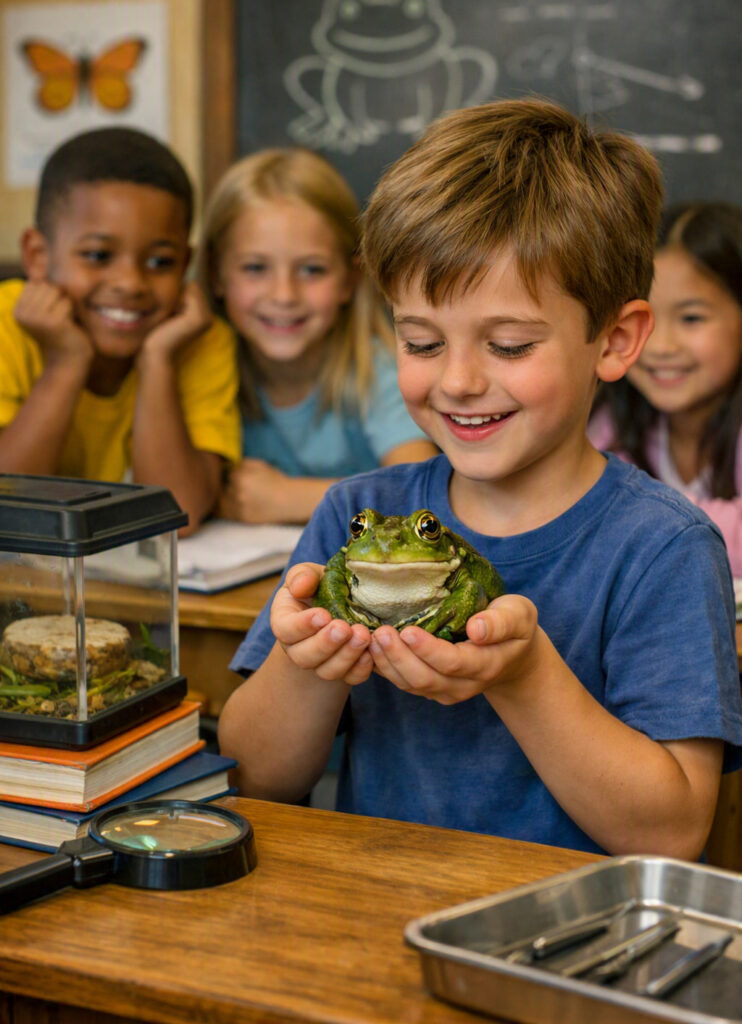
Frogs make great pets for kids because they’re easy to care for, educational, and naturally interesting. They don’t need lots of space, costly equipment, or nonstop attention, but they still give children many chances to learn. By watching how frogs eat, move, and respond to their surroundings, kids turn simple care into a practical science experience. Seeing a frog catch insects or relax in its enclosure can build patience, curiosity, and respect for animals.
What makes frogs especially kid-friendly is how little day-to-day effort they require. Unlike pets that need regular walks, grooming, or lots of handling, frogs mainly need to be fed, have their habitat maintained, and be observed. These simple responsibilities fit easily into a child’s routine with limited supervision and are far less intense than caring for pets that demand constant engagement.
If you’re interested in low shedding pets check out our article pets that don’t shed!
For Elementary Students in Particular
Frogs are an especially good fit for elementary students because they’re both interesting and easy to handle. Kids at this age are curious, but often not ready for pets that require a lot of responsibility. With frogs, they can help care for an animal without the added risk or complicated needs of more demanding pets. Frogs also connect well to school lessons on life cycles, ecosystems, and basic biology, making them great for learning at home or in the classroom.
Frogs vs Other Classroom Pets
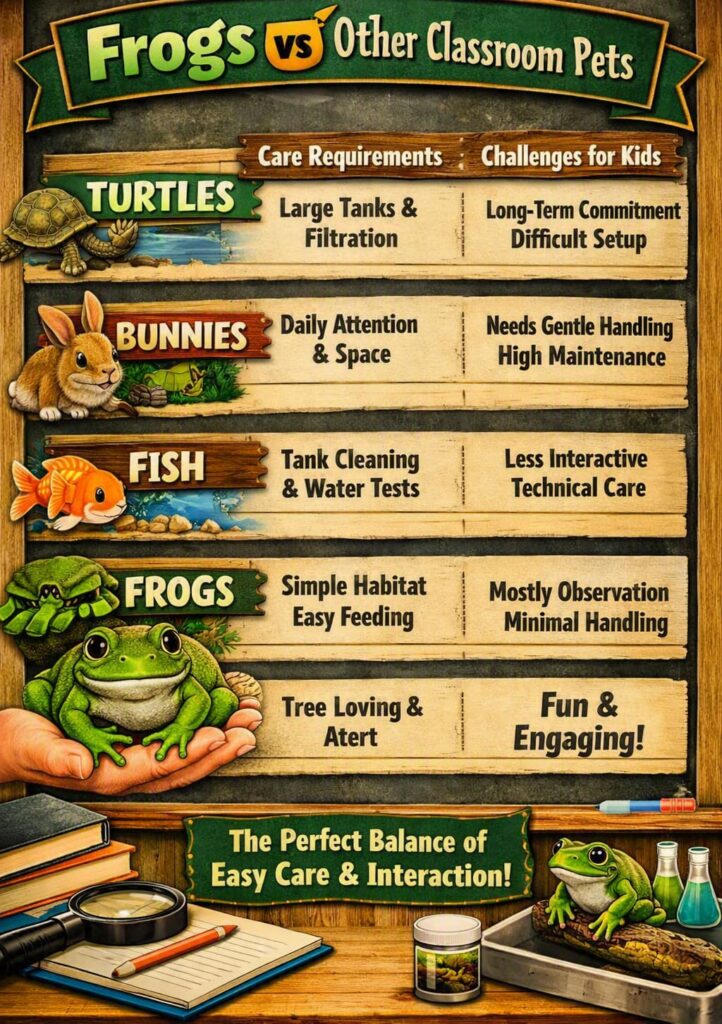
| Pet Type | Care Requirements | Challenges for Kids | Overall Suitability |
|---|---|---|---|
| Turtles | Large tanks, filtration systems, long lifespan | Long-term commitment, complex setup | Harder to manage for young students |
| Bunnies | Daily interaction, space to move, regular care | Needs careful handling, high attention | Can be overwhelming for kids |
| Fish | Tank maintenance, water quality monitoring | Less interactive, technical care | Easy but less engaging |
| Frogs | Simple habitat, minimal handling, basic feeding | Limited handling (mostly observation) | A perfect balance of easy care and engagement |
Frogs offer a middle ground, they are more interactive than fish, easier to manage than turtles, and less demanding than bunnies. This is why many parents and teachers consider looking for the best frog breeds for elementary students as pets, to provide both fun and educational value without unnecessary complexity.
What Can Children Learn from Frogs?
Before you start looking for the best frog breeds for elementary students, you should know that frogs are more than just pets, they are powerful teaching tools that help children explore important scientific concepts in a fun and memorable way. One of the most fascinating lessons frogs offer is their life cycle, from egg to tadpole to adult frog. This process introduces kids to metamorphosis and helps them understand how living organisms grow and change over time.
Frogs also help children learn about ecosystems and habitats. By setting up a proper tank, kids begin to understand the importance of clean water, humidity, temperature, and how different elements work together to support life. They can see firsthand how small environmental changes affect a living creature, which builds awareness about nature and conservation.
In addition, frogs teach responsibility and observation skills. Since frogs are not highly interactive pets, children learn to be patient and attentive watching behaviors, noticing changes, and following simple care routines. This makes them especially valuable as they encourage learning through observation rather than constant handling.
Now that we talked about how amazing frogs are, let’s dive into the best frog breeds for elementary students!
Top 5 Best Frog Breeds for Elementary Students
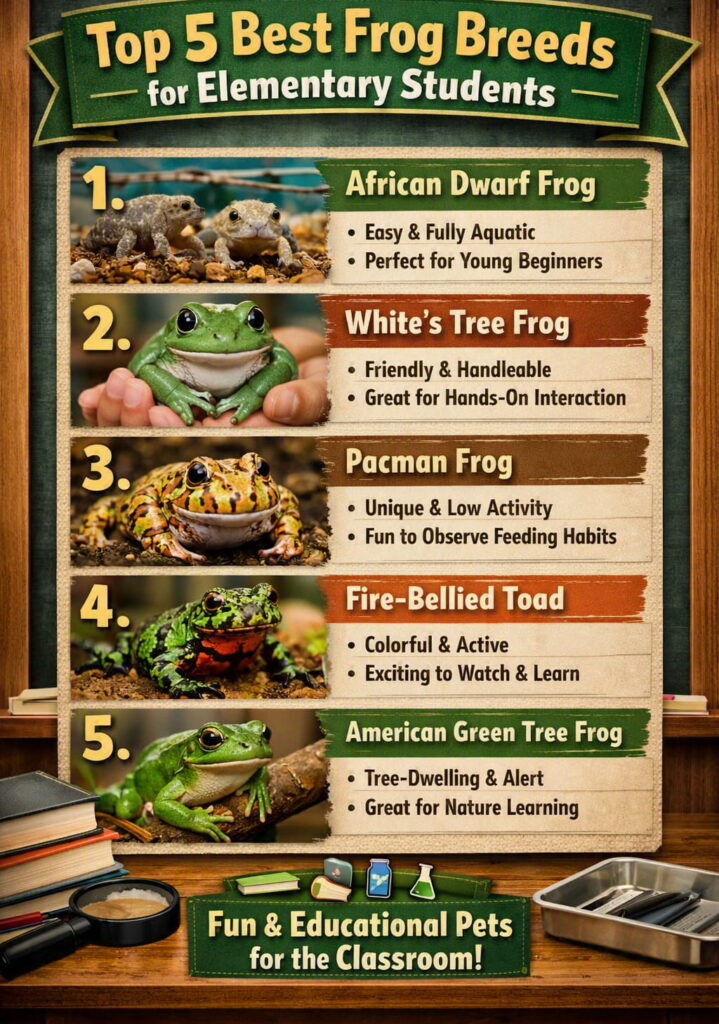
1. African Dwarf Frog
Why it’s great:
The African Dwarf Frog is one of the best frog breeds for elementary students, and for a good reason. These frogs are fully aquatic, meaning they live their entire lives in water, no complicated land setup needed. This makes them much easier for kids to care for compared to other amphibians.
They are also small, peaceful, and social, often doing best in groups of two or more. Watching them swim to the surface for air, explore their tank, or gently interact with each other can be very engaging for children. Their calm nature makes them perfect for observation-based learning, especially in classrooms where low-maintenance pets are preferred.
Another advantage is their simple care routine. They don’t require handling, which reduces the risk of harm to both the frog and the child. This makes them a safe and stress-free option for beginners who are just learning how to care for a pet.
Care basics:
- Tank size: 5–10 gallons (larger if keeping multiple frogs)
- Water: Clean, dechlorinated water with regular changes
- Temperature: Ideally between 22–26°C
- Food: Frog pellets, frozen bloodworms, or brine shrimp
- Tank setup: Gentle filtration, hiding spots, and a secure lid
Best for:
Beginners, young kids, and classrooms looking for a simple, fully aquatic pet that is easy to maintain and fun to observe.
2. White’s Tree Frog (Dumpy Frog)
Why kids love it:
The White’s Tree Frog is often considered one of the best frog breeds for elementary students who want a slightly more interactive and visible pet. Known for its adorable “smiling” expression and chubby appearance, this frog quickly becomes a favorite among kids. Its larger size compared to many other frogs makes it easier to observe, which is great for younger students who are still developing attention to detail.
One of its biggest advantages is its hardy and calm nature. Unlike more delicate species, the White’s Tree Frog can tolerate small mistakes in care, making it forgiving for beginners. It can also handle gentle, occasional handling (with clean, damp hands and supervision !), which gives kids a more hands-on experience compared to strictly observation-only frogs.
These frogs are also quite interesting to watch, especially at night when they become more active. They enjoy climbing, resting on branches, and exploring their enclosure, which keeps children engaged and curious about their behavior and environment.
Care basics:
- Tank: Vertical terrarium (20+ gallons recommended) with branches and plants for climbing
- Environment: Warm (around 24–28°C) and moderately humid
- Diet: Crickets, mealworms, and other insects (dusted with supplements)
- Tank setup: Good ventilation, hiding spots, and a secure lid
Best for:
Kids who want a more interactive frog that they can occasionally handle, while still being easy to care for and visually engaging.
3. Pacman Frog
What makes it unique:
The Pacman Frog is easily one of the most recognizable and unusual-looking options among the rest list, Its round body and oversized mouth, make it instantly appealing to kids. Unlike more active frogs, the Pacman Frog is mostly stationary, spending much of its time partially buried and waiting for food to come close.
This behavior actually makes it very easy to monitor and care for, especially for beginners. Kids can clearly observe feeding habits and learn how predators in nature conserve energy by staying still and ambushing prey. Its bright colors (green, brown, albino varieties) also add visual interest without requiring a complex setup.
However, this frog is best suited for observation rather than interaction. It can mistake fingers for food and may bite, so handling is not recommended. This makes it a great teaching tool for respecting animal boundaries and understanding that not all pets are meant to be touched.
Care basics:
- Tank: Small enclosure (10 gallons is usually enough) with moist substrate for burrowing
- Environment: Warm (around 24–28°C) and humid
- Food: Worms, crickets, and other insects
- Handling: Not recommended due to feeding response
Best for:
Observation-based learning, kids who prefer low-activity pets, and those interested in unique feeding behaviors and animal habits.
4. Fire-Bellied Toad
(Yes, I know I know technically it’s a toad, but still perfect for beginners)
Why it’s popular:
The Fire-Bellied Toad, even though it is technically a toad, is often included in the list of the best frog breeds for elementary students because of its bright colors and active nature. Its vivid green back and striking red or orange belly make it visually exciting, instantly capturing kids’ attention. This coloration also introduces children to the concept of warning colors in nature, where animals signal that they may be toxic to predators.
Unlike more sedentary frogs, Fire-Bellied Toads are very active, frequently swimming, climbing, and exploring their environment. This makes them especially fun to observe, keeping children engaged for longer periods. Their semi-aquatic lifestyle also provides a great opportunity for kids to learn about both land and water ecosystems in one setup.
However, due to their mild skin toxins, handling should be avoided. This actually reinforces an important lesson for children, respecting animals without needing to touch them, which is a key part of responsible pet care.
Care basics:
- Tank: Semi-aquatic setup (about 50% water, 50% land)
- Environment: Moderate humidity with clean, shallow water
- Diet: Small insects like crickets and worms
- Handling: Not recommended due to mild toxins
Best for:
Visual learners and kids who enjoy active, colorful pets that are fun to watch and educational in terms of behavior and habitat.
5. American Green Tree Frog
A native favorite:
The American Green Tree Frog is another classic choice among the best frog breeds for elementary students, especially kids who love nature and wildlife. Its vivid green coloring and impressive ability to climb and stick to surfaces make it attractive and entertaining to watch. Children typically enjoy seeing it relax on leaves or cling to the terrarium glass.
Because these frogs are mainly active at night, they’re a helpful way to introduce the idea of nocturnal animals and how behavior can change depending on the time of day. They also offer a chance to talk about local ecosystems, since this species is native in many areas and reflects real wildlife rather than an exotic pet.
Although they aren’t a great option for frequent handling, their climbing and natural routines are engaging enough through observation. Watching them can build patience and spark curiosity as kids learn how animals respond to their surroundings.
Care basics:
- Tank: Tall/vertical terrarium with plants and climbing branches
- Environment: Warm (about 24–28°C) and humid
- Diet: Crickets and other small insects
- Tank setup: Lots of foliage, good ventilation, and a secure lid
Best for:
Kids who like watching animal behavior, learning about wildlife, and exploring life in tree-dwelling habitats.
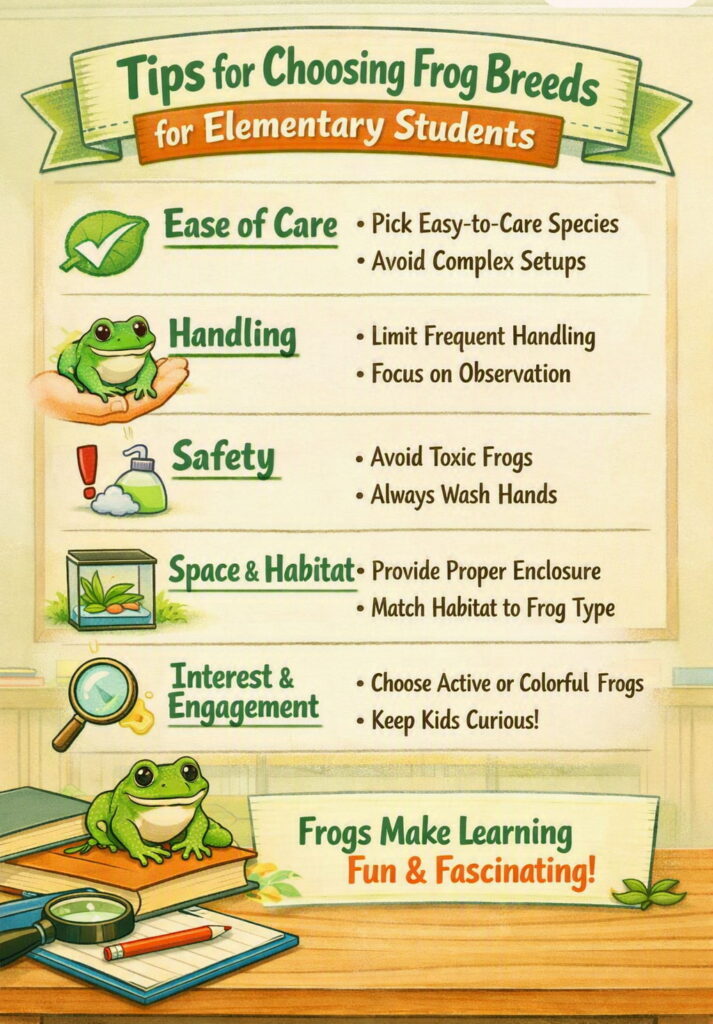
Tips for Choosing from the Best Frog Breeds for Elementary Students
Choosing the right frog for elementary students is about more than cuteness, it’s about selecting a pet that’s safe, interesting to observe, and easy for kids to manage. Keep these points in mind:
- Ease of care: Pick beginner-friendly species that can handle small mistakes, such as African Dwarf Frogs or Pacman Frogs. Avoid frogs that require complicated filtration systems or very exact habitat conditions.
- Handling: Frogs are generally fragile and shouldn’t be handled much. Even sturdier frogs like White’s Tree Frogs do best with gentle, infrequent handling. Observation-focused pets teach patience and reduce stress for the animal.
- Safety: Stay away from toxic species and supervise any contact. Some, like Fire-Bellied Toads, have mild skin toxins that can be harmful. Make handwashing before and after interaction a firm rule.
- Space and habitat: Match the enclosure to the species. Tree frogs need vertical room and climbing features, while African Dwarf Frogs need a fully aquatic setup. The right habitat supports health and simplifies care.
- Interest and engagement: Choose frogs that are active or colorful, such as Green Tree Frogs or Fire-Bellied Toads, to keep kids curious and encourage learning through observation.
Looking for a pet with less odor? Check out our guide to the best low-odor pets.
Frequently Asked Questions
What is the best frog for elementary students?
For most elementary students, the White’s tree frog is one of the best choices to consider. It is frequently recommended by frog keepers as a beginner-friendly species because it is relatively hardy and its care is more straightforward than that of many other frogs. Reddit users repeatedly recommend White’s tree frogs for beginners, including parents looking for a frog for an elementary-aged child.
However, an adult should remain responsible for the frog’s care. Children can participate in age-appropriate tasks, but frogs are delicate animals and their enclosure, temperature, humidity, feeding, and cleaning need consistent attention.
Are White’s tree frogs good classroom pets?
They can be, but they aren’t necessarily the easiest classroom frog. White’s tree frogs require an appropriately sized enclosure, controlled humidity, ventilation, and regular feeding. They also shouldn’t be treated like a pet that children can frequently pick up.
For a classroom, the teacher should be the primary caretaker while students observe the frog and participate in supervised educational activities.
What other frog is good for an elementary classroom?
African dwarf frogs can be an interesting option for classrooms because they are aquatic and can provide opportunities to teach children about aquatic ecosystems and animal life cycles.
Interestingly, Reddit has several discussions specifically involving African dwarf frogs in elementary classrooms. Teachers and frog keepers describe them as potentially good classroom animals, but emphasize that the aquarium must be properly established and maintained.
This makes them educationally interesting, but not necessarily the simplest choice for a teacher who has never maintained an aquarium.
Are Pacman frogs good for kids?
Pacman frogs are often considered beginner-friendly because they are hardy and relatively simple compared with some other frog species. Reddit frog keepers frequently mention them when discussing beginner frogs.
However, Pacman frogs are not especially active. They spend much of their time sitting partially buried and waiting for food. That makes them better for children who enjoy observing animals rather than expecting a pet that moves around frequently.
Which frog is the easiest to take care of?
There isn’t one frog that is universally “the easiest.” White’s tree frogs and Pacman frogs are commonly described by experienced frog keepers as beginner-friendly, but each still needs species-specific housing, food, humidity, temperature, and sanitation.
A Reddit discussion on beginner frogs similarly points out that the setup still requires equipment such as an enclosure, water dish, substrate, lighting, food, supplements, and appropriate water treatment.
Can elementary students hold frogs?
It is better to make observation rather than handling the main activity.
Frogs have delicate skin and can be stressed or injured by excessive handling. If handling is necessary, an adult should supervise it and follow appropriate hygiene and species-specific handling practices.
This is particularly important in a classroom where many children may want a turn.
What is the best frog for a child who wants an interactive pet?
If by “interactive” you mean a frog that is interesting to watch moving, climbing, and feeding, a White’s tree frog may be more satisfying than a Pacman frog.
Reddit keepers commonly recommend White’s tree frogs for beginners and describe them as active and relatively easy to keep.
Pacman frogs, by comparison, are more sedentary, so children may find them less exciting to watch.
Are frogs good classroom pets for young children?
They can be excellent observation animals, but they aren’t ideal if the expectation is that children will frequently touch or play with them.
A classroom frog can help students learn about:
- Animal life cycles
- Habitats and ecosystems
- Animal behavior
- Water and humidity
- Food chains
- Adaptation
- Responsibility and animal welfare
The frog should be treated as a living animal rather than a classroom toy.
What frog should teachers avoid choosing simply because it looks cute?
Teachers shouldn’t choose a species based only on appearance. Some frogs that look easy to keep can have surprisingly specific environmental requirements.
For example, Reddit discussions about tree frogs emphasize that maintaining the right combination of humidity and ventilation can be challenging, particularly for inexperienced keepers.
The best classroom frog is therefore the species whose care requirements the teacher can reliably meet.
Can a frog stay at school over weekends and holidays?
This depends on the species and the school’s care arrangements. Long school breaks are particularly important to plan for.
For example, keepers discussing African dwarf frogs in classrooms point out that they still need regular feeding and appropriate aquarium maintenance during school closures.
Before getting a frog, teachers should decide who will care for it during:
- Weekends
- Winter or summer holidays
- School closures
- Emergency closures
- Teacher absences
What should students learn from having a classroom frog?
The frog can become much more than a classroom pet. Teachers can use it as a living example when teaching life cycles, adaptation, habitats, food webs, animal behavior, and environmental needs.
African dwarf frogs can be particularly interesting for life-cycle lessons, while terrestrial frogs such as White’s tree frogs can help students observe feeding, movement, climbing, and behavior.
What is the best frog for a first-time frog owner?
For a family or teacher completely new to frogs, White’s tree frogs are one of the most frequently recommended options, while Pacman frogs are another common beginner choice. Reddit discussions repeatedly identify these species when people ask about their first frog.
But “beginner-friendly” should be interpreted as more forgiving than some alternatives, not as “requires almost no care.”
Is a frog a good pet for an elementary-school child?
A frog can be a wonderful animal for an elementary student to learn about, but the responsibility should ultimately belong to an adult.
The child can help with supervised observation and age-appropriate activities, while the adult handles the parts of husbandry that require consistency and experience.
One particularly relevant Reddit discussion involved a parent whose 8-year-old was interested in getting a frog; multiple commenters recommended White’s tree frogs while still emphasizing that they require more work than many people initially expect.