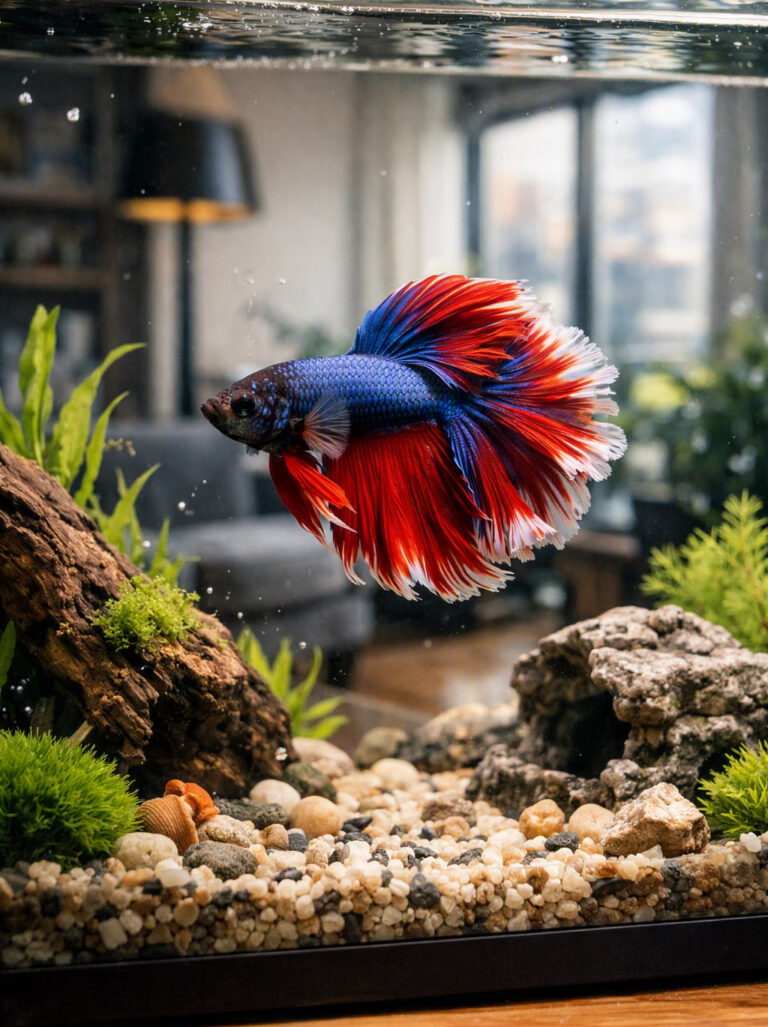
When you hear “best pets for small apartments,” you might immediately think of cats or small dog breeds. And while cats and certain dogs can certainly make wonderful apartment companions, they aren’t the only options.
In this guide, we’re taking a different approach. Instead of focusing on the usual cats and dogs, we’re looking at unusual pets that can be surprisingly well suited to apartment living. From colorful geckos and aquatic frogs to tiny invertebrates and fascinating small mammals, some of the best pets for small spaces are animals you may not have considered before.
Of course, an animal being small doesn’t automatically make it a good apartment pet. Every species has its own needs, and some unusual pets require specialized habitats, heating, lighting, humidity control, or specific diets. The goal is to find animals that can comfortably live in a smaller home while allowing you to provide everything they need to stay healthy and enriched.
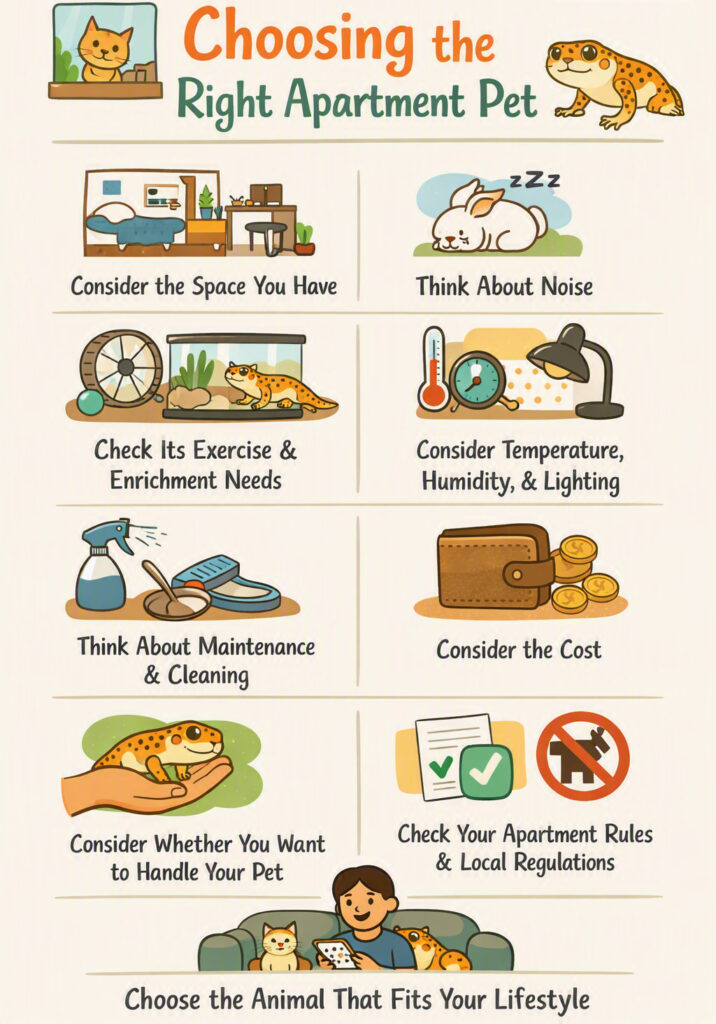
Choosing the Right Apartment Pet
When choosing one of the best pets for small apartments, don’t focus only on how much physical space the animal itself occupies. An animal may be tiny but still require a surprisingly large enclosure or specialized equipment.
Instead, think about the animal’s overall needs and how they fit into your home and lifestyle.
Consider the Space You Have
Start by looking at how much room you can realistically dedicate to a pet. This includes not only the animal’s enclosure but also equipment, food, toys, cleaning supplies, and space for maintenance.
The best pets for small spaces are the ones that can live comfortably in a well-designed enclosure without needing access to the entire apartment. A gecko, for example, may spend most of its time in a terrarium, while aquatic animals require an appropriately sized aquarium.
Don’t assume that the smallest animal automatically needs the least space. Some small pets have surprisingly large housing requirements because they need room to move, dig, climb, or explore.
Think About Noise
Noise can make a big difference when choosing apartment-friendly pets. You may have plenty of room for an animal but still run into problems if it is particularly vocal or active at night.
Many reptiles, amphibians, and invertebrates are naturally quiet, which can make them appealing choices for apartment dwellers. However, remember that equipment such as aquarium filters, pumps, or fans can also produce noise.
Birds are another example of a pet that may seem ideal because of its small size but can be surprisingly loud. If you have neighbors nearby, consider the animal’s natural vocalizations before bringing it home.
Check Its Exercise and Enrichment Needs
A pet doesn’t necessarily need a large apartment to stay active, but it does need enough opportunities to express normal behaviors.
Dogs are an obvious example: even a small dog may need daily walks and plenty of mental stimulation. Some small mammals also need room to explore, climb, dig, or play.
For animals that spend most of their time in an enclosure, enrichment is still important. Hides, climbing areas, tunnels, appropriate toys, and other forms of stimulation can help make a small habitat more interesting and suitable for the animal.
Consider Temperature, Humidity, and Lighting
This is particularly important if you’re considering unusual pets such as reptiles and amphibians.
Some species need carefully controlled temperatures, humidity levels, or specialized lighting. A terrarium may take up relatively little space in your apartment, but the equipment required to maintain the correct environment can be substantial.
Before choosing an unusual animal, make sure you understand its habitat requirements and can maintain them consistently.
Think About Maintenance and Cleaning
A small pet isn’t necessarily a low-maintenance pet. Every animal needs appropriate food, clean water, a suitable habitat, and regular care.
Depending on the species, you may need to clean an enclosure, maintain an aquarium, replace substrate, monitor temperature and humidity, prepare fresh food, or provide daily interaction.
This is particularly important in a small apartment because odors and mess can become noticeable more quickly. If you’re specifically looking for low-maintenance pets for apartments, compare the animal’s complete care requirements rather than judging it by its size.
If you’re looking for a low-maintenance pet with minimal shedding and odor, check out our articles on these pets!
Consider the Cost
Think beyond the initial cost of acquiring the animal. Food, enclosures, heating, lighting, filtration, bedding, enrichment, and veterinary care can all contribute to the overall cost.
Some unusual pets are inexpensive to purchase but require specialized equipment, while others may have a more affordable setup but ongoing dietary expenses.
If you’re looking for an affordable pet, calculate the approximate initial and ongoing costs before deciding. A pet that seems cheap at first may not remain inexpensive once you have purchased everything it needs.
Consider Whether You Want to Handle Your Pet
Another important question is how much interaction you want.
Some unusual pets are fascinating to observe but aren’t suitable for frequent handling. Invertebrates and some reptiles, for example, may be better appreciated by watching their natural behavior.
Other animals can be much more interactive. Pet rats, for example, are known for being social and intelligent, making them more suitable for someone who wants an animal they can interact with regularly.
Think about what you want from your pet rather than simply choosing the most unusual animal you can find.
Check Your Apartment Rules and Local Regulations
Before getting any pet, check your lease or building’s rules. Some apartments have restrictions on the type or number of animals residents can keep.
This is particularly important when considering unusual or exotic species. Certain animals may be restricted or require permits depending on where you live.
It’s always better to check before bringing an animal home rather than discovering later that it isn’t allowed.
Choose the Animal That Fits Your Lifestyle
Ultimately, the best pets for small apartments are those whose needs match your available space, schedule, budget, and lifestyle.
If you want a quiet animal that you can primarily observe, a reptile, amphibian, or invertebrate might be an interesting option. If you’d prefer a more interactive companion, a social small mammal may be a better fit.
The most important thing is not whether an animal is unusual or small. It’s whether you can provide a safe, appropriate, and enriching environment for its entire life.
And with that in mind, let’s look at some of the best pets for small apartments that you probably weren’t expecting.
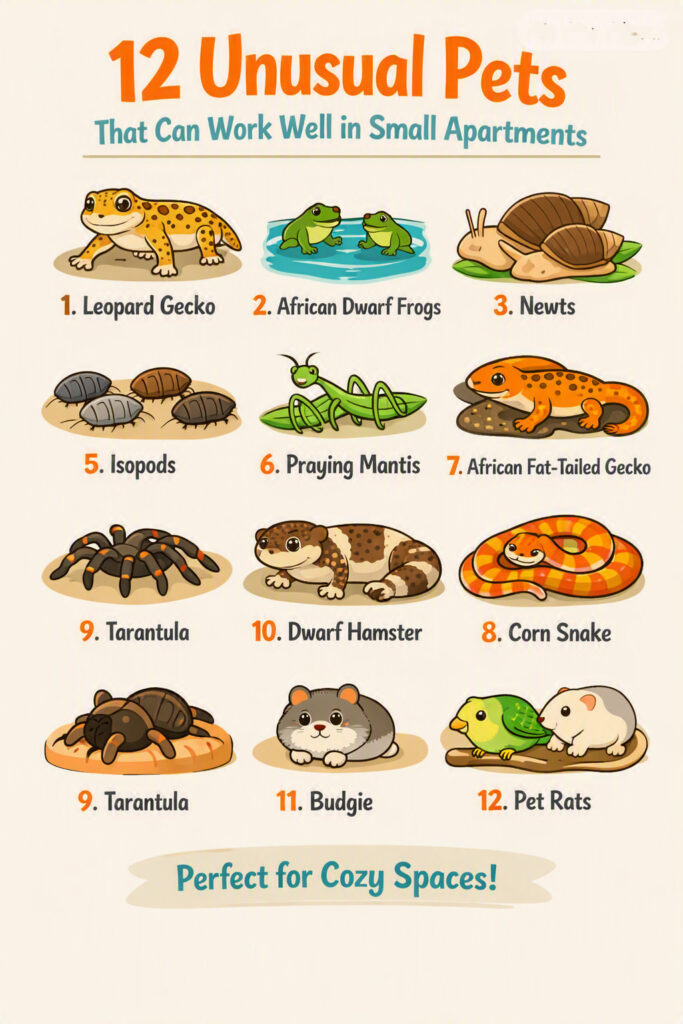
12 Unusual Pets That Can Work Well in Small Apartments
If cats and small dogs aren’t what you’re looking for, there are plenty of other animals worth considering. Some of the best pets for small apartments are surprisingly unusual, from tiny amphibians and reptiles to fascinating invertebrates.
However, remember that small doesn’t always mean low-maintenance. The animals below have different care requirements, and some need specialized habitats or equipment. The key is choosing a pet whose needs you can realistically meet in your available space.
1. Leopard Gecko
Leopard geckos are one of the more approachable reptiles for people who want something a little different. They are quiet, don’t need to roam around your apartment, and can live in a properly equipped terrarium.
Their enclosure needs appropriate heating, hiding places, substrate, and enrichment. They also have specific dietary requirements, so they aren’t completely hands-off pets. Still, their relatively compact habitat and quiet nature can make them appealing pets for small spaces.
2. African Dwarf Frogs
If you like aquatic animals, African dwarf frogs are a fascinating alternative to keeping fish. These tiny frogs spend their lives underwater and can be kept in an appropriately maintained aquarium.
They don’t need walks, don’t make the kind of noise that would disturb apartment neighbors, and their habitat can fit comfortably into many homes. Their aquarium still needs proper filtration, water quality, and suitable tank conditions, so their small size shouldn’t be mistaken for effortless care.
3. Newts
Newts are another unusual option for someone who wants an aquatic or semi-aquatic pet. Watching them move through their habitat can be surprisingly entertaining, and they don’t require space to run around your apartment.
Depending on the species, newts can have specific temperature, water-quality, humidity, and habitat requirements. If you’re interested in keeping one, research the particular species carefully before setting up its enclosure.
4. Giant African Land Snails
A giant African land snail is probably not the first animal that comes to mind when you think of the best apartment pets, which is exactly what makes it interesting.
These snails can be fascinating to observe and don’t require walks or a large area of your home. Their habitat does, however, need appropriate humidity, ventilation, substrate, food, and cleaning.
Important: Giant African land snails are restricted or prohibited in some locations because of their potential to become invasive. Always check local regulations before considering one.
5. Isopods
Yes, you can keep isopods as pets. These tiny creatures are becoming increasingly popular among people interested in unusual animals and miniature ecosystems.
Different species come in interesting colors and patterns, and they can be kept in relatively compact terrariums. They are particularly appealing if you enjoy observing rather than handling your pets.
Isopods are also useful for creating a small bioactive enclosure, where they can help break down organic material. Despite their simplicity, they still need the appropriate humidity, substrate, ventilation, and food for their species.
6. Praying Mantis
A praying mantis can make an incredibly unusual apartment pet. It requires very little space compared with most traditional pets and can spend its life in a relatively small, properly ventilated enclosure.
Mantises are fascinating to watch, particularly when they hunt and interact with their surroundings. They aren’t cuddly pets, though, and their diet consists primarily of appropriate live insects.
If you’re looking for an animal that is quiet, unusual, and more about observation than companionship, a mantis could be an interesting choice.
7. African Fat-Tailed Gecko
African fat-tailed geckos are another small reptile that can work well for the right apartment owner. They are generally quiet and spend most of their time in their enclosure, meaning you don’t need to dedicate a large portion of your apartment to them.
Like other reptiles, however, they need an appropriate habitat with suitable temperature, humidity, hides, and lighting or heating depending on the setup. They are a better choice for someone willing to learn about reptile care rather than someone simply looking for a pet that takes up little space.
8. Corn Snake
A corn snake might be an unexpected choice for an apartment, but snakes don’t need to wander freely around your home to get adequate space.
A properly designed enclosure can provide everything the snake needs while taking up a manageable amount of room. Corn snakes are also generally quiet, which can be a major advantage when you have neighbors close by.
Of course, a snake is not suitable for everyone. You’ll need to be comfortable with its feeding requirements, enclosure maintenance, and adult size before deciding whether it is right for you.
9. Tarantula
For someone who wants a truly unusual pet, a tarantula certainly qualifies. They require very little household space and don’t make noise, making them one of the more space-efficient options on this list.
Tarantulas are primarily observation pets rather than animals you should expect to handle regularly. Their enclosure still needs to be appropriate for the species, and their care requirements should be researched carefully.
They’re best suited to someone who is genuinely interested in keeping and observing an invertebrate rather than looking for a traditional companion animal.
10. Dwarf Hamster
Hamsters may be more familiar than some of the other animals on this list, but they are still worth considering when discussing small apartment pets.
Their small bodies mean they don’t take up the same amount of household space as a dog or cat, but they still need a properly sized enclosure with deep bedding, hiding places, enrichment, and an appropriate exercise wheel.
One thing to remember is that hamsters are often active at night. If you’re a light sleeper, the sounds of an active hamster moving around its enclosure could be something to consider.
11. Budgie
A budgie can be a great option if you want a small pet that is more interactive. These little birds can form strong bonds with their owners and can be entertaining and intelligent companions.
However, don’t assume that their small size automatically makes them perfect apartment-friendly pets. Budgies need an appropriately sized cage, toys, perches, social interaction, and opportunities for exercise.
Noise is also an important consideration. Budgies can be quite vocal, so they may not be the best choice if you have particularly sensitive neighbors.
12. Pet Rats
Pet rats are one of the most underrated options on this list. They are intelligent, social, curious, and can become surprisingly interactive with their owners.
They don’t require an entire apartment to themselves, but they do need a suitably large and secure cage, enrichment, regular cleaning, and social companionship. Rats generally shouldn’t be kept alone because they benefit greatly from interaction with other compatible rats.
For someone looking for a small pet for an apartment that can provide more interaction than a typical aquarium pet, rats are definitely worth considering.
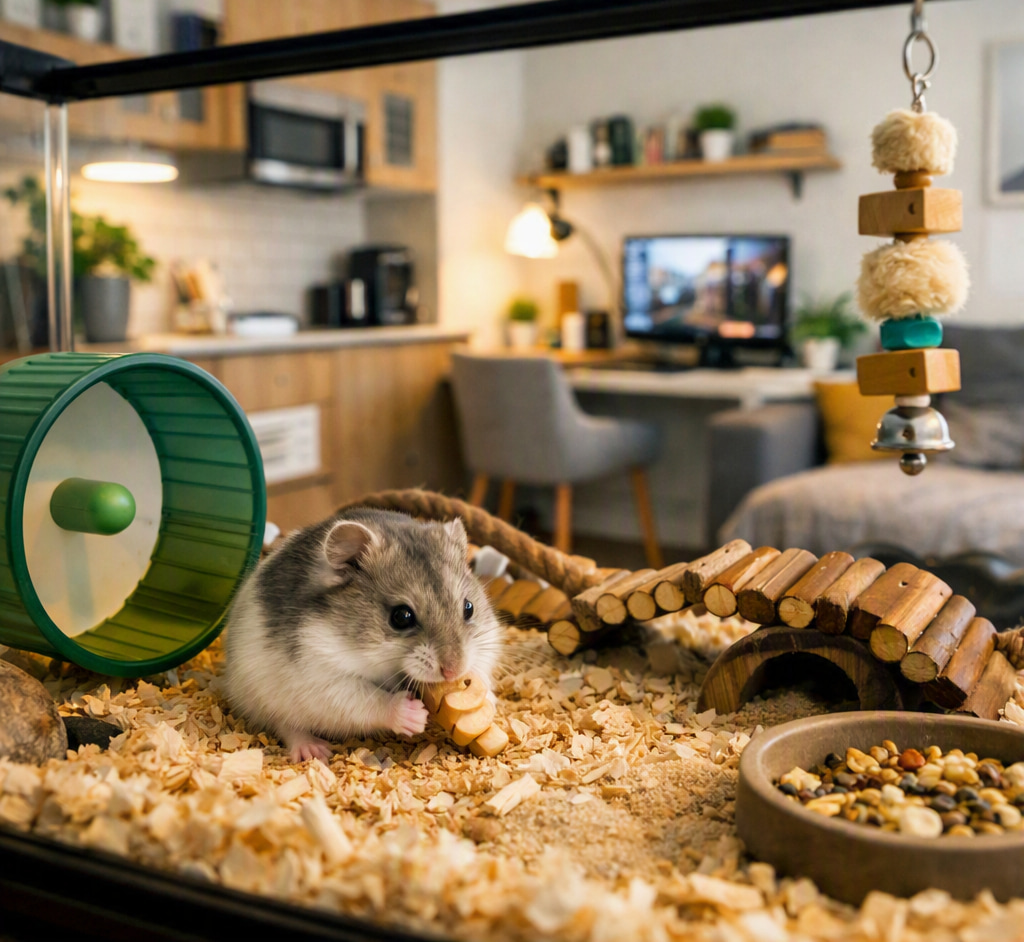
What Pet Owners Say About Keeping Pets in Small Apartments
When you’re choosing one of the best pets for small apartments, advice from people who actually live with animals in apartments can be useful. Online pet communities often bring up practical issues that are easy to overlook, such as noise, enclosure size, landlord restrictions, and how much room an animal really needs.
What are some good unusual pets for a very small apartment?
People living in particularly small apartments often look beyond cats and dogs. In one Reddit discussion, a person living in an apartment of around 22 m² asked what kind of pet could comfortably fit into such a small space. One commenter suggested rats, noting that they can be good pets when space is limited.
This doesn’t mean rats (or any other particular animal) will automatically be suitable for every small apartment. Their cage still needs to be appropriately sized, and they need social interaction and enrichment. However, it shows why looking beyond traditional pets can open up some interesting possibilities.
Does a small apartment mean you can’t have a pet?
Not necessarily. Another Reddit discussion from someone moving into an apartment of roughly 23 m² considered several options, including turtles, hamsters, gerbils, geckos, fish, and birds. The responses highlighted an important point: the size of the animal isn’t the same thing as the amount of space it needs.
For example, a bird may be physically small but still need opportunities to fly and exercise. A reptile may stay inside a terrarium but require a surprisingly specific setup. Before choosing a pet, consider its complete living requirements rather than simply asking whether the animal itself is small enough.
Are reptiles good apartment pets?
Reptiles can be a practical option for some apartment owners because they generally remain within their enclosure and don’t make the kind of noise associated with barking dogs or vocal birds.
However, apartment owners on Reddit point out that landlord policies vary considerably. In one discussion, a corn-snake owner asked whether landlords generally allow reptiles, and the responses ranged from landlords who were comfortable with them to apartment buildings that restricted caged animals or reptiles altogether.
So, if you’re considering a gecko, snake, or another reptile, check your lease before bringing one home. Don’t assume that an animal is permitted simply because it stays in a tank or terrarium.
Are quiet pets always better for apartments?
Not necessarily. A quiet pet is certainly easier on neighbors, but you also need to consider the equipment and care the animal requires.
For example, aquarium filters and pumps can produce some noise, while reptiles may require heating or lighting equipment. Some animals that seem ideal because they are quiet can also have demanding environmental requirements.
Noise is still an important consideration, though. One Reddit discussion from an apartment resident specifically looking for a pet listed being quiet, requiring little space, and being affordable as major priorities.
What should you check before getting an unusual apartment pet?
The biggest lesson from apartment pet owners is that you shouldn’t choose an animal based only on its size.
Before bringing home an unusual pet, consider:
- How much space does its enclosure actually need?
- Does it need time outside its enclosure?
- Will it make noise at night?
- Does it require heating, lighting, or humidity control?
- Will its food and supplies be easy to obtain?
- How much cleaning will it require?
- Is the animal allowed by your landlord or building?
- Is it legal to keep in your area?
- Can you afford its setup and ongoing care?
These questions can help you narrow down the best pets for small apartments without choosing an animal simply because it happens to be small.