
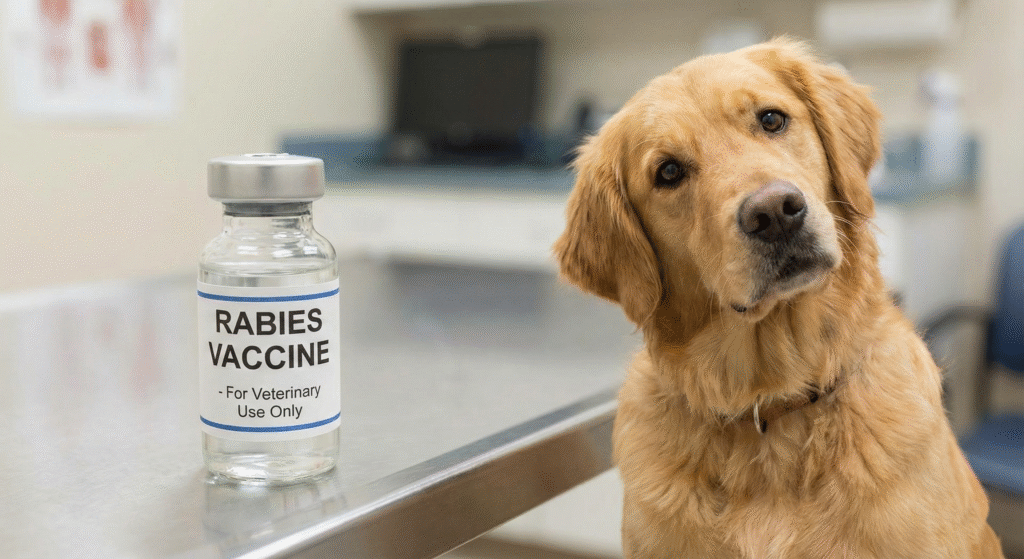
The rabies vaccine for dogs is crucial to your pet’s life; rabies has an almost 100% fatality rate and can spread from infected wild animals to pets and even humans, making prevention through vaccination the key to avoiding it.
The vaccine works by immunizing your pet as it exposes your dog’s immune system to an inactivated form of the virus, training it to recognize and fight rabies if it ever gets exposed to an active form. It’s considered to be very safe with mild and temporary side effects, and its benefits outweigh the rare risks. In many regions including the U.S, vaccinating your dog against the rabies is a legal requirement, and owners must stay up to date with the vaccine schedule to protect public safety.
What is Rabies?
Rabies is one of the most feared viral diseases in the world, and for a good reason. It affects the central nervous system, spreads through the saliva of an infected animal, and is almost always fatal once clinical signs appear. For pet owners, especially those living in areas where wildlife exposure is possible, understanding rabies in dogs is essential.
When people search for information about rabies dogs, they’re usually worried about symptoms, exposure risk, or how to keep their pets protected. That’s exactly where prevention becomes critical. The rabies vaccine for dogs is not only the most effective way to protect your pet, it’s also legally required in most regions across the U.S. and Canada.
Because rabies is preventable yet deadly, veterinarians emphasize consistent vaccination, recognizing early symptoms, and knowing what to do if exposure is suspected. By understanding how the virus spreads and why vaccination is so important, dog owners can dramatically reduce risks to both their pets and their families.
What Are Rabies Symptoms in Dogs?
Dog owners should learn how to recognize early rabies symptoms before the appearance of neurological signs, because once they appear, the disease is almost always fatal.
Rabies progresses in multiple stages, and each stage brings different clinical and behavioral changes. As a veterinarian myself, here are the early symptoms and how to spot them quickly:
Early Symptoms
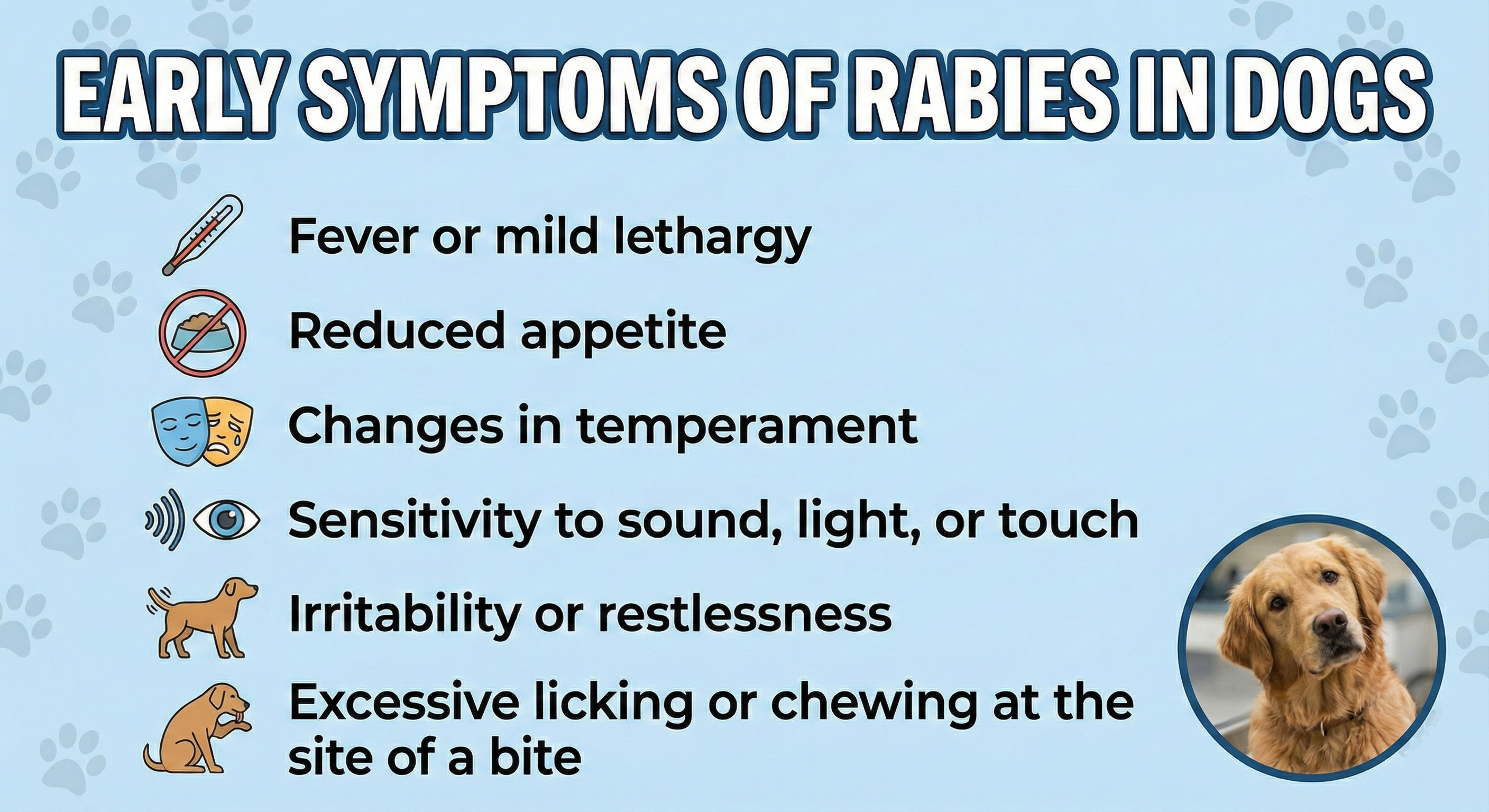
The prodromal stage: it happens the first few days after the virus reaches the central nervous system, signs are subtle and easy to miss. Dogs may show:
- Fever or mild lethargy
- Reduced appetite
- Changes in temperament — a normally calm dog may become anxious, or an excitable dog may appear unusually quiet
- Sensitivity to sound, light, or touch
- Irritability or restlessness
- Excessive licking or chewing at the site of a bite (if known)
These early clues are often mistaken for general illness, which is why understanding them is so important.
Advanced Neurological Signs
Excitative and paralytic stages: As the virus spreads through the brain and spinal cord, the neurological rabies symptoms in dogs become more severe. These may include:
- Disorientation and confusion
- Difficulty swallowing or choking sounds
- Excessive drooling or foaming due to paralysis of throat muscles
- Unprovoked aggression or sudden attempts to bite
- Seizures
- Muscle tremors
- Loss of coordination (ataxia)
- In the paralytic stage, dogs may develop:
- Weakness starting in the hind legs
- Paralysis of limbs, jaw, or throat
- Coma, followed by death
This progression is one of the reasons why immediate medical evaluation is essential after any suspicious bite.
Behavioral Changes
Rabies is known for altering a dog’s behavior dramatically. Common behavioral rabies symptoms in dogs include:
- Uncharacteristic aggression; striking out at people, animals, or objects
- Fearfulness or hiding
- Sudden friendliness in normally shy dogs
- Hyperactivity or restlessness
- Unprovoked biting or snapping
- Constant vocalizing, such as growling, barking, or whining
Not all dogs show “classic” aggression, some exhibit a quiet, depressed form of rabies, others sudden friendliness which makes awareness of early signs even more important.
How Does Rabies Spread to Dogs?
Understanding how rabies is spread to dogs is important to protect your pet. The rabies virus is extremely dangerous, and even a small exposure can lead to infection. Because there is no cure once symptoms appear, prevention is the only safe and effective protection.
- Common Transmission Routes
Rabies spreads through the saliva or nervous tissue of an infected animal. The virus must enter the body to cause infection. The most common routes include:
- Bite wounds, this is the #1-way dogs get rabies, because the virus is highly concentrated in saliva.
- Scratches from infected animals if saliva contaminates the claw.
- Open wounds or mucous membranes (eyes, nose, mouth) that come in contact with infected saliva.
- Eating an infected animal (rare, but possible if fresh nervous tissue is consumed).
Casual contact, like being near an infected animal, does not spread rabies. The virus cannot pass through intact skin or be transmitted by blood, urine, or feces.
- Wildlife Exposure
Wildlife is the primary source of rabies exposure for domestic dogs, especially in the U.S. and Canada. High-risk rabies carriers include:
- Raccoons
- Skunks
- Foxes
- Bats
- Coyotes
Even urban and suburban areas have rabies reservoirs, especially bats and raccoons. Dogs who spend time outdoors, go camping, or live near wooded areas are at increased risk.
A dog does not need to be bitten in front of you to be exposed. Many bites occur during nighttime wildlife encounters and go unnoticed due to:
- thick fur
- small puncture wounds
- self-grooming removing saliva evidence
This is why vets take wildlife exposure seriously, even minor suspicious wounds require immediate attention.
- Why Prevention Is the Only Safe Approach
Once rabies symptoms in dogs appear, the disease is almost always fatal. There is no effective treatment at that stage.
Because of this, prevention is the only reliable strategy:
- Rabies vaccine for dogs is legally required in many places because it is highly effective.
- Avoiding wildlife contact reduces risk dramatically.
- Keeping dogs on a leash prevents surprise encounters.
- Immediate veterinary evaluation after any suspicious bite is critical.
Rabies is preventable, but only before exposure or before the virus reaches the nervous system. This is why vets emphasize routine rabies vaccine for dogs and prompt medical care after potential contact.

The Importance of the Rabies Vaccine for Dogs
Why is Rabies Vaccine for Dogs Important?
The rabies vaccine for dogs is one of the most important and life-saving vaccinations your pet will ever receive. Rabies is nearly 100% fatal once symptoms start, which means prevention is the only protection, not only to your pet but to yourself as well. The rabies vaccine for dogs creates strong immunity, stopping the virus before it can reach the brain and cause neurological disease.
Because the virus spreads through the saliva of infected wildlife, even indoor dogs can be at risk from unexpected encounters with bats or wild animals entering a yard or home. This is why veterinarians emphasize that every dog, regardless of lifestyle, needs a rabies vaccine. Not only does the rabies vaccine for dogs protect the pet, but it also safeguards the entire household, community, and public health.
Simply put:
Rabies is deadly, but the rabies vaccine for dogs is extremely effective and safe.
Public Safety Benefits
Vaccinating dogs has dramatically reduced rabies cases in pets and humans across America. When the rabies vaccine for dogs is widely used:
- Fewer dogs get exposed
- Less wildlife-to-dog transmissions occur
- Fewer humans are bitten by potentially infected pets
- emergency rabies treatments for people decrease
The rabies vaccine for dogs protects more than the individual dog, it helps maintain herd immunity and prevents rabies outbreaks at a national level. Every vaccinated pet contributes to public safety.
Legal Requirements in the U.S. & Canada
In both the United States and Canada, the rabies vaccine for dogs is legally required in most states and provinces. Local laws vary, but nearly all regions mandate at least:
- An initial canine rabies vaccine
- Regular booster shots
- Official documentation
- Proof of vaccination for licensing
Failure to vaccinate can lead to fines, quarantine of the dog, or restrictions on ownership. If a dog bites someone and does not have a current rabies shot, authorities may impose strict isolation rules or even euthanasia in high-risk cases.
Because rabies is a public health threat, the rabies vaccine for dogs is not optional—it is a community responsibility.

What Is a Rabies Shot (Rabies Jab) for Dogs?
A rabies shot; also called a rabies jab or rabies shot for dogs, is an injection that trains the dog’s immune system to recognize and destroy the rabies virus if exposure occurs. It contains an inactivated (killed) virus, meaning it cannot cause rabies and is considered extremely safe.
Veterinarians administer the canine rabies vaccine under the skin (subcutaneously), and it provides long-lasting immunity that protects the dog and reduces public health risks.
Terminology Explained
- Rabies shot for dogs = general term dog owners use
- Rabies jab = same meaning, more common in UK/Europe
- Rabies shot = the injection itself
- Canine rabies vaccine = veterinary/medical term for the product containing killed virus
All four terms refer to the same vaccine, the same protective effect, and the same goal—preventing rabies in dogs.
How Often Dogs Need a Rabies Vaccine?
- 1-Year vs. 3-Year Protocols
Dogs typically receive one of two rabies vaccine for dogs protocols:
- 1-Year Rabies Vaccine
- Approved for annual use
- Required by some states or provinces
- Often used for the first boosters
- 3-Year Rabies Vaccine
- Contains the same ingredients as the 1-year vaccine
- Labeled to provide protection for up to three years
- Accepted in most regions
The choice between a 1-year or 3-year canine rabies vaccine depends on:
- Local laws
- Age of the dog
- Vaccine brand
- Veterinarian’s recommendation
- Dog’s vaccination history
Regardless of type, both protect dogs extremely well.
Why Booster Schedules Exist
Boosters ensure that the dog’s immune system stays strong enough to stop the virus immediately upon exposure. Immunity can fade over time, so routine boosters are required to maintain full protection forthe longest time possible.
Because rabies is so dangerous, authorities insist on strict, well-documented schedules for every rabies shot for dogs.
Vaccinations Are Given Only by Licensed Professionals
Only licensed veterinarians or authorized veterinary technicians can administer a rabies shot legally in most areas. Home vaccination is not allowed for rabies, because:
- Proper documentation is required
- Vaccine handling must meet strict standards
- Verification is necessary for public safety
This ensures each rabies vaccine for dogs is stored, dosed, and delivered safely and properly.
Q&As About the Rabies Vaccine for Dogs — Dog Owners Ask, Vets Answer
Q1. Does my dog really need the rabies vaccine if they never go outside?
Vet’s Answer:
Yes. Even strictly indoor dogs need the rabies vaccine for dogs. Rabid bats can enter homes, and unexpected exposure can happen quickly. Legally, almost all regions still require indoor dogs to be vaccinated because rabies is a public health threat.
Q2. How often does my dog need a rabies shot?
Vet’s Answer:
In most regions, dogs receive their first rabies vaccine for dogs at 12–16 weeks old, then a booster in one year, then every 1 or 3 years depending on local laws and the vaccine type. Only licensed vets can determine the correct schedule.
Q3. Can the rabies vaccine make my dog sick?
Vet’s Answer:
The canine rabies vaccine is very safe. Most dogs have no reaction at all. Some may experience mild soreness, lethargy, or low fever for 24–48 hours. Severe reactions are extremely rare, and the benefits far outweigh the risks.
Q4. What happens if my dog is overdue for a rabies shot?
Vet’s Answer:
Your dog will likely need a booster right away. Laws vary, but overdue dogs may be treated as “unvaccinated,” especially if they bite someone or encounter wildlife. Staying current on the rabies vaccine for dogs prevents legal issues and keeps your dog protected.
Q5. Can a rabies shot give my dog rabies?
Vet’s Answer:
No. The rabies jab uses a killed (inactivated) virus, meaning it cannot cause rabies. The vaccine only stimulates the immune system safely.
Q6. Is the 3-year rabies vaccine different from the 1-year one?
Vet’s Answer:
They are extremely similar. The biggest difference is the labeling and duration of immunity, not the ingredients. Whether your dog gets a 1-year or 3-year rabies shot depends on your vet and your local laws.
Q7. What if my dog is vaccinated but still gets bitten by a wild animal?
Vet’s Answer:
Even vaccinated dogs should be examined immediately. Your vet may give a booster rabies vaccine for dogs to refresh immunity, as required by law. Quarantine rules vary by state or province.
Q8. How much does a rabies shot typically cost?
Vet’s Answer:
Prices vary, but most rabies shots for dogs cost between $15–$40 at clinics and $10–$20 at vaccination events. Full exam fees can increase the cost depending on the clinic.
Q9. Why is the rabies vaccine required by law but other vaccines aren’t?
Vet’s Answer:
Because rabies is almost always fatal and can spread to humans, the rabies vaccine for dogs is considered a public health requirement. Other diseases, while serious, do not pose the same level of human risk.
Q10. Can I give my dog a rabies shot at home?
Vet’s Answer:
No. In the U.S. and Canada, only licensed professionals can administer a canine rabies vaccine legally. Home vaccination is not accepted for documentation or public health protection.
Q11. What signs should I look for after vaccination?
Vet’s Answer:
Minor reactions include:
- Soreness
- Mild fever
- Tiredness
- Reduced appetite
Severe reactions are very rare, but if your dog has persistent vomiting, difficulty breathing, or facial swelling, contact your vet.
Q12. Can puppies get a rabies shot early if I’m traveling?
Vet’s Answer:
Most regions require puppies to be at least 12 weeks for their first rabies jab. Some borders won’t allow entry without this proof. Your vet can help you plan travel safely and legally.
Q13. What if my rescued dog has no vaccination history?
Vet’s Answer:
Your vet will treat the dog as unvaccinated and administer a rabies vaccine for dogs immediately, then follow the standard booster schedule. Keeping documentation afterward is essential.






One Comment