You found an abandoned baby raccoon? Our expert guide reveals what to do, a detailed feeding chart, age milestones, and why they don’t make good pets. Learn how to help safely and legally.
Is This Baby Raccoon Actually Orphaned?
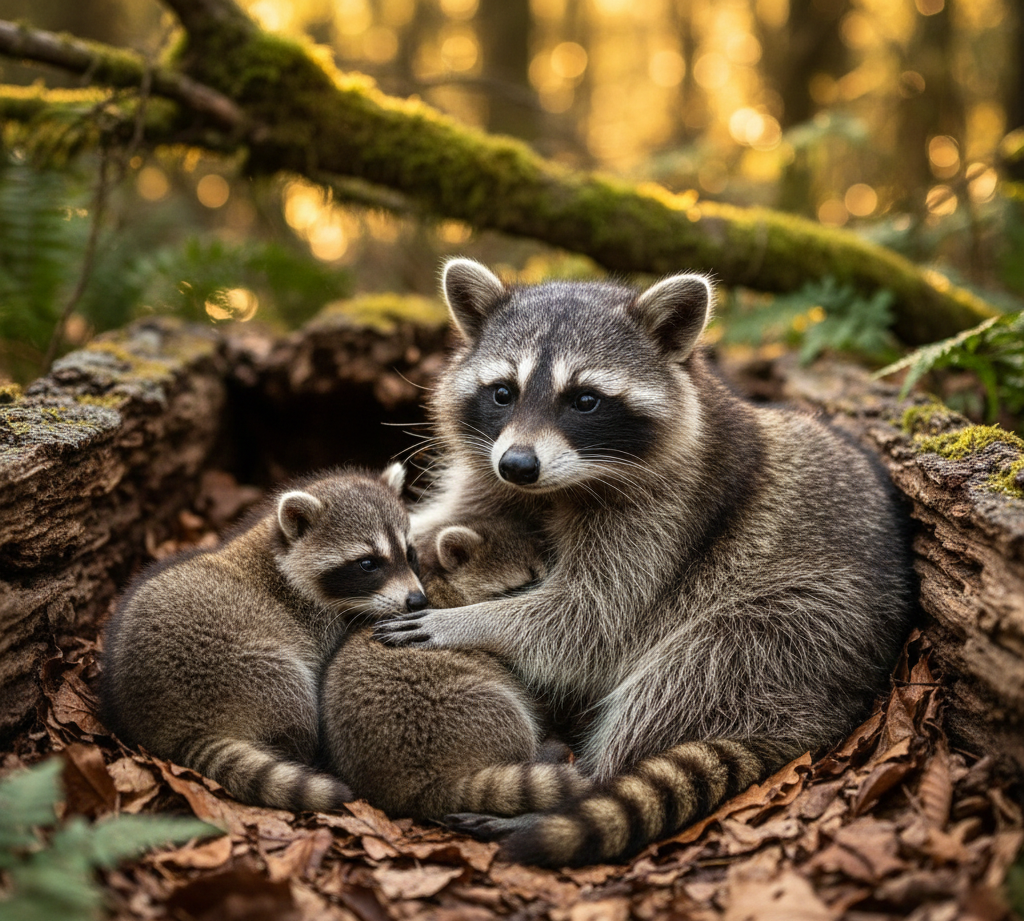
Before you intervene, it’s crucial to determine if the baby raccoon, or “kit,” is truly in need of rescue. Mother raccoons are excellent caregivers but often leave their young unattended for hours while they forage for food.
How to tell if a baby raccoon is orphaned:
- Observe from a distance: Watch for 4-6 hours, or from dusk until the next morning (mothers are nocturnal). Use binoculars to avoid scaring her away.
- Check for distress signs: A healthy, waiting kit may cry but will be relatively alert. A truly orphaned one may be lethargic, cold to the touch, or have a sunken belly.
- Look for immediate danger: If the kit is in immediate danger (e.g., from predators, traffic, or severe weather), move it to a safe, nearby location so the mother can still find it.
How to Reunite a Baby Raccoon with Its Mother
If the kit is warm, healthy, and in a safe area, reunification is the best option.
- Contain the baby: Place it in a shallow box with a soft cloth.
- Choose the right location: Put the box as close as possible to where it was found, elevated off the ground and protected from rain and direct sun.
- Encourage the mother’s return: Leave the area completely quiet. You can play a recording of baby raccoon cries softly every 30 minutes to attract her attention.
- Be patient: Wait until the next morning. If the mother has not retrieved her baby by then, assume it is orphaned.
If the baby is cold, injured, covered in insects, or the mother hasn’t returned after an extended period, it is likely orphaned and needs help.
Critical First Aid
Step 1: Provide Warmth (Do Not Feed Yet!)
A cold baby raccoon cannot digest food. Hypothermia is an immediate killer. Warming is your first and most important task.
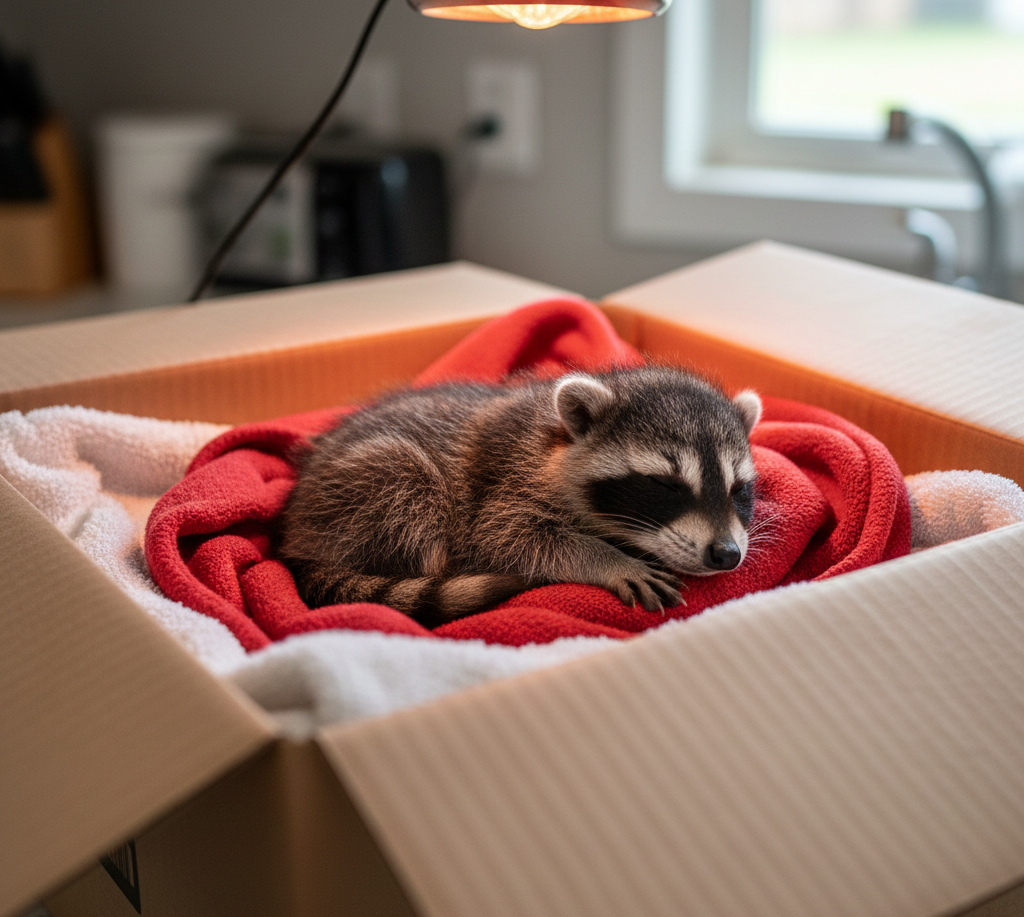
- Create a heating source: Use a heating pad on the lowest setting placed under half of a cardboard box or pet carrier. This allows the kit to move away if it gets too warm. Alternatively, a warm water bottle wrapped in a towel works well.
- Ideal temperature: Aim for an ambient temperature of 85–90 °F (29–32 °C) for newborns. You can reduce this by about 5 degrees each week as they grow fur.
- Bedding: Line the box with soft, fleece blankets. Avoid terrycloth towels as tiny claws can get caught.
Step 2: Perform a Gentle Health Check
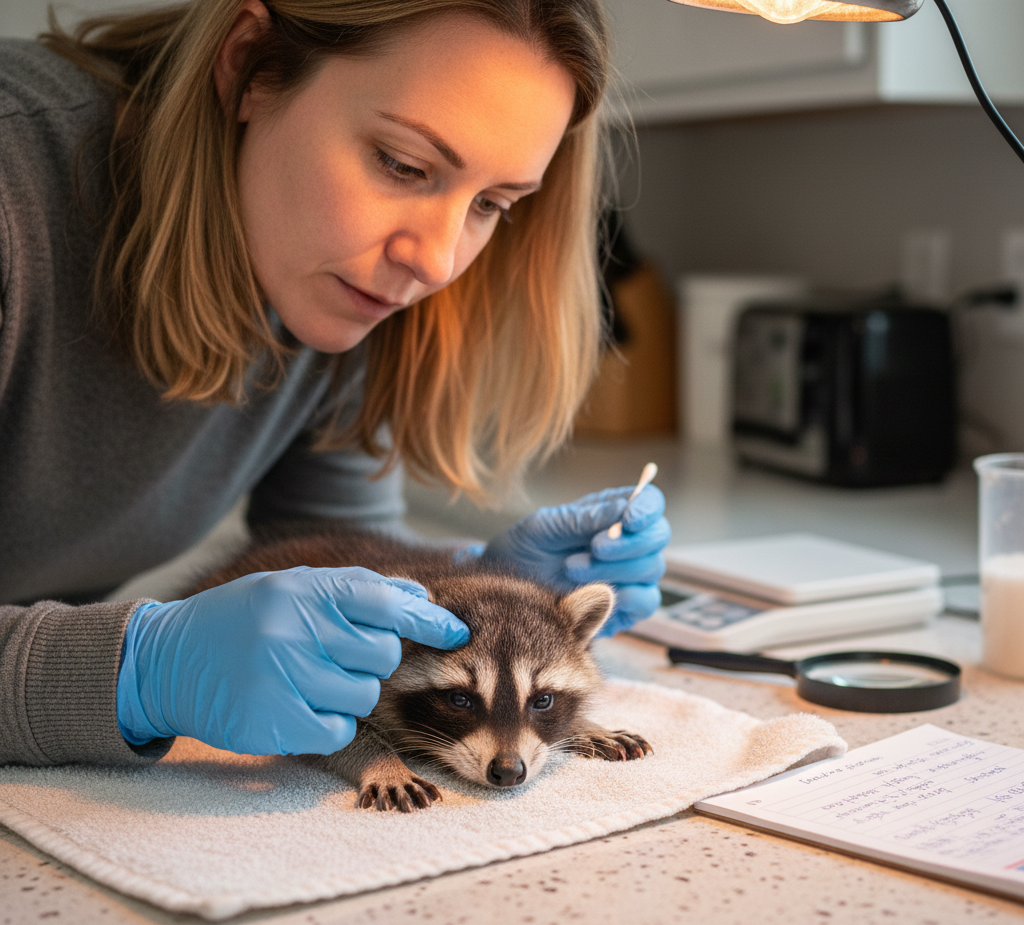
Once the baby is warm, check for injuries. Always wear gloves.
- Look for visible injuries: Check for bleeding, limping, swollen limbs, or the presence of maggots in wounds.
- Assess hydration: The mouth and gums should be pink and moist. Pale or dry, sticky gums indicate severe dehydration.
- Check for lethargy: The baby should show some resistance when handled. A completely limp or non-responsive raccoon needs urgent veterinary care.
If you find any injuries or signs of serious illness, contact a wildlife rehabilitator immediately.
Step 3: Determine baby raccoon’s age
Knowing the age of your foundling is key to providing proper care.
| Age | Eyes | Ears | Weight | Key milestones |
| Birth | Closed | Closed | ~75g | Pink skin, crawls weakly |
| 2-3 weeks | Opening | Opening | 150-200g | Dark skin, faint fur |
| 4-5 weeks | Open | Open | 250-350g | Full fur coat, wobbly walk |
| 6-7 weeks | Fully open | Fully open | 400-500g | Climbs, explores, plays |
| 8-12 weeks | Adult-like | Adult-like | 600g-1kg | Eats solids, very active, weaning |
The Complete Baby Raccoon Feeding Guide
Rehydration is Key
A dehydrated baby cannot process milk. Always start with a rehydration solution.
- What to use: Unflavored Pedialyte is ideal. A homemade recipe is 1 teaspoon salt + 3 teaspoons sugar mixed into 1 quart of warm water.
- How to feed: Offer 2-5 ml of the solution every 30 minutes for 2-3 hours using a 1ml oral syringe.
- Success indicator: The baby is hydrated when it produces pale yellow urine.
Choosing the Right Formula and Tools
- Formula: Esbilac Puppy Milk Replacer (powdered) is the gold standard. KMR (Kitten Milk Replacer) is a second choice. Never use cow’s milk, goat’s milk, or human infant formula, they cause fatal diarrhea.
- Tools: Use a 1ml or 3ml syringe for newborns. As they grow, you can switch to a specially designed wildlife nipple (like the Miracle Nipple) on a small bottle.
Baby Raccoon Feeding Chart (By Weight and Age)
This chart is a guideline. Always adjust based on the individual kit’s appetite and weight gain.
| Age | Weight | Feeding Amount | Frequency | Food Type |
| 0-2 weeks | 75-150g | 2-5 ml | Every 2-3 hours | Rehydration solution, then diluted formula |
| 2-4 weeks | 150-250g | 5-12 ml | Every 3-4 hours | Full-strength formula |
| 4-6 weeks | 250-400g | 12-20 ml | Every 4 hours | Formula + begin offering soft solids |
| 6-8 weeks | 400-600g | 20-25 ml | 4 times/day | Mostly solids, formula supplement |
| 8-12 weeks | 600-1000g | 10-15 ml | 3 times/day | Weaning off formula, full solid diet |
Safe Feeding Techniques
- Position is critical: Always feed the raccoon on its stomach, never on its back. You can hold it upright or let it crawl on a towel.
- Feed slowly: Let the baby suckle from the syringe. Do not squirt formula into its mouth, as this can cause aspiration pneumonia.
- Stimulate for elimination: After every single feeding, use a warm, damp cotton ball to gently rub its genital and anal area. This mimics the mother’s licking and is essential for the baby to urinate and defecate. Continue this until it is weaned.

Housing a Baby Raccoon Through Its Life Stages
Neonatal Stage (0-6 weeks)
A small, secure pet carrier or cardboard box is perfect. Maintain a warm temperature (85-90°F) with a heating source and keep it in a quiet, dark place to reduce stress.
Weaning Stage (6-12 weeks)
Once its eyes are open and it’s mobile, upgrade to a large dog crate or plastic tub. Add soft toys, fleece blankets, and short branches for climbing. Introduce a shallow dish of water.
Pre-Release Stage (12+ weeks)
An outdoor enclosure is essential at this stage. It should be at least 8’x8’x8′, secure, and include tree branches, nesting boxes, and foraging opportunities. This is where they develop crucial survival skills.
Why Raccoons Do Not Make Good Pets
The idea of a “baby raccoon pet” is tempting but misguided and often illegal.
- Legal Issues: Most states and countries prohibit keeping raccoons as pets without a special permit.
- Behavioral Problems: As they mature, they become destructive, unpredictable, and can bite or scratch severely.
- Health Risks: Raccoons can carry rabies, roundworm (Baylisascaris), and other zoonotic diseases transmissible to humans and pets.
- Ethical Concerns: A raccoon imprinted on humans cannot be released and will not have a normal, wild life.
The ultimate goal of care should always be rehabilitation and release.
Understanding Baby Raccoon Sounds
Listening to their vocalizations helps you meet their needs.
- Chirping & Trilling: Contentment, especially during nursing or cuddling with siblings.
- Crying & Whimpering: Distress, usually meaning “I’m cold” or “I’m hungry.”
- Hissing & Growling: Fear or a defensive warning. This is common in older kits.
- Chattering: Often a sound of excitement, sometimes when anticipating food.
Frequently Asked Questions (FAQ)
What should I do immediately after finding a baby raccoon?
- Ensure your safety by wearing gloves.
- Observe from afar to see if the mother returns.
- If truly orphaned, warm it up before doing anything else.
- Contact a licensed wildlife rehabilitator for guidance.
Can I give a baby raccoon cow’s milk?
No. Cow’s milk and most human formulas are not digestible for raccoons and will cause severe, often fatal, diarrhea. Use only approved puppy or kitten milk replacers.
How can I tell how old a baby raccoon is?
The most accurate method is a combination of weight and physical development (eyes, ears, fur, teeth). Refer to our baby raccoon age chart above for a visual guide.
Is it legal to keep a baby raccoon I found?
In most places, no. Laws heavily restrict private ownership of native wildlife. You must contact a licensed professional. Keeping one illegally can result in fines and the confiscation of the animal.
What do I feed a baby raccoon when it starts eating solids?
Start with high-quality puppy kibble soaked in formula, mashed bananas, and soft fruits. Gradually introduce protein sources like scrambled eggs, mealworms, and small pieces of cooked chicken.
Final Checklist and When to Call a Professional
You should always contact a licensed wildlife rehabilitator. They have the expertise, facilities, and legal permits to give the raccoon the best chance.
Call a rehabber if:
- The raccoon has any signs of injury or illness.
- You are unsure about feeding or care routines.
- You are unable to provide the proper long-term housing.
- It is legal for you to care for it, but you feel overwhelmed.
Conclusion
Caring for a baby raccoon is a significant commitment that requires specific knowledge and resources. While the experience can be deeply rewarding, your success is measured by the raccoon’s ability to return to its natural life in the wild. By following these steps and working with professionals, you can give that little masked survivor the second chance it deserves.