Can you keep a fennec fox as a pet? Speaking as a vet, the brief answer is yes in some locations where it’s permitted and doable, though it’s generally not recommended for the average household.
Fennec foxes (Vulpes zerda) are undeniably cute. Their large ears, small stature, and lively appearance have helped make them a top-trending exotic pet on the internet. However, calling them “tiny desert dogs” on social media is misleading and often detrimental.
An Overview of a Fennec Fox
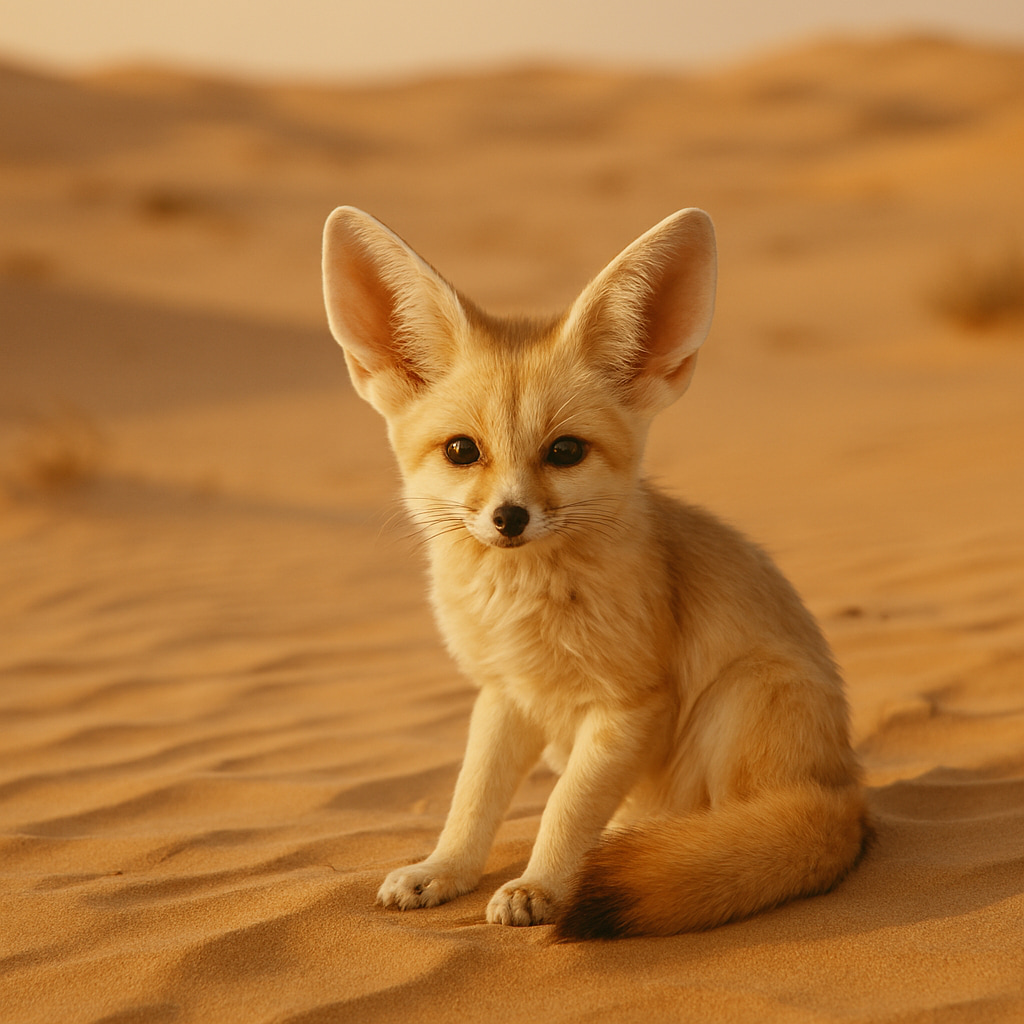
Native to the Sahara and parts of North Africa, the fennec fox (Vulpes zerda) is the smallest fox in existence. Before asking if you can keep a fennec fox as a pet, it helps to understand what it is: a wild canid built for desert life, rather than a domesticated pet.
Fennec foxes stand out immediately because of their oversized, upright ears, which are vital for survival. The ears help them shed heat in scorching conditions and pick up the faint sounds of prey moving under the sand. Although their small stature and distinctive look make many people wonder if they can keep a fennec fox as a pet, those very traits are tied to a lifestyle that doesn’t translate well to captivity.
To cope with intense desert heat, fennec foxes spend daylight hours tucked away in extensive underground dens. When night falls, they venture out to forage, hunt, and explore broad ranges. Since these hardwired habits remain even when kept captive, veterinarians frequently caution those who ask if keeping a fennec fox as a pet in an ordinary home is realistic.
Fennec fox basics
- Scientific name: Vulpes zerda
- Typical weight: 1–1.5 kg (2–3 lb)
- Body length: 24–40 cm (9–16 in), not including the tail
- Captive lifespan: about 10–14 years
- Active time: mainly at night (nocturnal)
- Habitat: the Sahara Desert and other dry to semi-dry regions
- Domestication: a wild species, not domesticated
Veterinary note: Fennec foxes, unlike dogs and cats, haven’t been selectively bred to live closely with humans. This biological fact is a key reason veterinarians often discourage keeping them as pets, even where it’s legal.
Legality of Owning a Fennec Fox as a Pet
The legal side of keeping a fennec fox is one of the most misunderstood (and potentially risky) parts of owning one. Many people believe that because fennec foxes are small and commonly captive-bred, they must be legal pets. That belief is often wrong.
Whether you’re allowed to keep a fennec fox depends completely on your location, including national rules, state or provincial regulations, and sometimes even city or county ordinances.
Is it legal to keep a fennec fox as a pet?
There isn’t a single universal answer. Laws differ widely by region and can change over time.
In general:
- Owning a Fennec fox as a pet may be legal or only partially allowed in a small number of places
- Many areas require permits or licenses
- Some countries treat fennec foxes as prohibited wildlife no matter their size or captive-bred status
- Import/export restrictions may apply even if local ownership is permitted
Important: Even if ownership is legal, that doesn’t ensure you’ll have access to a vet, be approved for housing, or meet animal welfare requirements.
1. United States
In the U.S., there’s no clear federal ban on having a fennec fox as a pet, but rules are set mainly by state and local governments.
- Some states permit ownership only with a license or permit
- Others allow it without special paperwork
- Many states prohibit fox ownership altogether
- City or county ordinances can be stricter than state law
Key notes:
- USDA licensing may apply if the animal is bred or sold
- Because rabies vaccines aren’t FDA-approved for foxes, owners can face added legal exposure
- Certain states may allow fennec foxes while banning other fox species
2. Canada
In Canada, keeping a fennec fox as a pet is generally much more limited than in the U.S. Provincial governments enforce wildlife rules, and most provinces treat foxes as wild animals, meaning private ownership is typically prohibited or tightly controlled. Importing a fennec fox can also run afoul of federal wildlife and transportation regulations.
Additional hurdles include limited access to exotic-animal vets, strict welfare oversight, and potential consequences such as fines, seizure of the animal, or even euthanasia.
3. Australia
Australia enforces some of the world’s toughest animal biosecurity rules, and fennec foxes are not permitted as pets anywhere in the country. They’re treated as invasive pests, with strict bans designed to safeguard native wildlife. Federal law prohibits importing foxes, and private pet permits aren’t issued. Illegal possession can lead to major fines, criminal prosecution, and the animal being seized.
Import, Export, and International Travel Laws
Even when local ownership is permitted, you must still follow international and interstate transportation rules. These can include:
- CITES requirements
- Customs and border protection clearances
- Quarantine rules
- Health certificates and transport permits
Noncompliance may lead to the animal being confiscated or euthanized.
Important note about veterinary care:
In areas that allow owning a fennec fox as a pet, it can still be difficult to find a vet who is qualified and covered to treat them. Typical obstacles include the lack of an approved rabies vaccine, few established anesthesia guidelines, liability worries, and emergency clinics declining to see them. Legality alone doesn’t ensure proper healthcare, which creates major welfare risks.
Fennec Fox Temperament in the Wild vs. in Captivity
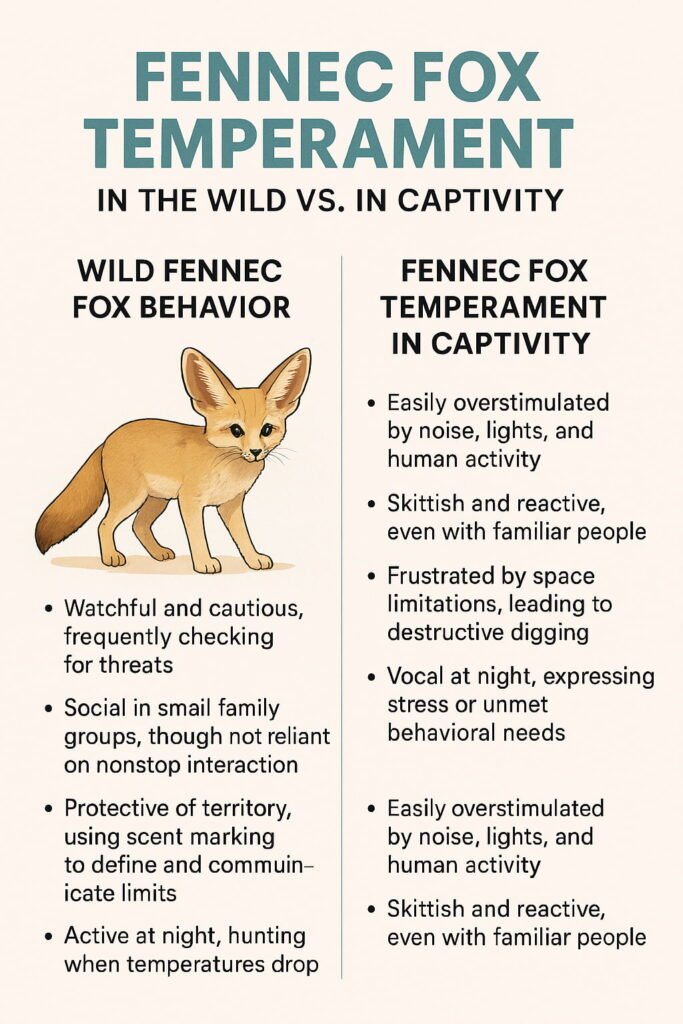
Grasping how a wild fennec fox’s temperament differs from one in captivity is crucial when considering whether you can keep a fennec fox as a pet. Behaviors that seem manageable (or even endearing) in a controlled setting often serve a very different purpose in the wild.
Wild Fennec Fox Behavior
In the desert, fennec foxes act in ways that reflect the demands of survival in a harsh environment.
In nature, they tend to be:
- Watchful and cautious, frequently checking for threats
- Social in small family groups, though not reliant on nonstop interaction
- Protective of territory, using scent marking to define and communicate limits
- Active at night, hunting when temperatures drop
- Generally calm and balanced, since the wild suits their instincts
What looks like curiosity is purposeful: it helps them find food, read the terrain, and avoid danger. Behaviors like digging, calling, and bolting are functional responses, not stress signals.
Fennec Fox Temperament in Captivity
In captivity, these same instincts often become problematic behaviors, especially in household settings. This is where many owners realize that keeping a fennec fox as a pet is very different from observing one in the wild.
In captive environments, fennec foxes are commonly:
- Easily overstimulated by noise, lights, and human activity
- Skittish and reactive, even with familiar people
- Frustrated by space limitations, leading to destructive digging
- Vocal at night, expressing stress or unmet behavioral needs
Behaviors that are normal in the wild, such as digging tunnels or vocal alarm calls cannot be fully expressed indoors. As a result, the fox may redirect these instincts toward furniture, walls, or repetitive actions.
How Instinct Becomes Stress in Captivity
When asking can you keep a fennec fox as a pet, it’s important to recognize how captivity alters behavior:
| Natural Instinct | Wild Function | Captive Outcome |
|---|---|---|
| Digging | Burrow construction | Damage to flooring and walls |
| Nocturnal activity | Night hunting | Sleep disruption for owners |
| Scent marking | Territory communication | Persistent urine marking |
| High alertness | Predator avoidance | Anxiety and fear responses |
From a veterinary/clinical perspective, long-term stress behaviors are markedly more prevalent in fennec foxes kept in captivity than in those living in the wild. Common signs include pacing in loops, biting defensively, persistent hiding, and harming themselves or damaging their fur. Rather than being a training issue, these are red flags that the fox’s physical and mental needs aren’t being met.
A fennec fox’s personality is ideal for surviving in the desert but not for living in a home. That gap is why many veterinarians urge caution (or even advise against it!) when people ask whether they can keep a fennec fox as a pet. Even with top-quality care, captivity can’t truly recreate the richness of a fennec fox’s natural habitat.
Fennec Fox Housing Requirements (Often Underestimated)
A leading reason fennec fox ownership doesn’t work out is insufficient housing. When people wonder whether a fennec fox can be kept as a pet, they often picture an indoor setup much like a small dog or cat. From a veterinary welfare standpoint, that expectation is misguided.
Fennec foxes are adapted to harsh desert habitats, and their housing needs reflect thousands of years of evolution in those conditions.
Natural Habitat of the Fennec Fox
In the wild, fennec foxes live in:
- Hot, dry desert climates with large temperature swings
- Complex underground burrow systems, sometimes extending up to 10 meters (30 feet)
- Environments with low humidity and high airflow
- Vast open territory used primarily during night-time hunting and foraging
These burrows provide:
- Thermal regulation
- Protection from predators
- A secure space for raising young
- Psychological safety
This natural setting allows fennec foxes to express instinctive behaviors without restriction, something captivity struggles to replicate.
Housing Requirements in Captivity
To keep a fennec fox as a pet humanely and responsibly, housing must compensate (at least partially) for what captivity removes.
A proper setup requires:
Large, Escape-Proof Enclosure
- Outdoor enclosures are strongly recommended
- Fencing must be dig-proof and climb-resistant
- Foxes are excellent escape artists
- Indoor-only housing is inadequate
Digging Substrate
- Access to deep sand or soil is essential
- Digging is not optional, it is a biological necessity
- Without it, stress and destructive behavior increase dramatically
Temperature Control
- Fennec foxes do not tolerate cold well
- So, if you’re thinking about keeping a fennec fox as a pet you need to know that they require:
- Heated shelter in cooler climates
- Protection from drafts and moisture
- Prolonged cold exposure can cause:
- Respiratory illness
- Hypothermia
- Immune suppression
Environmental Enrichment
- Hiding areas
- Elevated platforms
- Objects to explore and manipulate
- Variable feeding methods to mimic hunting behavior
Diet: What Does a Fennec Fox as a Pet Needs to Eat?
Diet is a common area where well-meaning owners can accidentally do damage. Although fennec foxes will eat a wide range of foods, they’re omnivorous carnivores with nutritional requirements that are more complicated than those of typical dogs or cats.
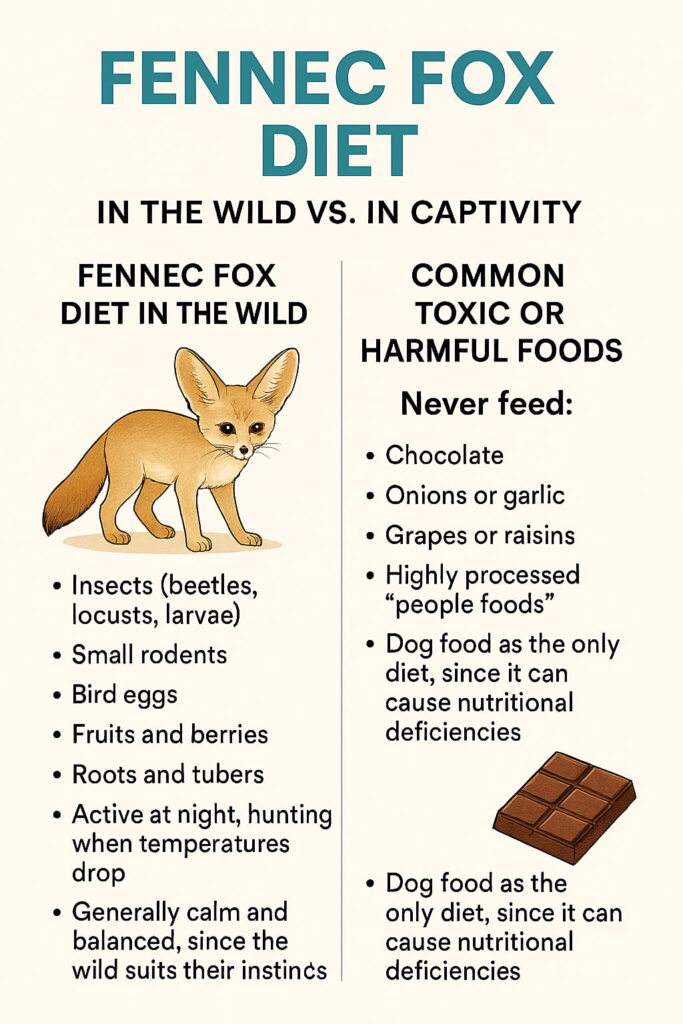
Fennec Fox Diet in the Wild
In the wild, fennec foxes consume a broad mix of foods, such as:
- Insects (beetles, locusts, larvae)
- Small rodents
- Bird eggs
- Fruits and berries
- Roots and tubers
This variety helps supply:
- Protein and fat
- Micronutrients
- Natural fiber
- Essential amino acids
Proper Diet in Captivity
A healthy diet for a fennec fox as a pet, should be built around:
- A high-quality carnivore/exotic fox formula (not regular dog kibble)
- Live or dried insects (mealworms, crickets, dubia roaches)
- Lean meats like poultry or rabbit
- Small amounts of fruit for enrichment rather than as a main food
- Calcium and taurine supplements to support bones and heart function
Because they’re naturally nocturnal, a fennec fox as a pet should have its main meal in the evening.
Common Toxic or Harmful Foods
Never feed:
- Chocolate
- Onions or garlic
- Grapes or raisins
- Highly processed “people foods”
- Dog food as the only diet, since it can cause nutritional deficiencies
Cost of Owning a Fennec Fox as a Pet
Owning a fennec fox is a significant financial commitment that goes far beyond just buying the animal. These costs can vary based on your location, legality, and how well you prepare for its care.
1. Initial Purchase Price
The price to acquire a fennec fox from a reputable breeder typically ranges from:
- $1,500 – $3,500 USD for a young kit from a licensed breeder
- Some breeders and rare color variations may cost $4,000 – $5,000 USD or more
Prices lower than about $1,500 often indicate scams or unethical sources. Always verify the breeder’s reputation and health checks.
Shipping fees (if the fox is not local) can add $250 – $500 or more.
2. Housing & Setup Costs
Creating proper habitat is essential because you can’t just treat a fennec like a typical pet dog or cat:
- Outdoor enclosure: $500 – $2,000 (dig-proof fencing, shelter)
- Indoor setup (if used): Large secure play areas add hundreds more
- Heating/cooling equipment: $100 – $300 annually in climates that don’t match desert conditions
Total initial setup: often $1,000 – $3,000+
3. Diet and Monthly Care
A fennec fox as a pet requires a specialized diet, and food isn’t cheap:
- Balanced carnivore diet, insects, lean meats, and appropriate supplements
- Average food budget: $50 – $200+ per month depending on ingredients and availability
4. Veterinary Care
Veterinary costs for exotic animals like fennec foxes are higher than typical pets:
- Initial checkups, vaccines, spay/neuter: $100 – $800+
- Annual wellness exam: $100 – $300+
- Parasite prevention and boosters: $80 – $200/year
Emergency care can easily run into the thousands if needed.
5. Enrichment, Supplies, and Ongoing Cost
Fennec foxes are active and curious:
- Toys, digging boxes, puzzle feeders: $20 – $50/month
- Bedding, litter, grooming supplies: variable
- Replacement enrichment items over time

FAQs
Q: Can you keep a fennec fox as a pet if it was captive-bred?
A: Even if a fennec fox is captive-bred, it remains a wild animal. Captive breeding does not equal domestication, and the fox will still retain natural instincts such as digging, nocturnal activity, and scent marking. This is a common misconception among people researching whether they can keep a fennec fox as a pet safely.
Q: Can you keep a fennec fox as a pet long-term, for its entire lifespan?
A: In theory, yes but in practice, long-term care is challenging. Over a lifespan of 10–14 years, owners must maintain specialized housing, consistent enrichment, and access to exotic veterinary care. Many foxes are surrendered or rehomed when owners can no longer meet these demands.
Q: Can you keep a fennec fox as a pet if you work full-time?
A: This is rarely advisable. Fennec foxes are most active at night and require daily enrichment and monitoring. Leaving them alone for long periods often increases stress-related behaviors, which is why full-time work schedules can conflict with responsible ownership.
Q: Can you keep a fennec fox as a pet without outdoor space?
A: No. Outdoor space with a secure, dig-proof enclosure is considered essential for welfare. Indoor-only environments cannot accommodate natural behaviors, making this a key reason veterinarians advise against ownership in urban or apartment settings.
Q: Can you keep a fennec fox as a pet if you already own exotic animals?
A: Not necessarily. Even experienced exotic pet owners can struggle with fennec foxes because of their high sensitivity to stress, territorial nature, and unique dietary and environmental requirements. Prior exotic animal experience does not guarantee success.
Q: Can you keep a fennec fox as a pet and travel frequently?
A: Frequent travel makes ownership extremely difficult. Finding qualified caretakers or boarding facilities for fennec foxes is rare, and changes in routine can cause severe stress. This lifestyle factor is often overlooked when asking can you keep a fennec fox as a pet.
Q: Can you keep a fennec fox as a pet ethically if it cannot be released?
A: Even if release into the wild is not possible, ethical concerns remain. Long-term captivity must prioritize quality of life, not just survival. Many animal welfare professionals argue that sanctuary care is more appropriate than private ownership.