
Worried about bad odors and looking for small pets that don’t smell? You’re not alone.
For many people (especially those in apartments or shared housing) odor is one of the biggest factors when picking a pet. There’s a widespread assumption, that all pets smell bad, but that’s simply not the case, there are many small pets that don’t smell at all when properly cared for, and some are naturally clean by design.
Pets like fish, certain reptiles, amphibians such as newts, and even small mammals like gerbils can be surprisingly odor-free. The issue isn’t the animal itself, but rather bad information, poor husbandry, or unrealistic expectations.
IIn this guide, we’ll provide simple, experience-based and veterinarian-informed advice ranking small pets that don’t smell, break down why some animals stay fresher than others, and help you pick a pet that suits your lifestyle without unpleasant smells. Read on to learn which small pets are genuinely low-odor and which are better to skip.
What Makes a Small Pet Smell Badly?
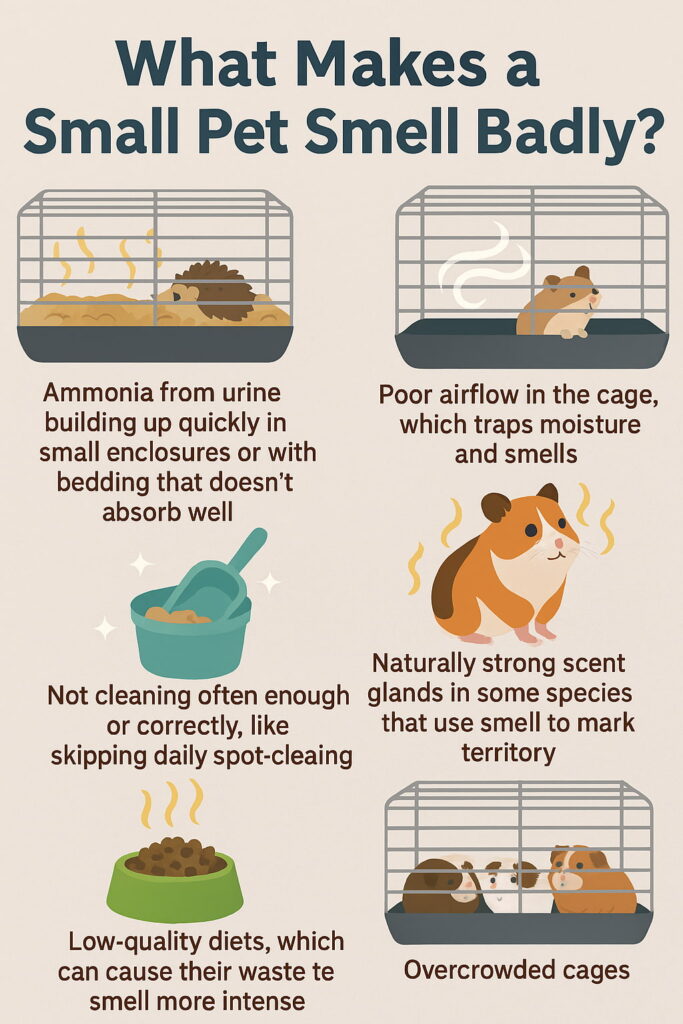
Before deciding on a pet, it’s crucial to know what truly leads to bad smells. Many people think all animals are smelly, but in fact, most odor issues are caused by environmental conditions rather than the animal itself. This becomes particularly important when looking for small pets that don’t smell, as the right setup can make a huge difference.
- Small pets often develop odors due to a few typical factors:
- Ammonia from urine building up quickly in small enclosures or with bedding that doesn’t absorb well
- Poor airflow in the cage, which traps moisture and smells
- Not cleaning often enough or correctly, like skipping daily spot-cleaning
- Naturally strong scent glands in some species that use smell to mark territory
- Low-quality diets, which can cause their waste to smell more intense
How large the enclosure is matters a lot as well. Even small pets that don’t smell may develop an odor when confined to cramped or overcrowded cages.
On the other hand, pets that produce dry waste, have low urine output, or live in aquatic or semi-aquatic environments tend to stay much cleaner. This is why animals like fish, reptiles, amphibians, and certain low-odor small mammals are often recommended for apartments and clean homes.
Understanding these factors helps you choose small pets that don’t smell much and ensures that your home stays fresh with the right care and maintenance.
Small Pets That Don’t Smell (Ranked Best to Worst)
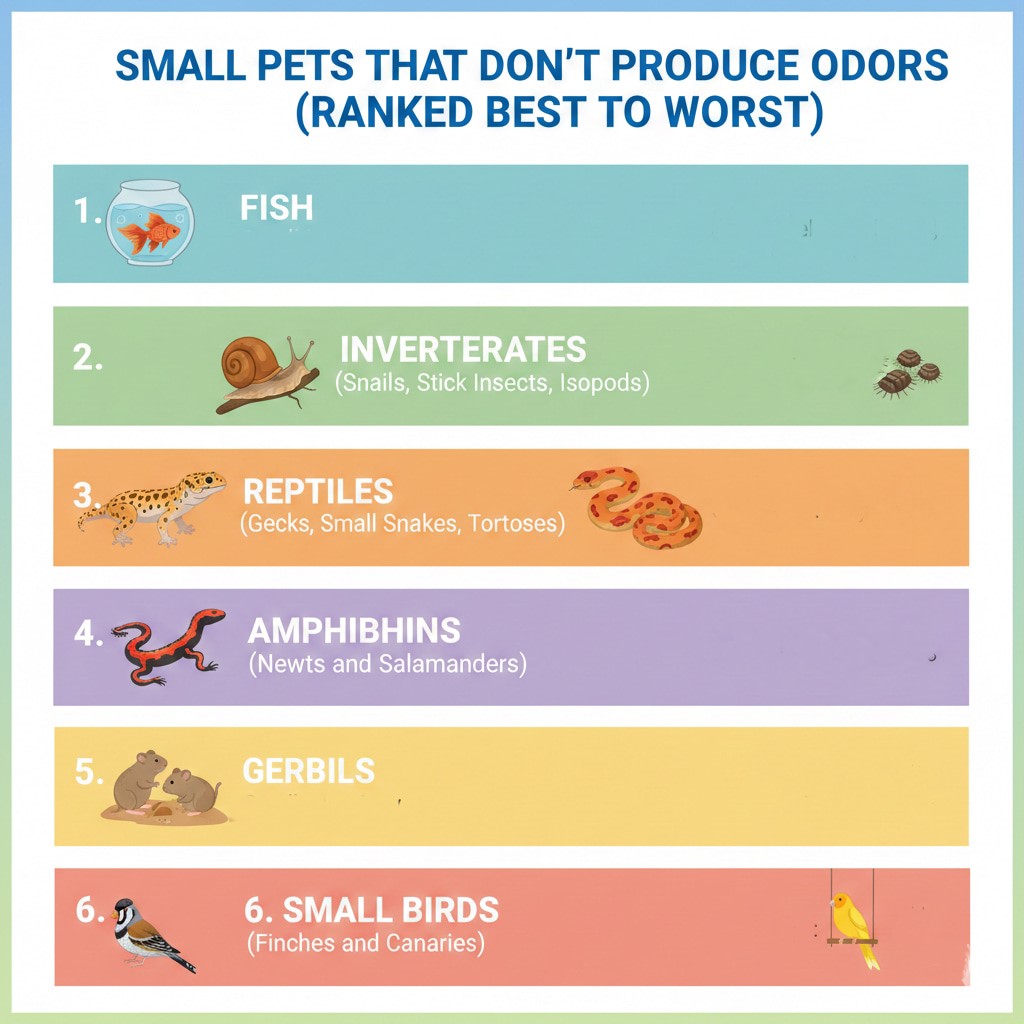
If keeping odors to a minimum is your main priority, picking the right pet is crucial. No animal is totally maintenance-free, but many small pets that tend not to smell are naturally tidy and stay fresh with simple care. Below is a straightforward list of the least smelly small pets, starting with the cleanest and moving toward those that need a bit more upkeep.
1. Fish
Smell level: Very low
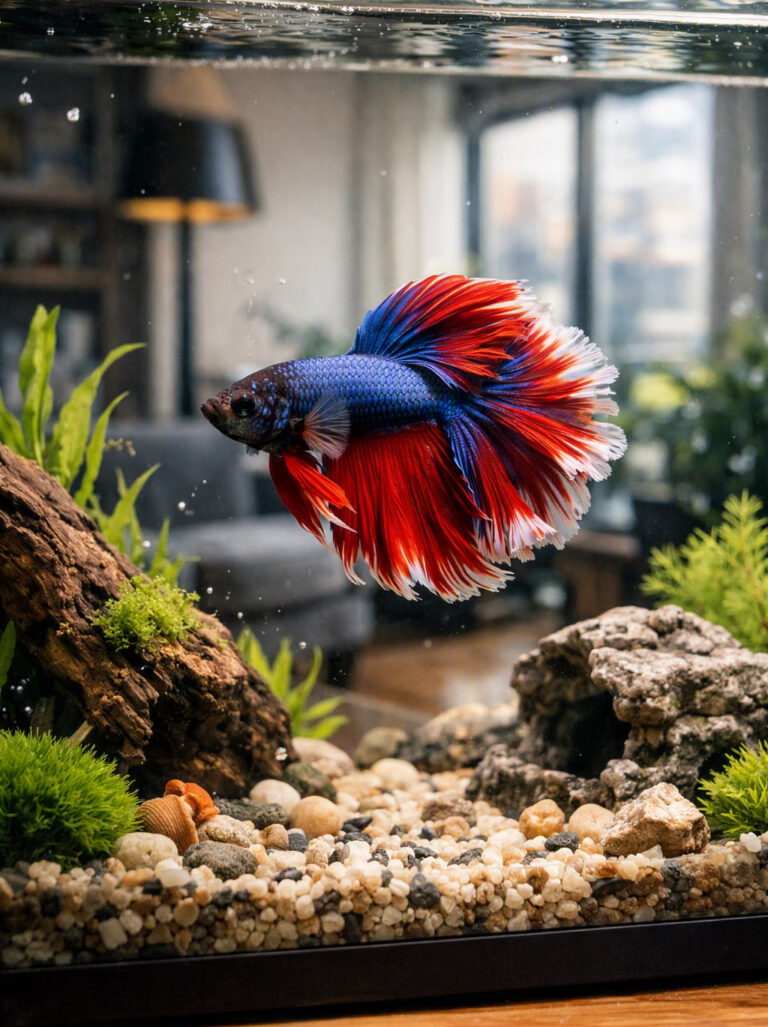
Fish are often seen as the cleanest, least smelly small pets. With a well-maintained aquarium, you shouldn’t notice any odor at all.
Why fish don’t smell:
- Waste is dispersed and diluted in the water
- They have no fur, sweat, or scent glands
- Odors usually only occur when the tank is overfed or poorly maintained
Fish are great for apartments and small living areas, making them one of the top low-odor small pet options.
2. Invertebrates (Snails, Stick Insects, Isopods)
Smell level: Very low
Invertebrates are among the most underrated low-odor small pets. They:
- Produce virtually no smell
- Need very little space
- Are incredibly easy to care for
They’re perfect for beginners or anyone wanting a genuinely odor-free pet.
3. Reptiles (Geckos, Small Snakes, Tortoises)
Smell level: Very low
Reptiles are a great option for anyone wanting a small, low-odor pet. They produce mostly dry waste and are kept in enclosed, well-ventilated enclosures.
Some low-smell reptile pets include:
- Leopard geckos
- Crested geckos
- Corn snakes
With a quick spot clean once a week, reptiles stay almost odorless and suit tidy households very well.
4. Amphibians (Newts and Salamanders)
Smell level: Very low
Frequently underestimated, amphibians are among the least odorous small pets you can keep. Their fully or partially aquatic setups help stop smells from accumulating.
Why amphibians don’t smell much:
- They produce very little waste
- They have no fur or scent glands
- They live in clean, filtered water
Newts and salamanders are quiet, easy to care for, and a great choice for people who are sensitive to pet odors.
5. Gerbils
Smell level: Low
Among furry animals, gerbils are one of the best small pets that don’t smell much. As desert animals, they produce less urine than hamsters or mice.
Why gerbils smell less:
- Low urine output
- No strong body odor
- Clean grooming habits
With proper bedding and regular cleaning, gerbils remain surprisingly odor-free.
6. Small Birds (Finches and Canaries)
Smell level: Low
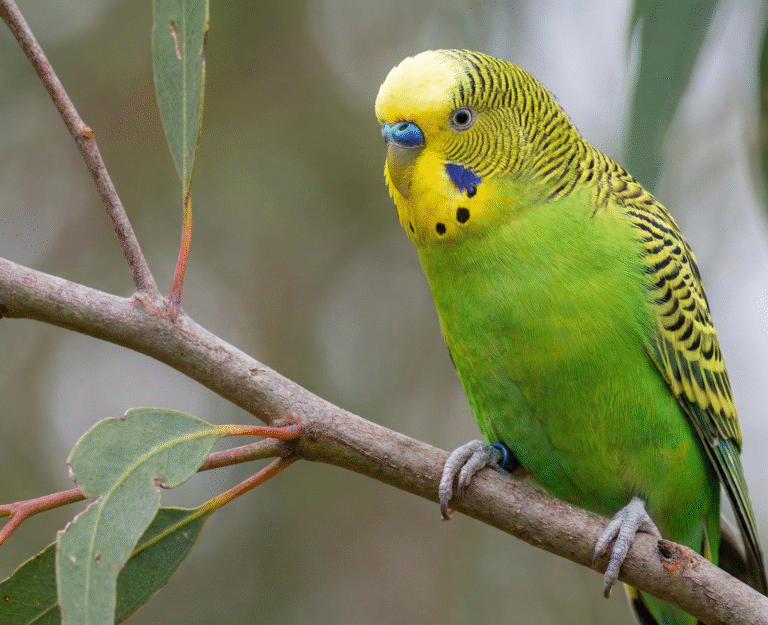
The birds themselves have virtually no odor, though their cages can smell if not cleaned regularly. When properly maintained, small birds are some of the least smelly pets.
Top low-odor choices:
- Finches
- Canaries
They’re light, relatively quiet, and work well in apartment settings. If you’re interested in keeping a parrot as a pet check out our article about Best parrots for pets
Small Pets That Smell More (With Poor Care)
Even when choosing from small pets that don’t smell, it’s important to understand that no pet is completely odor-proof. Some small animals are naturally clean but can quickly develop unpleasant odors if their enclosures are not cleaned regularly. These pets aren’t smelly by nature—but they do require consistent maintenance to stay odor-free.
- Guinea Pigs
Guinea pigs are gentle, social animals, but they produce a large amount of urine for their size. When bedding isn’t changed frequently, urine ammonia can build up and create strong odors.
Why guinea pigs may smell:
- High urine output
- Damp bedding if not changed daily
- Small or poorly ventilated cages
With daily spot cleaning and regular full cage changes, guinea pigs remain clean and suitable for people looking for small pets that don’t smell much.
- Rabbits
Rabbits are naturally very clean animals and often groom themselves like cats. However, their litter boxes can become smelly quickly if not maintained.
Why rabbits may develop odors:
- Dirty litter boxes
- Infrequent litter changes
- Limited ventilation in indoor enclosures
Litter-trained rabbits with proper care usually have very little odor, making them a good option for owners willing to commit to regular cleaning.
Small Pets to Avoid If Smell Is a Concern
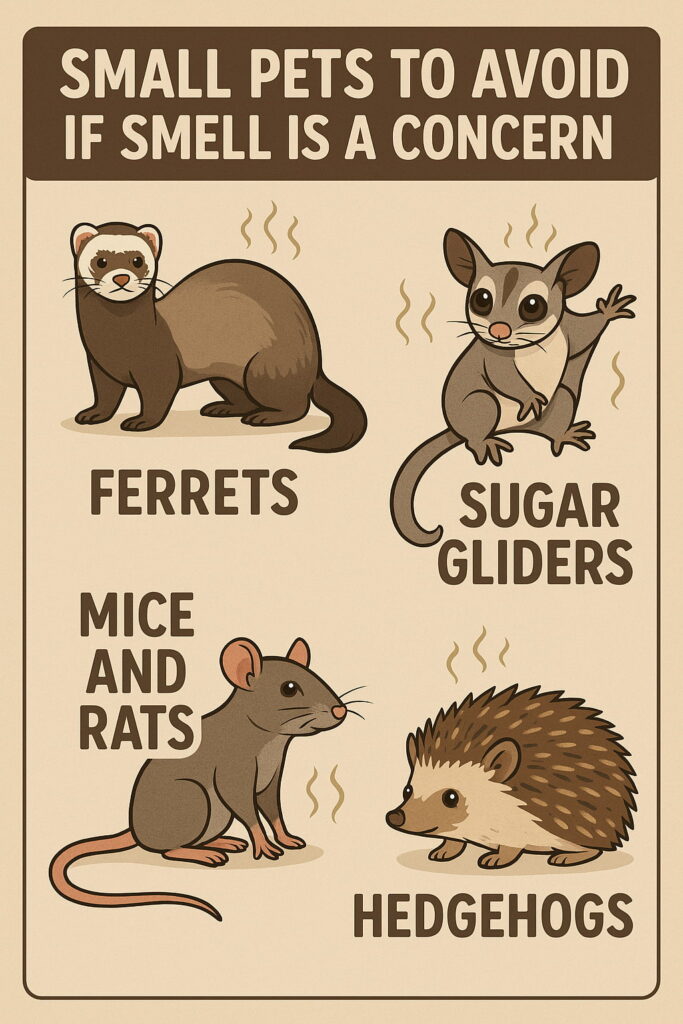
If keeping your home odor-free is a top priority, some small pets are simply not ideal choices, even with good care. These animals are known to produce stronger odors due to natural scent glands, territorial marking, or ammonia-heavy waste. While they can make great pets for experienced owners, they are generally not recommended for people specifically looking for small pets that don’t smell.
- Ferrets
Ferrets are loving and energetic pets, but they’re also famous for having a strong musky smell. This odor is produced by their natural skin scent glands and can’t be completely removed, even with regular cleaning and baths. Because of this, ferrets are better for people who aren’t very sensitive to odors.
- Sugar Gliders
Although sugar gliders are small and seem quiet, they frequently have noticeable smells, which can be quite evident in indoor settings.
Why sugar gliders can be smelly:
- They mark territory with scent
- Their urine has a strong odor
- Smell intensifies during breeding periods
They are social creatures, but they aren’t ideal for people who want small pets that don’t smell.
3. Mice and rats
Despite being smart and relatively low-maintenance pets, mice and rats often create strong ammonia smells, especially when kept in small enclosures.
Reasons they smell:
- Their urine contains high levels of ammonia
- They mark their territory frequently
- Odors accumulate fast if cages aren’t cleaned every day
Even with regular cleaning, odor can remain a persistent problem.
4. Hedgehogs
Hedgehogs are frequently advertised as low-odor pets, yet many owners find that they develop a distinct smell over time.
Reasons hedgehogs can smell include:
- Natural skin oils mixing with their bedding
- Strongly scented urine and feces
- Cages that need to be cleaned often
Because of this, they may not be ideal for people who are very sensitive to smells and looking for small pets that don’t smell.
Comparison Table of Some Small Pets That Don’t Smell
| Type of Small Pet | Typical Smell | Recommended Cleaning | Good for Apartment Living |
|---|---|---|---|
| Fish | Very Low | Once per week | Yes |
| Reptiles (Geckos, Snakes) | Very Low | Once per week | Yes |
| Amphibians (Newts, Salamanders) | Very Low | Once per week | Yes |
| Gerbils | Low | 2–3 times a week | Yes |
| Small Birds (Finches, Canaries) | Low | 2–3 times a week | Yes |
| Guinea Pigs | Medium | Every day | Case‑by‑case |
How to Keep Small Pets from Smelling
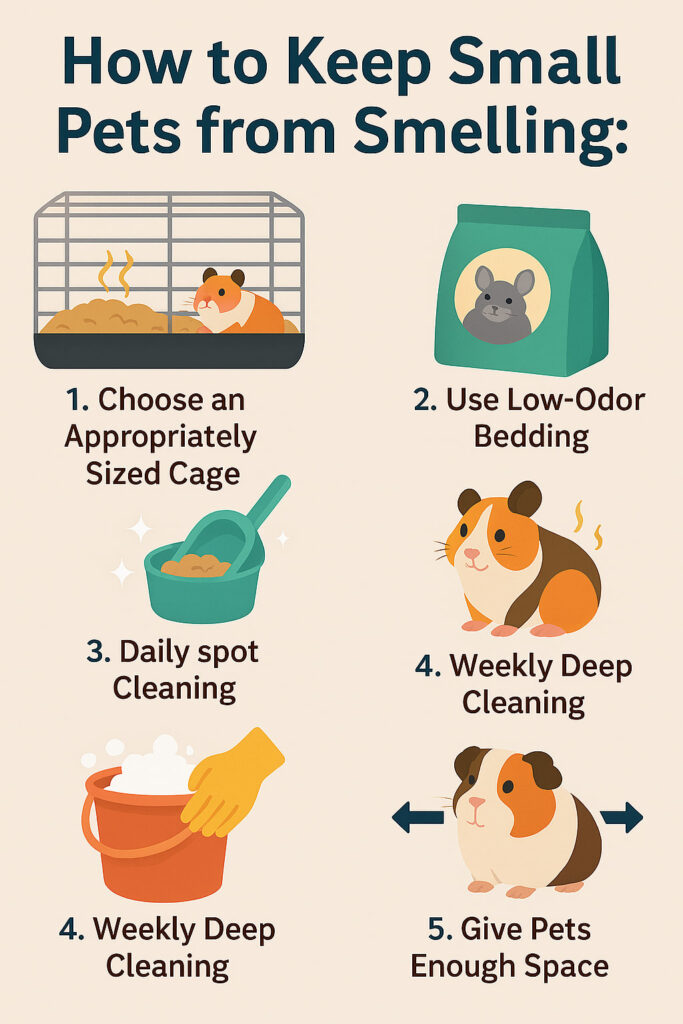
Whichever animal you decide on, proper care is key to controlling unpleasant smells. Even the small pets that don’t smell can develop unpleasant odors if their living environment isn’t managed correctly. The good news is that most odor issues are easy to prevent with consistent habits.
1. Choose an Appropriately Sized Cage
A cage that’s too small traps moisture and waste, leading to rapid odor buildup. Always pick an enclosure that’s larger than the minimum size suggested for your pet. Bigger, well-ventilated cages help even naturally low-odor small animals stay fresh.
2. Use Low-Odor Bedding
Because bedding soaks up moisture and waste, the wrong type can intensify smells. Better options include:
- Paper-based bedding
- Aspen shavings
- Fleece liners (for certain species)
Skip heavily scented bedding, which can irritate your pet and simply cover up odors rather than reduce them.
3. Daily spot cleaning
Take out dirty bedding, leftover food, and waste daily to prevent ammonia from building up. This simple routine is one of the best ways to keep naturally small pets that don’t smell always fresh.
4. Weekly Deep Cleaning
Beyond routine spot cleaning, perform a complete enclosure clean once per week. Be sure to wash accessories, replace the bedding, and disinfect surfaces using cleaners that are safe for pets.
5. Give Pets Enough Space
Too many animals in one enclosure will sharply increase unpleasant odors. Crowded conditions speed up waste accumulation, create stress, and limit fresh air circulation. Keeping fewer pets with adequate space promotes cleanliness and overall health.
FAQs
- What are the best small pets that don’t smell?
The best options include fish, reptiles like geckos and snakes, amphibians such as newts, gerbils, and certain small birds. These animals are naturally low-odor and can stay fresh with proper care. Choosing one of these species makes it much easier to maintain a clean home.
- Do all small pets that don’t smell require little maintenance?
Not always. While some small pets that don’t smell (like fish and reptiles) require minimal daily attention, others (such as gerbils or small birds) need regular spot cleaning and cage maintenance to prevent odors. The key is understanding the cleaning needs of each species.
- Can small pets that don’t smell live in apartments?
Yes! Many small pets that don’t smell are perfect for apartment living, including fish, reptiles, amphibians, and gerbils. Choosing the right enclosure size and following proper cleaning routines ensures your home stays odor-free even in smaller spaces.
- Why do some small pets smell even if they are supposed to be low-odor?
Even small pets that don’t smell naturally can develop odors if their cage is too small, poorly ventilated, or not cleaned regularly. Diet, overcrowding, and improper bedding can also contribute to unwanted smells.
- How can I keep my small pets that don’t smell actually odor-free?
- Use the correct cage size
- Choose low-odor bedding
- Spot clean daily
- Deep clean the enclosure weekly
- Avoid overcrowding
Following these steps ensures that your small pets that don’t smell remain fresh and healthy in your home.
- Are there any small pets that are completely odorless?
While no animal is 100% odorless, some of the cleanest small pets that don’t smell include fish, reptiles, amphibians, and certain invertebrates like snails or stick insects. With proper care, their smell is virtually undetectable.
Conclusion
Choosing a pet doesn’t have to mean dealing with unpleasant odors. Many small pets that don’t smell are naturally clean, apartment-friendly, and easy to care for when their environment is properly maintained. From fish and reptiles to amphibians and gerbils, these low-odor pets can bring joy to your home without compromising freshness or hygiene.
Remember, even the cleanest pets need the right cage size, low-odor bedding, regular spot cleaning, and proper ventilation to stay truly odor-free. With these simple habits, maintaining a fresh, welcoming home is entirely possible.
If you’re interested in exploring more options, check out our guides on least smelly small pets for apartments, low-maintenance exotic pets, and beginner-friendly odor-free pets. By choosing wisely, you can enjoy the companionship of animals while keeping your space clean and comfortable.

2 Comments