
Wondering whether keeping an isopod as a pet is actually worth it? Yes, it’s a great idea! These tiny crustaceans are low-maintenance, affordable, and surprisingly fascinating to observe, making them perfect for bioactive terrariums or small living spaces.
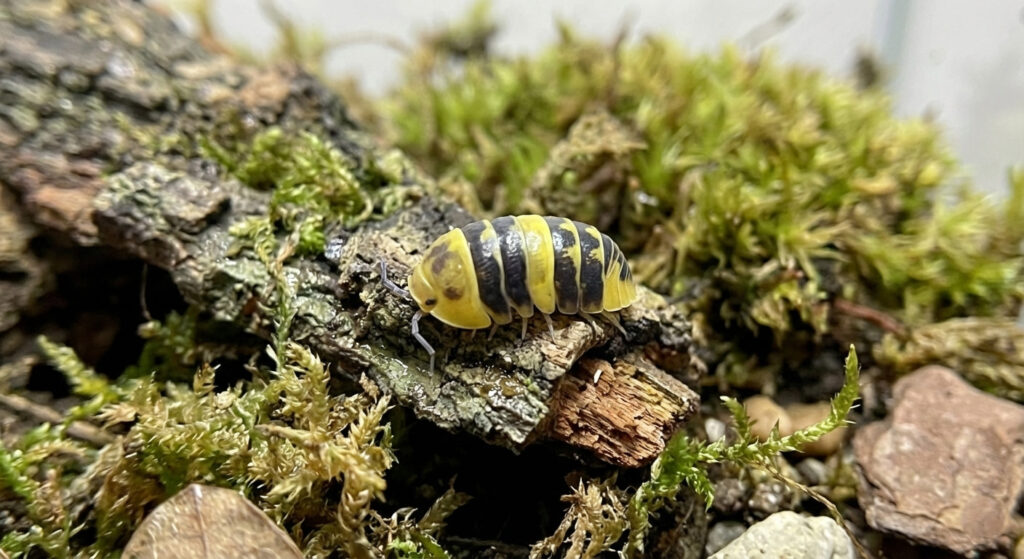
From adorable rubber ducky isopods to striking zebra isopods, isopods are easy to care for and thrive in compact setups. If you’re looking for a unique pet that doesn’t require much time or space, an isopod as a pet might be exactly what you’re looking for. Let’s explore everything you need to know before getting started.
What Is an Isopod?
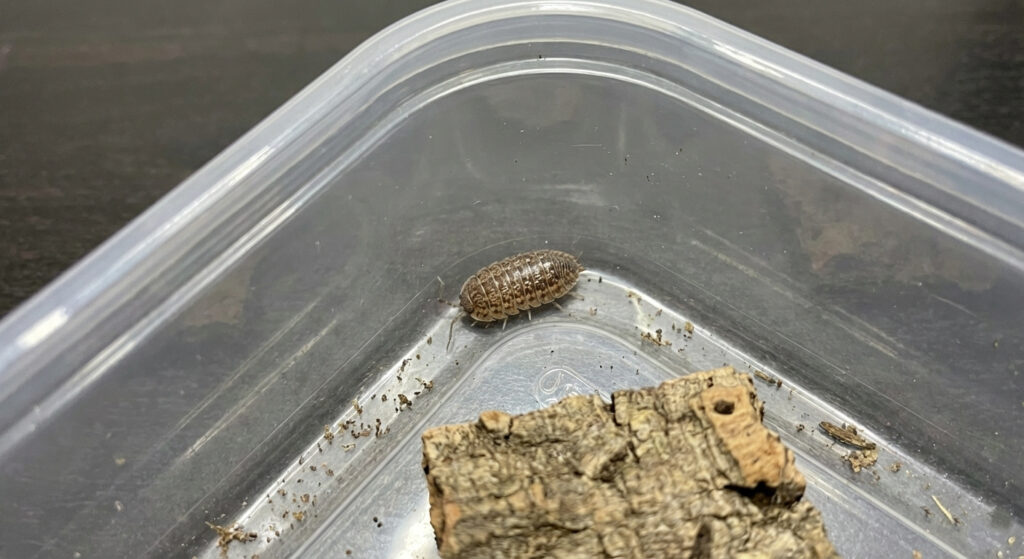
Isopods are small, land-dwelling crustaceans closely related to crabs, shrimp, and lobsters. Although many people mistake them for insects, isopods are actually more similar to aquatic creatures, which explains their strong need for moisture. In the wild, they thrive in damp, dark environments such as forests, under logs, beneath stones, and within rich soil full of decaying organic matter.
You may already recognize isopods by their common names, including:
- Pill bugs
- Roly-polies
- Woodlice
These familiar backyard creatures play an important role in nature by breaking down dead plants and recycling nutrients back into the soil.
Unlike insects, isopods breathe through gill-like structures rather than lungs. Because of this, they must live in humid conditions to survive and cannot tolerate dry environments for long periods. This unique trait is exactly why an isopod as a pet does so well in controlled habitats like terrariums and bioactive enclosures.
Thanks to their small size, calm behavior, and natural cleanup abilities, keeping an isopod as a pet has become increasingly popular among terrarium hobbyists, reptile keepers, and anyone interested in low-maintenance, educational pets.
Why Keep an Isopod as a Pet?
Keeping an isopod as a pet is becoming increasingly popular, and for good reason. These tiny crustaceans are ideal for beginners, students, and anyone who wants a unique pet without the demands of traditional animals. Because they require very little space and care, isopods are perfect for apartments, dorm rooms, or small homes.
One of the biggest advantages of choosing an isopod as a pet is how easy they are to maintain. They don’t make noise, produce strong odors, or require daily attention, making them a stress-free option for first-time pet owners.
Benefits of Isopod Pets
- Extremely low maintenance, with simple feeding and care routines
- No noise, odor, or mess, unlike many common pets
- Affordable, with minimal setup and ongoing costs
- Great for learning about ecosystems, decomposition, and natural cycles
- Perfect for terrariums and vivariums, especially bioactive setups
In addition to being fascinating to watch, isopods serve a practical purpose. They act as natural “cleanup crews,” feeding on waste, mold, and decaying plant matter. This makes an isopod as a pet not only interesting but also incredibly useful for maintaining a healthy, balanced enclosure.
Is It Legal to Own an Isopod as a Pet in the USA and Canada?
Yes, owning an isopod as a pet is generally legal in both the United States and Canada, especially when the species is captive-bred and commonly used as terrarium or bioactive cleanup crew isopods. However, there are a few important details to keep in mind.
United States
In the U.S., most commonly kept isopods (such as zebra isopods and many terrarium species) are legal to own, buy, and sell.
That said:
- Some states restrict the import or release of non-native or potentially invasive species
- Laws may apply to commercial selling or shipping across state lines
- Releasing isopods into the wild is illegal in many areas
As long as the isopods are kept responsibly indoors and sourced from reputable breeders, keeping an isopod as a pet is usually allowed.
Canada
In Canada, owning an isopod as a pet is also generally legal, particularly for non-invasive, captive-bred species.
Important considerations:
- Importing live invertebrates from other countries may require permits
- Some provinces have stricter biosecurity rules
- Releasing non-native species into the environment is prohibited
Most hobbyists keep isopods without any legal issues when they buy locally and keep them contained in terrariums.
Natural Behavior of Isopods
In the wild, isopods are quiet, secretive creatures that spend most of their time hidden under logs, rocks, and leaf litter. They are primarily nocturnal, coming out at night to feed on decaying plants, fungi, and organic debris. This behavior helps recycle nutrients back into the soil and keeps ecosystems healthy.
When kept as an isopod as a pet, these natural behaviors remain largely the same. In captivity, isopods will still burrow, hide, and forage throughout their enclosure, especially in moist, dark areas. A well-designed terrarium with leaf litter, wood, and hiding spots allows them to behave naturally and reduces stress.
Isopod Personality Traits
Although isopods are not interactive in the traditional sense, they do have observable personality traits, especially when kept in groups.
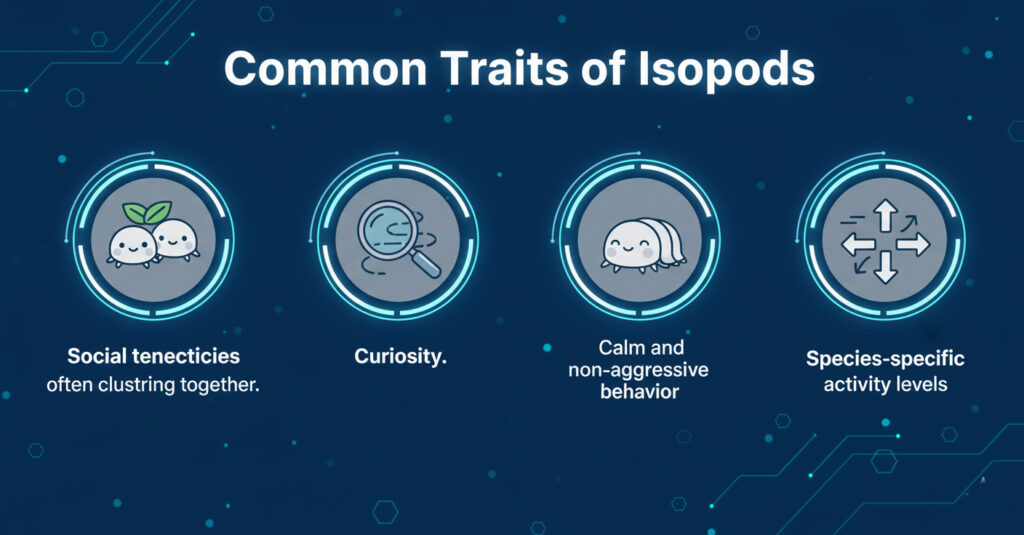
Common traits include:
- Calm and non-aggressive behavior
- Curiosity when exploring food or new areas
- Social tendencies, often clustering together
- Species-specific activity levels (some are more visible than others)
Watching a colony interact and grow is one of the most enjoyable parts of keeping an isopod as a pet, even without direct handling.
Are Isopods Suitable for Families with Children?
Yes, an isopod as a pet can be suitable for families with children, particularly as an educational pet. They help teach responsibility, patience, and respect for small living creatures.
However, a few guidelines are important:
- Best for observation rather than handling
- Younger children should be supervised
- Isopods are delicate and can be injured easily
- They are ideal for classrooms, science projects, and families interested in nature and ecosystems.
Are Isopods Safe Around Other Pets?
Isopods are completely harmless to humans and other pets. When kept properly in sealed terrariums, they pose no risk to cats, dogs, or other household animals.
In fact, isopods are often kept alongside reptiles and amphibians in bioactive setups, where an isopod as a pet acts as a natural cleanup crew. Just be sure they are not housed with animals that may overeat them.
Are Isopods Suitable for Apartment Living?
Absolutely. One of the biggest advantages of keeping an isopod as a pet is how apartment-friendly they are.
Isopods:
- Require very little space
- Produce no noise or odor
- Don’t disturb neighbors
- Thrive in compact enclosures
As long as humidity and temperature are maintained, isopods do extremely well in apartments, dorm rooms, and small homes.
While isopods may not seek attention like traditional pets, their natural behaviors, peaceful personalities, and ease of care make them a rewarding choice. Whether you live in a small apartment, have children interested in nature, or simply want a unique low-maintenance companion, an isopod as a pet can be a surprisingly engaging addition to your home.
Housing Needs for an Isopod as a Pet
Providing the right enclosure is essential for keeping an isopod as a pet healthy and stress-free. Isopods don’t need large spaces, but they do require a stable, moisture-rich environment that mimics their natural habitat.
- Enclosure Type
Isopods can be housed in:
- Plastic storage containers with ventilation holes
- Glass terrariums
- Acrylic enclosures
A secure lid is important to maintain humidity and prevent escapes. Even a small container works well, as long as conditions are stable.
- Substrate and Interior Setup
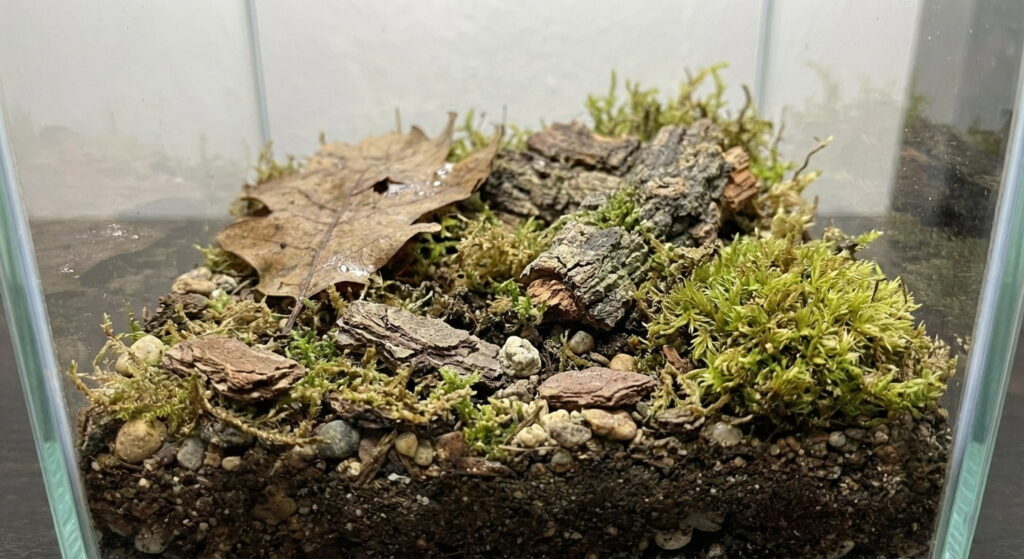
The substrate should retain moisture and provide food and hiding spots.
Recommended setup:
- Organic soil or coco fiber as a base
- Leaf litter (oak or maple preferred)
- Pieces of cork bark or rotting wood
- Moss for moisture retention
This setup allows an isopod as a pet to burrow, hide, and forage naturally.
Temperature Requirements
Most isopod species are comfortable at normal room temperatures.
- Ideal range: 18–26°C (65–80°F)
- Avoid direct sunlight
- Keep away from heaters or cold drafts
Temperatures outside this range can slow activity or cause stress.
- Humidity and Moisture
Humidity is one of the most important factors when keeping an isopod as a pet, since they breathe through gill-like structures.
Best practices:
- Keep part of the enclosure consistently moist
- Leave another area slightly drier to prevent mold
- Light misting as needed (not soaking)
- A humidity gradient lets isopods regulate themselves naturally.
Ventilation
Proper airflow prevents mold and stagnant conditions.
- Small air holes or mesh vents are sufficient
- Balance ventilation with humidity retention
- Too much airflow can dry the enclosure
Lighting Needs
Isopods do not require special lighting.
- Ambient room light is enough
- Avoid strong or direct light
- No UVB or heat lamps needed
This makes an isopod as a pet especially easy to house.
- Cleaning and Maintenance
One benefit of keeping an isopod as a pet is minimal cleaning.
- Remove uneaten food after 24–48 hours
- Add fresh leaf litter as needed
- Spot-clean rather than full substrate changes
Isopods help clean their own enclosure by consuming waste and mold.
Diet of an Isopod as a Pet
Feeding your isopod as a pet is simple and affordable, but understanding their natural diet helps keep them healthy and thriving.
Natural Diet
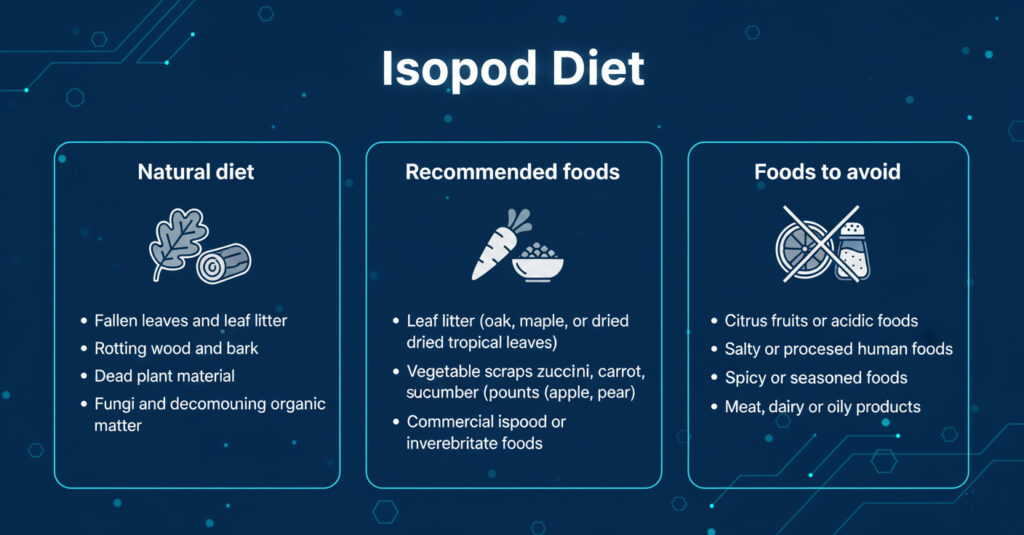
In the wild, isopods are detritivores, meaning they feed on decaying organic matter. Their natural diet includes:
- Fallen leaves and leaf litter
- Rotting wood and bark
- Dead plant material
- Fungi and decomposing organic matter
This diet helps recycle nutrients in ecosystems and keeps soil healthy. Watching isopods forage is one of the most interesting aspects of keeping an isopod as a pet.
Recommended Foods in Captivity
In a terrarium, isopods can be fed a variety of safe and nutritious foods, including:
- Leaf litter (oak, maple, or dried tropical leaves)
- Vegetable scraps such as zucchini, carrot, cucumber, or squash
- Rotting fruit in small amounts (apple, pear)
- Commercial isopod or invertebrate foods
Providing a mix of decaying plant matter and fresh vegetables mimics their natural diet and keeps them active.
Supplements
Some species of isopod as a pet may benefit from calcium supplements to maintain healthy exoskeletons. Safe options include:
- Crushed eggshells
- Cuttlebone
- Powdered calcium supplements designed for invertebrates
- Sprinkle sparingly in the terrarium to avoid mold growth.
Foods to Avoid
Certain foods can harm or even kill your isopods. Avoid feeding:
- Citrus fruits or acidic foods
- Salty or processed human foods
- Spicy or seasoned foods
- Meat, dairy, or oily products
Sticking to leaf litter, vegetable scraps, and occasional calcium ensures your isopod as a pet stays healthy.
Lifespan of an Isopod as a Pet
When kept in proper conditions, an isopod as a pet can live surprisingly long for such a tiny creature. Most commonly kept species, like zebra isopods or rubber ducky isopods, have an average lifespan of:
- 1.5 to 3 years for small to medium species
- Some hardy species may live slightly longer under ideal care
- Factors that affect lifespan include:
- Proper enclosure humidity and temperature
- Adequate nutrition and calcium supplementation
- Clean, well-maintained substrate
- Minimal stress and safe habitat
In captivity, watching a colony grow over several generations can be very rewarding. Baby isopods, called manca, hatch fully formed and gradually grow into adults, allowing hobbyists to observe their life cycle firsthand.
Keeping an isopod as a pet not only offers a long-term low-maintenance companion but also provides a unique window into the natural behaviors and lifecycle of these fascinating crustaceans.
Health and Veterinary Care for an Isopod as a Pet
Keeping an isopod as a pet is generally low-maintenance, but proper care is essential to prevent health issues and ensure a long, thriving life. Because isopods are small and delicate, their health largely depends on the environment and diet rather than traditional veterinary care.
Common Health Issues
Isopods are hardy but can face a few problems if conditions are not ideal:
- Dehydration
- Caused by low humidity or dry substrate
- Symptoms: lethargy, curled-up bodies, or visible desiccation
- Prevention: maintain a moist but not soggy environment
- Mold Overgrowth
- Can occur if the terrarium is too wet or poorly ventilated
- Some mold is fine and can be a food source, but excessive mold can harm isopods
- Prevention: maintain a moisture gradient and proper airflow
- Calcium Deficiency
- Leads to weak or malformed exoskeletons
- Prevention: provide calcium sources such as cuttlebone or eggshells
- Overcrowding Stress
- Too many isopods in a small space can lead to competition for food and slower growth
- Prevention: keep colonies at an appropriate density
Veterinary Care
Isopods rarely require professional veterinary care. Most issues can be prevented or managed by adjusting environmental conditions:
- Ensure proper humidity and temperature
- Provide a balanced diet and calcium supplements
- Maintain a clean and ventilated terrarium
Because of their small size, isopods are typically not treated by vets unless part of a research or specialized exotic invertebrate practice. Most hobbyists handle health concerns through husbandry adjustments rather than medical intervention.
Signs of a Healthy Isopod
A healthy isopod as a pet will display:
- Active movement, especially during feeding
- Smooth, intact exoskeleton
- Normal foraging and burrowing behavior
- Steady population growth if breeding
Tips for Long-Term Health
- Keep the terrarium clean but avoid full substrate replacement too often; isopods help maintain their own habitat.
- Offer variety in food and occasional calcium supplements.
- Avoid pesticides, chemical cleaners, or fertilizers near the enclosure.
- Observe behavior regularly, any sudden lethargy or population decline can indicate environmental issues.
Cost of Owning an Isopod as a Pet
One of the biggest advantages of keeping an isopod as a pet is its affordability. Compared to traditional pets like cats, dogs, or reptiles, isopods are inexpensive to buy and maintain.
- Initial Setup Costs
- Terrarium or container: $10–$50 depending on size and material
- Substrate and leaf litter: $5–$15
- Hiding spots (cork bark, wood pieces): $5–$20
- Calcium supplements (cuttlebone, eggshells): $1–$5
- Starter colony of isopods:
- Common species like zebra isopods: $5–$15 per group
- Rare species like rubber ducky isopods: $30–$50 or more
- Ongoing Costs
- Food: mostly free (vegetable scraps, leaf litter, decaying plant matter)
- Occasional calcium supplement: $1–$2 per month
- Substrate refreshes: $5–$10 every few months
- Total Estimated Cost
For a beginner setup with a small colony of common species, you can expect to spend around $25–$50 initially. Rare species or larger colonies may push the initial cost closer to $100, but ongoing maintenance remains very low.
Because isopods are small, quiet, and low-maintenance, keeping an isopod as a pet is one of the most cost-effective ways to enjoy a live animal hobby without breaking the bank.
Here’s a table that summarizes the difference in cost between species:
| Item | Common Species (e.g., Zebra Isopods) | Rare Species (e.g., Rubber Ducky Isopods) |
|---|---|---|
| Starter Colony | $5–$15 | $30–$50+ |
| Terrarium / Container | $10–$50 | $10–$50 |
| Substrate & Leaf Litter | $5–$15 | $5–$15 |
| Hiding Spots (cork bark, wood) | $5–$20 | $5–$20 |
| Calcium Supplements | $1–$5 | $1–$5 |
| Initial Total Cost | $25–$50 | $50–$100+ |
| Ongoing Monthly Costs | Minimal (mostly food, $1–$2) | Minimal (mostly food, $1–$2) |
Pros and Cons of Keeping an Isopod as a Pet
Like any pet, an isopod as a pet has both advantages and limitations. Understanding these will help you decide if they’re the right choice for your home or terrarium setup.
Pros
- Low Maintenance: Isopods require minimal care, making them ideal for beginners or busy owners.
- Quiet and Clean: No noise, odor, or mess compared to traditional pets.
- Affordable: Setup and ongoing costs are very low.
- Educational: Observing their behaviors teaches about ecosystems, decomposition, and invertebrate biology.
- Terrarium-Friendly: Perfect for small spaces, apartments, and bioactive enclosures.
- Helpful Cleanup Crew: They consume decaying plant matter, mold, and waste, keeping their environment clean naturally.
Cons
Limited Interaction: Isopods are more for observation than handling; they don’t form bonds or respond to humans.
- Fragile: They are delicate and can be injured if handled roughly.
- Specialized Care Requirements: Require proper humidity, substrate, and temperature to thrive.
- Breeding Colonies Can Overgrow: If not managed, a healthy colony can expand quickly, which may require additional space.
Conclusion
Keeping an isopod as a pet is perfect for those who enjoy quiet, educational, and low-maintenance pets. They are especially suited for terrariums and small living spaces but may not satisfy someone looking for an interactive or cuddly pet.


2 Comments