Can you own a fossa as a pet? Short answer: no. a fossa is a wild, protected predator from Madagascar that requires extreme space, permits, and expert care. This article explains why you can’t keep a fossa as a pet and helps you understand the legal, ethical, and practical realities.
What Is a Fossa?
The fossa (Cryptoprocta ferox) is the largest carnivorous mammal native to Madagascar and one of the island’s most fascinating predators. With a long, muscular body, flexible spine, and semi-retractable claws, the fossa is perfectly adapted for climbing, jumping, and hunting in dense tropical forests. This unique anatomy allows it to move with cat-like agility both on the ground and high in the trees.
Because of its appearance, many people describe the fossa as a mix between a cat, dog, and mongoose. This resemblance is one reason why some people become curious about the idea of a fossa as a pet. However, despite its sleek look, the fossa is a fully wild animal with instincts and behaviors shaped by thousands of years in the wild.
Although it is sometimes nicknamed the fossa cat, the fossa is not a cat at all. It belongs to a distinct family of carnivores known as Eupleridae, which evolved in isolation on the island of fossa Madagascar. This long period of isolation explains why the fossa does not behave like domestic cats or dogs and cannot be domesticated.
In the wild, the fossa is an apex predator and plays a crucial role in maintaining ecological balance, particularly by controlling lemur populations. This ecological importance, combined with habitat loss, is one of the reasons why keeping a pet fossa is illegal and ethically problematic in most parts of the world.
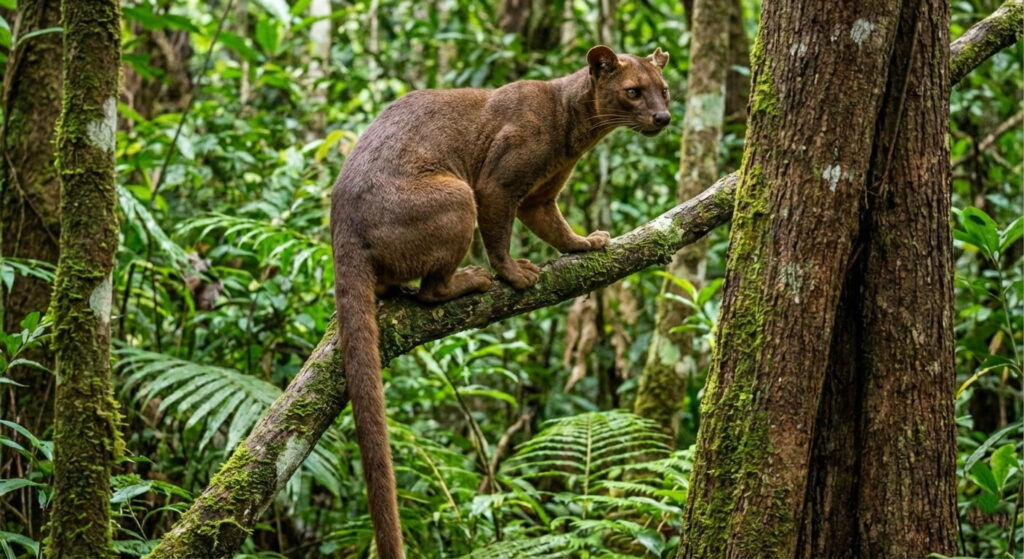
Quick Facts About the Fossa
- Native to: Madagascar only
- Size: Up to 6 feet long including the tail
- Weight: 15–26 lbs (7–12 kg)
- Diet: Obligate carnivore (meat-only)
- Lifestyle: Solitary and territorial
- Conservation status: Vulnerable
Can You Own a Fossa as a Pet?
Short answer: No, in almost all cases.
Owning a fossa as a pet is illegal or extremely restricted in most countries. Fossas are wild predators protected by conservation laws, and they pose serious animal welfare and public safety concerns. Because of this, keeping a pet fossa is not considered appropriate or ethical for private individuals.
Even people who are experienced with exotic animals quickly discover that the legal barriers alone make owning a fossa as a pet nearly impossible.
Legal Status Explained
- Madagascar
In Madagascar, fossas are protected wildlife species. They cannot be captured, sold, or kept as pets. Private ownership is strictly illegal, as the species plays a vital ecological role and is classified as Vulnerable.
- United States
In the United States, the fossa is classified as exotic wildlife. Laws vary by state, but the general rule is that owning a fossa as a pet is either completely banned or subject to extremely strict permit requirements that most individuals cannot meet.
Below is a simplified overview of legality by state category:
| State Category | Examples of States | Legal Status for Fossa as a Pet |
|---|
| Total Ban on Exotic Carnivores | California, New York, Hawaii | Illegal to own a fossa as a pet |
| Strict Permit Required | Florida, Texas, Nevada | Possible only with rare permits (often denied) |
| Partial or Unclear Exotic Laws | North Carolina, Alabama | Legal gray area but local bans usually apply |
| Federal Restrictions | All states | Federal wildlife, transport, and welfare laws still apply |
Even in states where exotic ownership is not clearly banned, local county laws and federal regulations usually prevent private ownership. Transporting a pet fossa across state lines can also violate federal law.
- Europe & United Kingdom
Across most of Europe and the UK, owning a fossa as a pet is prohibited under Dangerous Wild Animal Acts or similar legislation. Fossas are classified as dangerous, non-domesticated carnivores and are restricted to licensed zoos and conservation facilities.
- Other Countries
In most other parts of the world, similar wildlife protection laws apply. Fossas are rarely, if ever, approved for private ownership outside of accredited zoological institutions.
Why Legal Ownership Is Unrealistic
Even in rare situations where ownership might seem legally possible, keeping a pet fossa requires:
- Special wildlife and exotic animal permits
- Secure, zoo-grade enclosures with inspections
- Access to veterinarians trained in exotic carnivores
- Proof of conservation, research, or educational purpose
- Ongoing government oversight and compliance
For private pet owners, these requirements make owning a fossa as a pet unrealistic, expensive, and legally risky. In practice, fossas are meant to be cared for only by trained professionals in accredited facilities—not in homes.
Why People Want a Fossa as a Pet
Interest in the fossa as a pet has grown in recent years, largely driven by curiosity and misinformation rather than a realistic understanding of the animal. One of the main reasons is the fossa’s sleek, athletic, almost cat-like appearance. With its long tail, expressive face, and agile movements, the fossa is often mistaken for a large, exotic version of a house cat, leading some people to believe it could behave like a fossa cat in a home environment.
Social media also plays a major role. Short viral videos, wildlife documentaries, and edited clips often show fossas appearing calm, playful, or tolerant around humans. What these clips rarely show is the extensive professional handling, controlled environments, and years of experience required to safely interact with such an animal. This creates a misleading impression that keeping a pet fossa is manageable for the average person.
Another factor is confusion between wild and domesticated animals. Because fossas resemble cats or small dogs, some people assume they can be trained, socialized, or domesticated in the same way. In reality, the fossa Madagascar evolved as a wild apex predator, not a companion animal, and its instincts remain intact regardless of how it is raised.
Finally, the desire to own something rare or exotic strongly influences interest in a fossa as a pet. For some, the appeal lies in exclusivity having an animal that few others have. Unfortunately, this mindset overlooks the animal’s complex needs, legal restrictions, and welfare concerns. As intriguing as the fossa may be, fascination does not equal suitability, and curiosity alone is never a valid reason to keep a wild predator as a pet.
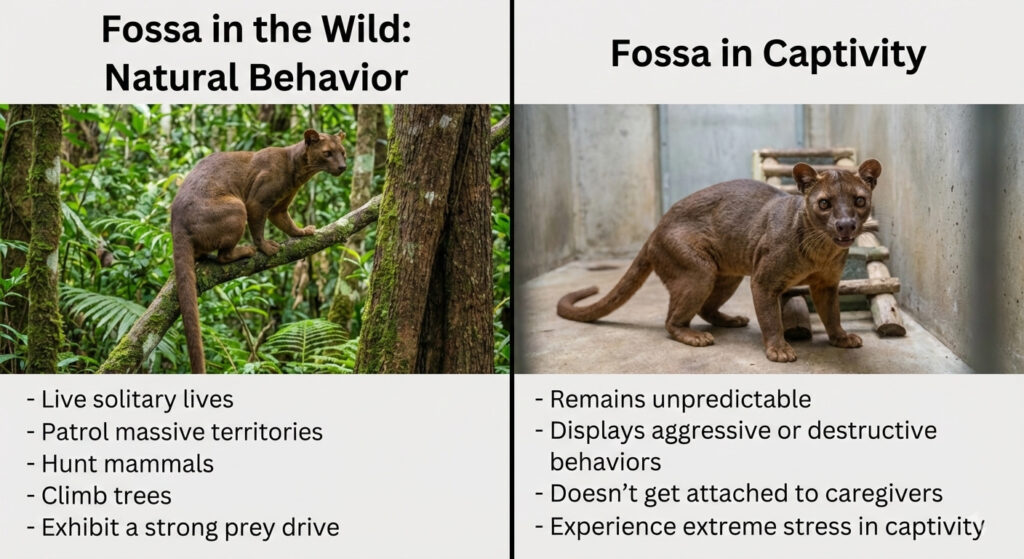
Natural Behavior of the Fossa
Understanding the natural behavior of the fossa is critical before even considering the idea of a fossa cat as a pet. The fossa is not a domesticated animal with adaptable instincts; it is a highly specialized predator whose behaviors are shaped by the forests of fossa Madagascar. These instincts remain strong regardless of upbringing, environment, or human contact.
In the Wild
In Madagascar, fossas live as solitary apex predators with lifestyles that are incompatible with domestic settings. In their natural habitat, fossas:
- Live solitary lives, interacting with other fossas mainly during breeding season
- Patrol massive territories that can span several square miles
- Hunt lemurs and other mammals, relying on speed, stealth, and powerful jaws
- Climb trees with extreme agility, moving headfirst up and down trunks
- Exhibit a strong prey drive that is constant and instinctive
This combination of independence, territoriality, and predatory behavior allows the fossa to thrive in the wild, but it also explains why the species cannot adapt to life in a household.
In Captivity
In captivity, even when raised by humans from a young age, fossas do not lose their wild instincts. A fossa as a pet typically:
- Remains unpredictable, with sudden mood or behavior changes
- Displays aggressive or destructive behaviors, especially when frustrated or confined
- Does not bond like domestic cats or dogs, showing little attachment to human caregivers
- Experiences chronic stress in confined or artificial environments
Captive fossas often pace, attempt escape, or become defensive, clear signs of poor welfare. Unlike domesticated animals, they cannot adapt psychologically to restricted spaces or constant human interaction.
Why This Matters for Pet Ownership
Because of these behaviors, keeping a fossa as a pet is not only dangerous for owners but also deeply inhumane for the animal. No amount of training, affection, or early handling can override the natural instincts of a wild predator. The reality is that the fossa belongs in protected natural habitats or professional conservation facilities, not in homes.
Housing and Habitat Needs of a Fossa as a Pet
Housing a fossa as a pet is extremely demanding and is one of the main reasons this species is considered unsuitable for private ownership. Fossas are large, athletic, and semi-arboreal predators native to the forests of Madagascar. Their natural habitat is vast, complex, and mentally stimulating—conditions that are nearly impossible to recreate in a home setting.
Space Requirements for a Fossa as a Pet
A standard house or apartment is completely inappropriate for a fossa as a pet. In the wild, fossas travel long distances daily, climb tall trees, and leap between branches with ease.
Minimum space requirements (zoo-level standards):
- 300–500 m² (3,200–5,400 sq ft) of outdoor enclosure space
- 4–6 meters (13–20 ft) of vertical height for climbing and jumping
- Enclosures must prioritize vertical complexity, not just floor space
- Separate zones for running, climbing, resting, and hiding are essential
Without adequate space, keeping a fossa as a pet often leads to stress-related behaviors such as pacing, aggression, and repeated escape attempts.
Enclosure and Cage Setup
Traditional cages are completely unsuitable for a fossa as a pet. Any form of confinement must resemble a professionally designed zoo enclosure rather than a pet cage.
Essential enclosure features include:
- Heavy-duty fencing with anti-climb and anti-dig protection
- A fully enclosed roof, as fossas are exceptional climbers
- Double-door safety systems to prevent escapes
- Reinforced materials and locks to withstand strength and problem-solving behavior
Indoor housing is not recommended. Even short-term indoor confinement for a fossa as a pet can result in severe destruction and safety concerns.
Temperature and Humidity Requirements
Because fossas originate from a tropical environment, a fossa as a pet requires very specific climate conditions to remain healthy.
- Ideal temperature range: 22–28°C (72–82°F)
- Required humidity levels: 60–80%
- Cold temperatures, dry air, or sudden climate changes can cause stress and illness
- In non-tropical regions, year-round climate control would be essential
Maintaining these conditions is costly and technically complex for anyone considering a fossa as a pet.
Environmental Enrichment and Stimulation
Mental and physical stimulation is critical when attempting to house a fossa as a pet, as these animals are highly intelligent and easily bored.
Recommended enrichment includes:
- Thick tree branches, logs, and elevated platforms for climbing
- Rotating toys, such as durable balls and hanging objects
- Puzzle feeders and hidden food to encourage natural hunting behavior
- Scent enrichment to promote exploration
- Quiet, shaded resting areas and enclosed dens
Enrichment must be updated frequently. A static environment is especially harmful for a fossa as a pet and often results in abnormal behaviors.
Why Housing a Fossa as a Pet Is So Difficult
Properly housing a fossa as a pet requires:
- Large amounts of land
- Zoo-grade construction and security
- Specialized temperature and humidity control
- Daily, structured enrichment planning
Due to these extreme requirements, fossas are best suited to professional zoological institutions. For most people, keeping a fossa as a pet is not practical, humane, or safe.
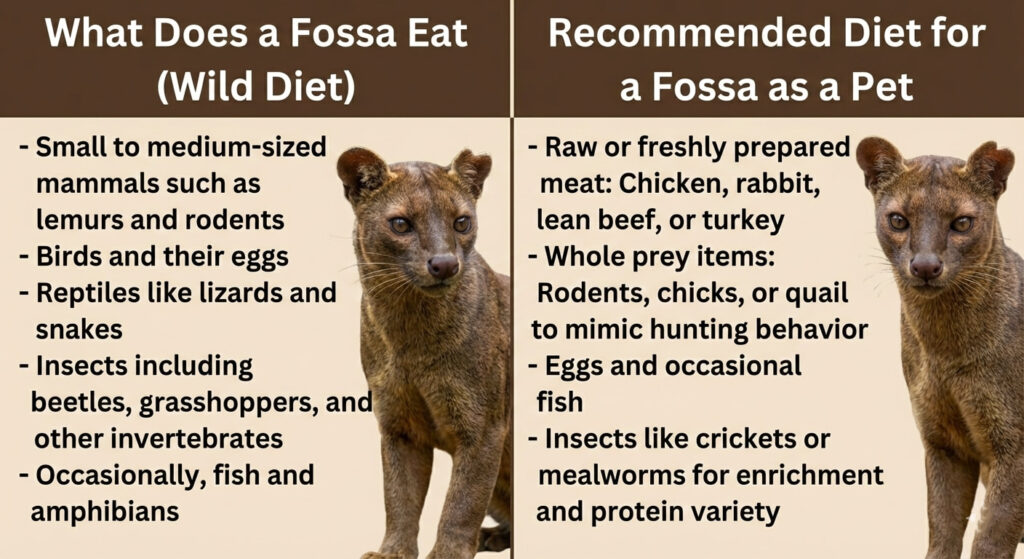
Diet and Nutrition for a Fossa as a Pet
Feeding a fossa as a pet is another major challenge, as their dietary needs are complex and very different from common domestic pets. Understanding what they eat in the wild and how to replicate it safely in captivity is essential for their health.
- Wild Diet of Fossas
In their natural habitat in Madagascar, fossas are carnivorous predators. Their diet mainly includes:
- Small to medium-sized mammals such as lemurs and rodents
- Birds and their eggs
- Reptiles like lizards and snakes
- Insects including beetles, grasshoppers, and other invertebrates
- Occasionally, fish and amphibians
Fossas are opportunistic hunters and will eat whatever prey is available in their territory.
- Recommended Diet for a Fossa as a Pet
Replicating a wild diet for a fossa as a pet is extremely difficult. A proper captive diet should focus on high-quality animal protein and variety:
- Raw or freshly prepared meat: Chicken, rabbit, lean beef, or turkey
- Whole prey items: Rodents, chicks, or quail to mimic hunting behavior
- Eggs and occasional fish
- Insects like crickets or mealworms for enrichment and protein variety
Feeding should mimic natural patterns: small meals throughout the day rather than one large meal. This encourages activity and digestion closer to wild behavior.
- Supplements
Even with a well-planned diet, fossas may need vitamin and mineral supplements, especially calcium and taurine, to prevent deficiencies:
- Calcium for bone health
- Vitamin D3 if the fossa has limited exposure to sunlight
- Taurine for heart and eye health
Note: supplements should only be given under guidance from a veterinarian experienced with exotic carnivores. Over-supplementing can be as harmful as deficiencies.
- Foods to Avoid
Certain foods can be toxic or harmful to a fossa as a pet:
- Processed human foods (sugary, salty, or fatty foods)
- Chocolate, caffeine, and alcohol
- Onions, garlic, and other Allium vegetables
- Avocado
- Bones that can splinter (like cooked chicken bones)
- Raw pork due to parasite risks
Even small amounts of these foods can cause digestive issues, toxicity, or long-term health problems.
Lifespan of a Fossa
A fossa as a pet can live significantly longer in captivity than in the wild, but their lifespan still depends on proper care, diet, and environment. In the wild, fossas typically live around 12–15 years, while in captivity, with ideal conditions, they can reach up to 20 years. However, achieving this requires expert veterinary care, a proper diet, adequate space, and constant mental stimulation, factors that make keeping a fossa as a pet a serious, long-term commitment.
Health Care for a Fossa as a Pet
Caring for a fossa as a pet goes far beyond basic feeding—it requires specialized veterinary attention to prevent and manage health issues. Fossas are exotic carnivores with unique physiological needs, and improper care can quickly lead to serious illness or injury.
- Routine Veterinary Care
- Exotic animal veterinarian: A vet experienced with carnivorous wildlife is essential. Regular vets often lack the expertise to treat fossas.
- Annual health check-ups: Include physical exams, dental checks, weight monitoring, and parasite screenings.
- Vaccinations: There are no standard vaccines for fossas, but some vets may recommend protection against common carnivore diseases.
- Common Health Concerns
- Nutritional deficiencies: Can result from an unbalanced diet; calcium, taurine, and vitamin deficiencies are most common.
- Obesity or muscle wasting: Poor diet or lack of exercise due to inadequate enclosure space.
- Dental problems: Due to diet not including bones or whole prey.
- Stress-related illnesses: Including behavioral disorders, gastrointestinal problems, and weakened immunity.
- Preventive Measures
- Provide a balanced, protein-rich diet with appropriate supplements.
- Maintain a large, enriched habitat with climbing structures and hiding areas.
- Monitor for changes in behavior, appetite, or activity—early detection is critical.
- Ensure proper hygiene in the enclosure to prevent infections.
Proper health care is challenging and costly, making it clear that keeping a fossa as a pet is a commitment that requires professional guidance, resources, and daily vigilance. Without expert care, a fossa is highly susceptible to illness, stress, and reduced lifespan.
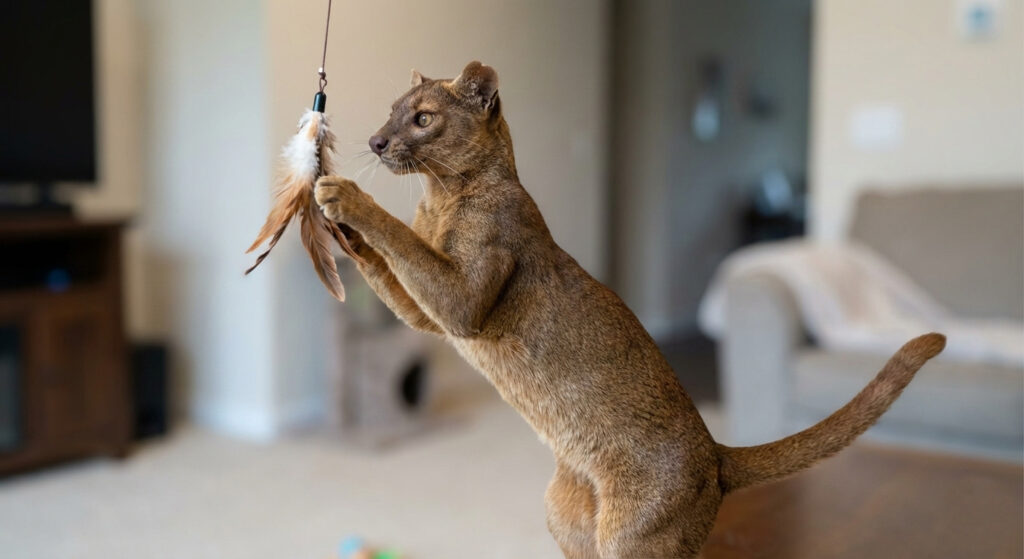
Cost of Ownership of a Fossa as a Pet
Keeping a fossa as a pet is an extremely expensive and long-term commitment. Beyond the initial acquisition, ongoing costs are substantial due to their specialized needs. These costs include housing, diet, veterinary care, and enrichment.
- Initial Costs
- Acquisition: Fossas are rarely available and often illegal to own. If legally obtainable, prices can be extremely high. Searching for fossa for sale can be difficult, as most reputable breeders or sanctuaries do not sell them to private individuals.
- Enclosure setup: Building a secure, zoo-quality habitat with climbing structures, elevated platforms, and double-door safety systems can cost thousands to tens of thousands of dollars.
- Climate control: Heating, humidity regulation, and shelter to mimic Madagascar’s tropical environment may require additional investment.
- Ongoing Expenses
- Diet: A protein-rich diet including whole prey, meat, and supplements can cost hundreds of dollars per month.
- Veterinary care: Exotic animal vets charge significantly more than typical domestic vets; annual check-ups, vaccinations, supplements, and emergency care can cost $1,000 or more per year.
- Enrichment and maintenance: Branches, toys, climbing platforms, and regular habitat cleaning are essential for the fossa’s mental and physical health.
- Hidden Costs
- Legal permits or documentation if owning a fossa for sale is allowed in your region
- Potential property damage due to their strength, intelligence, and climbing abilities
- Specialized insurance for exotic pets, where available
In summary, the cost of owning a fossa as a pet is extremely high, often running into tens of thousands of dollars annually when considering proper care. Searching for a fossa for sale is not only difficult but also often unethical, highlighting why these animals are best left to professional wildlife facilities rather than private ownership.
Pros and Cons of Owning a Fossa as a Pet
Owning a fossa as a pet is not like keeping a cat or dog. While they are fascinating and unique animals, the challenges far outweigh the benefits for most people. Understanding the pros and cons helps highlight why fossas are best left in professional care.
- Pros
- Unique and fascinating animal: Fossas are rare, exotic, and intriguing, with impressive hunting and climbing abilities.
- Highly intelligent: They can learn certain behaviors, which may appeal to experienced exotic animal enthusiasts.
- Active and agile: Watching a fossa explore and climb can be captivating for those with the right setup and expertise.
- Cons
- Extremely high maintenance: A fossa as a pet requires a massive enclosure, specialized diet, climate control, enrichment, and constant attention.
- Legal restrictions: Many countries and states prohibit private ownership; finding a fossa for sale legally is very difficult.
- Safety risks: Fossas are strong, fast, and predatory; improper handling can lead to serious injury.
- High cost of ownership: Enclosure construction, diet, veterinary care, and enrichment can cost tens of thousands of dollars annually.
- Behavioral challenges: Without proper stimulation and space, fossas can become stressed, aggressive, or destructive.
- Long-term commitment: Fossas can live up to 20 years in captivity, requiring decades of dedicated care.
What People on Reddit Say about Fossa
- Redditors often react to fossas with a mix of amusement and awe. Many comments highlight how unusual and unpredictable fossas are especially their sleep‑wake patterns (they are cathemeral, meaning they wake and sleep at random times), which users humorously compare to their own habits. Some even jokingly call the fossa their “spirit animal.”
- In several threads people describe fossas as both cute and intimidating. Some comments call them adorable or liken them to a mix of different animals, while others emphasize their muscular build and prowess as Madagascar’s top predator, noting that they look powerful even “jacked” !
- Users who have worked with or encountered fossas sometimes recount how stealthy, surprising, and even a bit scary they can be saying they might suddenly lunge with loud vocalizations. There’s an overall sense that fossas are wild animals with unpredictable tendencies.
- In lighter or more casual threads, Redditors simply react positively to fossas’ appearance, likening them to cats or other familiar animals or expressing affection for them as unique creatures.
- Posts referencing fossas often spark creative or pop‑culture comparisons (sometimes jokingly referencing movies or cartoons), and people tend to share general curiosity or admiration rather than serious discussion about keeping one as a pet.