
Can you keep a coati as a pet? Yes, in some places you can, but it’s far more challenging than most people expect. Coatis may look adorable, intelligent, and playful, yet the reality of owning a coati as a pet is much more complicated than their cute appearance suggests.
If you’ve ever seen a coati, those curious, long-nosed, raccoon-like animals you’ve probably wondered what it would really be like to live with one.
Let’s break it all down in a friendly, easy-to-follow guide.
What Exactly Is a Coati?
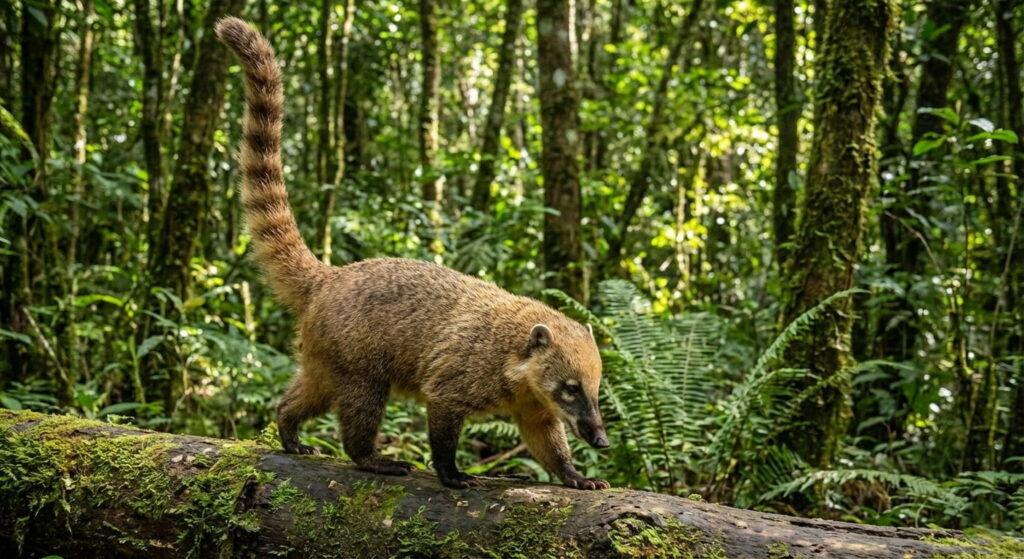
A coati (also called a coatimundi) is a small, agile mammal belonging to the raccoon family (Procyonidae). At first glance, they look like a mix between a raccoon, a monkey, and an anteater. Their long snout, ringed tail, and expressive eyes make them one of the most recognizable wild animals in the Americas.
Where Do They Come From?
Coatis naturally live in:
- Central America
- South America
- Mexico
- Parts of the southwestern United States
They thrive in tropical forests, mountains, grasslands, and jungle edges. Coatis are incredibly adaptable, they can live high in trees or forage confidently on the ground.
A Look Back …
Coatis evolved millions of years ago alongside raccoons and kinkajous.
Key points in their natural history:
- They developed flexible, elongated snouts to dig for insects, roots, and small prey.
- Their long, semi-prehensile tail helps them balance while climbing trees.
- Coatis formed highly social female-led groups (bands) of up to 30 individuals.
- Males usually live alone, which is where the word “coatimundi” comes from the meaning “lone coati.”
Their natural evolution made them:
- Expert climbers
- Outstanding diggers
- Highly intelligent problem-solvers
- Constantly active and curious
- These traits are amazing in the wild, but difficult to manage when someone tries to keep a coati as a pet.
Coatis in Ancient Traditions
In some Indigenous cultures of Central and South America, coatis were admired for their intelligence and often appeared in folk stories as clever, mischievous animals. Certain communities even kept orphaned coatis around their villages not as traditional “pets,” but as free-roaming companions that came and went. Despite this occasional closeness to humans, coatis were never domesticated the way dogs or cats were.
Is It Legal to Keep a Coati as a Pet?
The legality of keeping a coati as a pet depends heavily on where you live, and in many places, owning one is either restricted, regulated, or completely illegal. Coatis are considered exotic wildlife, which means governments want to protect the species, local ecosystems, and public safety.
In the United States, the laws are different in every state.
| State | Legal Status | Notes |
|---|---|---|
| Alabama | Allowed / Unregulated | Few state rules, but local laws may apply. |
| Alaska | Illegal | Coatis banned as exotic wildlife. |
| Arizona | Permit Required | Needs exotic wildlife permission. |
| Arkansas | Permit Required | Wildlife breeder/dealer permits often required. |
| California | Illegal | Strict exotic animal ban includes coatis. |
| Colorado | Illegal | Classified as restricted wildlife. |
| Connecticut | Restricted / Possibly Illegal | Exotic wildlife heavily regulated. |
| Delaware | Permit Required | Requires exotic animal license. |
| Florida | Permit Required | Class III Wildlife Permit needed. |
| Georgia | Illegal | Exotic mammals prohibited. |
| Hawaii | Illegal | Very strict animal import laws. |
| Idaho | Permit Required | Wildlife permits needed. |
| Illinois | Illegal | Coatis included in dangerous/exotic species bans. |
| Indiana | Permit Required | DNR permit may be required. |
| Iowa | Illegal | Considered dangerous wild animals. |
| Kansas | Allowed with Rules | Some local restrictions may apply. |
| Kentucky | Permit Required | Regulated under exotic wildlife rules. |
| Louisiana | Permit Required | State regulates many exotic mammals. |
| Maine | Illegal | Coatis banned as exotic pets. |
| Maryland | Illegal | Exotic animals prohibited. |
| Massachusetts | Illegal | Strict wildlife ownership laws. |
| Michigan | Permit Required | Must meet housing & care standards. |
| Minnesota | Restricted | Varies by county; some require permits. |
| Mississippi | Permit Required | Classified as wild/exotic. |
| Missouri | Allowed with Rules | Often requires registration. |
| Montana | Permit Required | Exotic wildlife permit needed. |
| Nebraska | Restricted | Exotic animals regulated at local levels. |
| Nevada | Allowed | One of the most permissive states. |
| New Hampshire | Illegal | Exotic mammals prohibited. |
| New Jersey | Illegal | Coatis banned. |
| New Mexico | Illegal | No private ownership allowed. |
| New York | Illegal | Exotic wildlife prohibited. |
| North Carolina | Allowed / Unregulated | State lenient; counties may ban them. |
| North Dakota | Permit Required | Exotic animal license required. |
| Ohio | Illegal | One of the strictest exotic pet bans. |
| Oklahoma | Allowed with Rules | Some cities regulate ownership. |
| Oregon | Illegal | Very strict exotic pet laws. |
| Pennsylvania | Permit Required | Exotic wildlife permit required. |
| Rhode Island | Illegal | Exotic mammals banned. |
| South Carolina | Illegal | Exotic pets largely prohibited. |
| South Dakota | Permit Required | Non-domestic mammal license. |
| Tennessee | Restricted | Depends on exotic animal class. |
| Texas | Allowed with Rules | Local bans exist (e.g., San Antonio). |
| Utah | Illegal | Coatis banned. |
| Vermont | Illegal | Exotic wildlife prohibited. |
| Virginia | Permit Required | Classified as exotic wildlife. |
| Washington | Illegal | Exotic mammals prohibited. |
| West Virginia | Permit Required | Exotic animal license required. |
| Wisconsin | Allowed / Unregulated | Few state restrictions; local rules vary. |
| Wyoming | Illegal | Many exotic mammals banned. |
Other countries (including many in Europe) classify coatis as regulated exotic species, meaning that keeping a coati as a pet often requires proof of proper housing, veterinary approval, wildlife ownership documentation, and official registration with authorities. In some regions, coatis have been banned entirely after escaping captivity or being released, where they formed wild populations and became invasive.
It’s important to understand that these laws are not meant to make life difficult, they exist because a coati as a pet requires specialized care, can become aggressive as it matures, and may pose serious ecological risks if released into the wild. Wherever you live, the key takeaway is that the legality of a coati as a pet cannot be assumed. Many people see baby coatis on social media and think they are easy to own, only to find later that owning a coati as a pet without permission can result in fines, confiscation, or legal trouble. Regulations are strict, and they vary significantly from country to country.
How Coatis Behave in the Wild and in Captivity
Understanding a coati’s natural behavior is essential before considering a coati as a pet. In the wild, coatis are highly social and energetic animals. Female coatis and their young live in large groups, called bands, often consisting of 10–30 individuals, while adult males typically live alone. Wild coatis spend their days climbing trees, digging for insects and small animals, exploring every corner of their habitat, and communicating with a variety of chirps and calls. Their intelligence, curiosity, and strong problem-solving skills make them fascinating to observe, but also very active and demanding.
When a coati is kept as a pet, much of this wild behavior remains. A coati as a pet will still climb, dig, and explore relentlessly. They are highly curious, often investigating cabinets, shelves, and furniture. Social interaction is crucial: a coati left alone for long periods may develop behavioral problems, including destructive chewing or biting. Unlike domesticated pets, a coati as a pet does not naturally adapt to a sedentary indoor lifestyle and requires daily mental and physical enrichment.
In short, while coatis can form strong bonds with their owners, a coati as a pet retains its wild instincts. This means owners must provide a secure, spacious environment and plenty of stimulation to ensure the coati remains healthy, happy, and safe both for the animal and for the people around it.
Are Coatis Good Pets for Families or Kids?
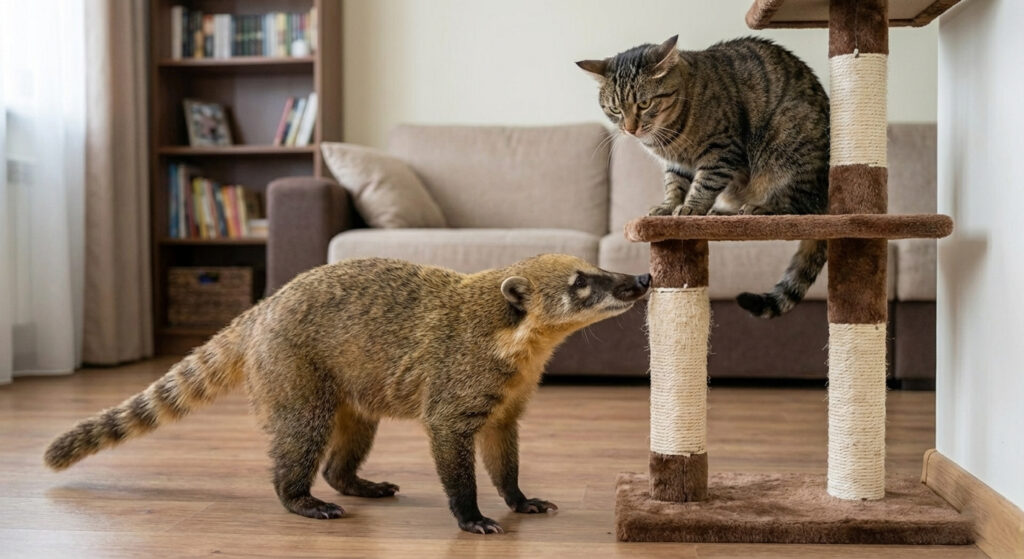
Short answer: No. coatis can be unpredictable. They bite when scared, become hyperactive, and can unintentionally injure children or other pets.
A coati as a pet is best suited only for:
- Experienced exotic owners
- People with time, space, and patience
- Homes with no young children
- Homes with no fragile pets
Coati as a Pet Care Guide
1. Housing and Habitat Needs for a Coati as a Pet
A coati as a pet is far from low-maintenance. Providing the right housing and habitat is essential to keep your coati healthy, safe, and happy. Unlike domesticated animals, coatis retain their wild instincts, so their environment must allow climbing, digging, and exploring.
- Space Requirements
Coatis are highly active animals that need lots of room to move. The minimum recommended enclosure size for one coati is about 3m x 3m x 3m (10ft x 10ft x 10ft), but larger is always better, especially if you have more than one. They require vertical as well as horizontal space for climbing, as they are natural tree dwellers.
- Cage or Enclosure Setup
A proper enclosure for a coati should include:
- Strong, escape-proof fencing: Coatis are excellent climbers and can squeeze through small gaps.
- Multiple levels: Shelves, branches, and platforms for climbing.
- Hiding spots: Boxes or dens where the coati can rest and feel secure.
- Digging areas: Sand or soil patches to satisfy their natural digging instincts.
The enclosure should be well-ventilated and easy to clean, as coatis are active and can make a mess.
- Temperature and Humidity
Coatis are tropical animals, so a warm, stable temperature is crucial. Aim for 75–85°F (24–29°C) indoors, with slightly cooler nighttime temperatures. Humidity should be moderate, around 50–70%, to mimic their natural environment and maintain healthy skin and fur. In cooler climates, you may need heat lamps or supplemental heating.
- Toys and Enrichment
Mental stimulation is vital for a coati as a pet, since boredom can lead to destructive or aggressive behavior. Enrichment ideas include:
- Hanging ropes, ladders, and swings
- Puzzle feeders to mimic foraging
- Treat-dispensing toys
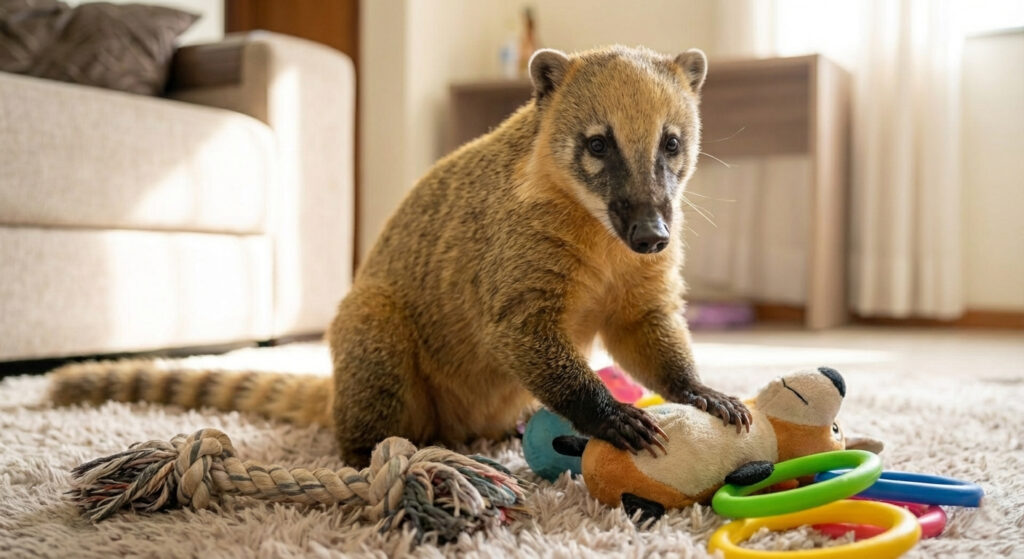
- Balls or objects they can manipulate
- Climbing structures and platforms at varying heights
Coatis thrive when they can explore, climb, and solve problems, so providing multiple forms of physical and mental enrichment is essential. Daily supervised time outside the enclosure is also highly recommended to allow for additional exploration.
What Does a Coati Eat?
Feeding a coati as a pet properly is one of the most important parts of ensuring its health and happiness. Coatis are omnivores, which means they eat both animal and plant-based foods. In the wild, they spend much of their day foraging for insects, small animals, fruits, and roots. When kept as a pet, it’s important to mimic this varied diet as closely as possible.
Fruits
Fruits should make up a large portion of a coati’s diet, but in moderation, because too much sugar can cause health problems. Safe and healthy options include:
- Banana
- Papaya
- Apple (without seeds)
- Grapes
- Melon
Protein Sources
Protein is essential for a coati’s energy and growth. In captivity, provide high-quality sources such as:
- Cooked chicken or turkey
- Eggs
- Insects like mealworms or crickets
- Small amounts of cooked fish
- High-quality cat or dog kibble as a supplement
Vegetables
Vegetables add fiber and essential nutrients:
- Sweet potato
- Carrots
- Peas
- Leafy greens
Foods to Avoid
Some human foods are dangerous for a coati as a pet:
- Chocolate
- Caffeine
- Alcohol
- Processed sweets
- Foods high in salt or sugar
Feeding Tips for a Coati as a Pet
- Multiple small meals per day mimic natural foraging habits.
- Use enrichment feeding: hide food in puzzle feeders, boxes, or soil to encourage digging and problem-solving.
- Fresh water should always be available.
- Rotate foods to provide variety and prevent boredom.
A coati as a pet is intelligent and curious, so mealtime is not just nutrition—it’s a chance for enrichment and bonding. A properly fed coati will be healthier, more active, and less likely to develop behavioral problems from boredom or malnutrition.

Lifespan of a Coati as a Pet
A coati as a pet can live anywhere from 10 to 16 years with proper care, nutrition, and a safe environment. In the wild, coatis often face predators, disease, and food scarcity, which reduces their lifespan to around 7–8 years.
In captivity, where they are protected from predators and receive a consistent diet, a coati can live significantly longer but only if their physical, mental, and social needs are met. This includes:
- A spacious, enriched enclosure with climbing and digging opportunities
- Balanced diet with fruits, vegetables, and protein
- Regular veterinary care with an exotic-animal vet
- Daily social interaction and mental stimulation
Potential owners should understand that a coati as a pet is a long-term commitment. Unlike dogs or cats, coatis retain wild behaviors throughout their life, requiring continuous attention, enrichment, and specialized care.
Health and Veterinary Care for a Coati as a Pet
Owning a coati as a pet comes with important responsibilities for health and veterinary care. Coatis are wild animals with unique needs, and their health depends on proper diet, environment, and regular checkups with a qualified exotic animal veterinarian.
Common Health Issues
Even with good care, coatis can face certain health problems, including:
- Obesity: Often caused by too many high-sugar fruits or a lack of exercise.
- Dental problems: Their teeth grow continuously and need proper diet and chewing opportunities.
- Parasites: Both internal (worms) and external (mites, ticks) can affect coatis.
- Infections: Respiratory or gastrointestinal infections may occur if hygiene is poor.
- Nutritional deficiencies: An unbalanced diet can cause vitamin or mineral shortages.
- Behavioral stress: Boredom, loneliness, or confinement can weaken the immune system.
Routine Veterinary Care
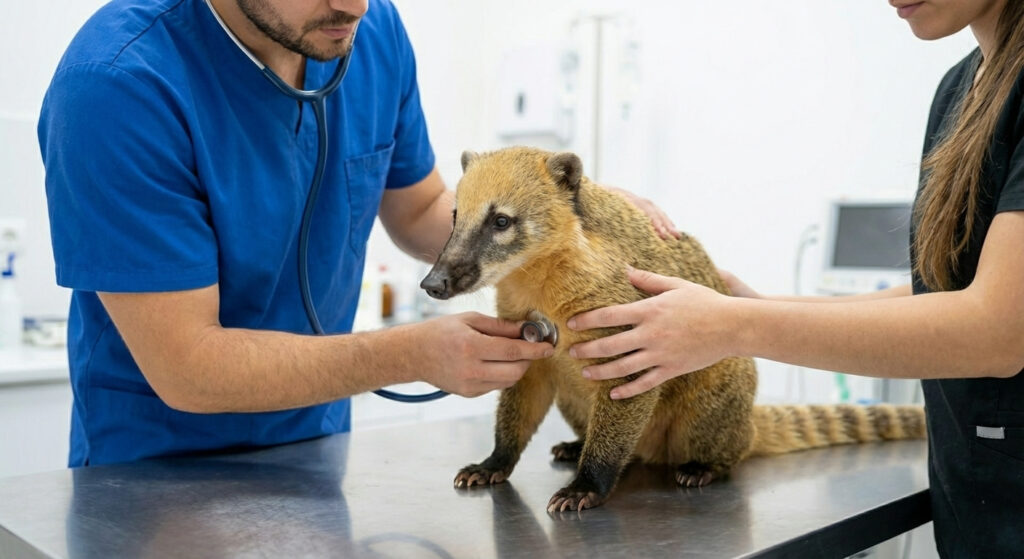
A coati as a pet should see an exotic animal veterinarian at least once a year, or more frequently if any issues arise. Key care includes:
- Annual physical exams
- Vaccinations (as recommended by a vet familiar with exotic mammals)
- Fecal testing for parasites
- Dental checks
- Monitoring weight, coat, and general behavior
Preventive Care Tips
- Keep the enclosure clean and hygienic.
- Provide a balanced diet with fruits, vegetables, and protein.
- Offer daily exercise and mental enrichment.
- Observe your coati for signs of illness, such as lethargy, loss of appetite, sneezing, diarrhea, or changes in behavior.
A healthy coati as a pet requires time, attention, and specialized veterinary care. Regular monitoring and early intervention are crucial because coatis can hide signs of illness, just like many other exotic pets.
Cost of Owning a Coati as a Pet
Owning a coati as a pet is not a small investment. These exotic animals require specialized care, a proper enclosure, a balanced diet, and access to a veterinarian experienced with exotic species. Understanding the costs upfront is crucial for anyone considering a coati as a pet.
Initial Costs
- Purchase Price: $500 – $2,000, depending on age, breeder, and region.
- Enclosure or Cage: $1,000 – $5,000 for a spacious, secure setup with climbing structures and enrichment.
- Permits and Licenses: Vary by state or country; can cost hundreds of dollars.
Ongoing Monthly Costs
- Food: $60 – $120 per month for fruits, vegetables, protein, and supplements.
- Toys and Enrichment: $20 – $50 per month to keep your coati mentally stimulated.
- Veterinary Care: $150 – $300 per visit; exotic vets may charge more for emergencies.
Long-Term Costs
Coatis can live 10–16 years in captivity, so lifetime costs can easily reach tens of thousands of dollars. This includes regular vet visits, enclosure maintenance, enrichment items, and a consistent supply of high-quality food.
Other Considerations
- Unexpected Medical Expenses: Exotic pets can develop health issues that require costly treatments.
- Relocation or Housing Adjustments: If you move, your coati’s enclosure may need modification to meet local regulations.
- Time Investment: While not a monetary cost, caring for a coati as a pet requires daily attention, social interaction, and enrichment, which is a significant commitment.
Owning a coati as a pet is a long-term financial and time commitment. Unlike conventional pets like cats or dogs, coatis need specialized care and resources, making them suitable only for owners fully prepared for the responsibility.
Time and Attention Requirements for a Coati as a Pet
A coati as a pet demands far more time and daily interaction than most people expect. These animals are incredibly energetic, social, and intelligent, meaning they cannot be left alone for long periods without developing behavioral problems.
- Daily Interaction
Coatis thrive on social bonding. In the wild, they live in bands, constantly interacting with other coatis. As a pet, you become their social group. This means:
- 2–4 hours of daily engagement (playtime, training, enrichment)
- Supervised indoor or outdoor exploration
- Consistent routines to prevent stress
Ignoring a coati, even for a day, can lead to chewing, digging, and aggressive behaviors out of boredom or frustration.
2. Mental Stimulation
A coati as a pet must stay mentally active. Their natural curiosity drives them to investigate everything, so they need:
- Puzzle toys
- Foraging activities
- Rotating enrichment items
- Opportunities to climb, dig, and solve problems
Without stimulation, coatis can become destructive or depressed.
3. Physical Activity
Coatis are high-energy animals with strong climbing and digging instincts. To stay healthy, a coati needs:
- Daily exercise sessions
- Access to a large enclosure with multiple levels
- Time to roam and explore safely
Just like a dog needs walks, a coati as a pet needs active play and movement every single day.
4. Long-Term Commitment
Because coatis can live 10–16 years, the time commitment is long-term. Their need for interaction does not decrease with age even older coatis require enrichment and human attention.
Owning a coati as a pet is similar to caring for a highly intelligent toddler with endless energy. It’s rewarding for the right person, but overwhelming for anyone who cannot dedicate daily time and effort.
Pros and Cons of Having a Coati as a Pet
Owning a coati as a pet can be exciting and rewarding, but it also comes with serious challenges. Here’s a realistic look at the ups and downs so readers understand what it truly means to bring a coati into their home.
Pros of Having a Coati as a Pet
- Highly intelligent and curious
Coatis are problem-solvers. They can learn tricks, explore complex toys, and interact in playful ways that some owners find fascinating. - Social and affectionate (when raised properly)
A well-socialized coati as a pet can form strong bonds with its owner. Some become cuddly, playful, and enjoy being part of daily activities. - Unique and exotic
If someone loves unusual animals, a coati definitely stands out. They’re rare, eye-catching, and very different from common household pets. - Entertaining to watch
Their natural behaviors; climbing, exploring, digging, and playing, make coatis a constant source of entertainment.
Cons of Having a Coati as a Pet
- Very high energy and demanding
A coati as a pet needs hours of daily attention, enrichment, and space. They never truly “calm down” like other pets. - Can become destructive
Coatis love to dig, chew, and climb. Without constant supervision and the right environment, they can damage furniture, walls, and personal belongings. - Not fully domesticated
Even if hand-raised, coatis keep their wild instincts. They may bite, scratch, or act unpredictably—especially during mating season or when stressed. - Difficult to house-train
Unlike dogs or cats, coatis do not naturally use a litter box consistently. Accidents are common. - Strong smell and messy habits
Coatis can be smelly, scatter food everywhere, and create a lot of cleanup work. - Specialized veterinary care
Finding an exotic animal vet can be expensive and difficult. Routine care and emergencies cost more than for regular pets. - Legal restrictions
In many places, owning a coati as a pet requires permits—or is completely illegal. Owners must check local laws before considering one.
What People are Saying About Owning a Coati as a Pet
- Mixed Experiences & Cuteness
- Many Reddit users find coatis adorable, smart, and funny to watch, often comparing them to raccoons or “Mexican trash pandas.”
- Some people note that coatis are curious and cheeky, not shy about interacting with humans when they’re used to people.
- Not a Typical Pet
- In threads specifically about keeping them as pets, several users strongly emphasize that a coati as a pet is not recommended, they mention coatis can bite and are not domesticated animals.
- One commenter sharing a secondhand story said a coati kept in a home was destructive and nocturnal, eventually needing to be re-homed because it kept its owner awake at night.
- Behavioral Traits People Notice
- Reddit users regularly point out that coatis are very intelligent and mischievous, with strong natural instincts, traits that make them interesting to observe but challenging to keep as a pet.
- Some people warn that coatis can be aggressive or unpredictable if approached too closely, especially wild ones or those used to human food.
Conclusion
A coati as a pet may look charming, playful, and irresistibly cute, but the reality is much more complex than their adorable appearance suggests. Coatis are intelligent, high-energy wild animals with instincts that never fully disappear in captivity. They require large, secure enclosures, hours of daily interaction, a varied diet, constant enrichment, and access to an experienced exotic-animal veterinarian.
For most people, a coati as a pet is simply too demanding legally, financially, and practically. They are not low-maintenance, not easy to train, and not suited to typical household environments. Even passionate exotic-animal lovers on Reddit and Quora often agree: coatis are fascinating animals to admire, but rarely good pets for the average owner.
However, for the small number of people who have the time, space, legal approval, experience, and patience, caring for a coati can be a rewarding but challenging long-term commitment. The key is understanding exactly what you’re getting into before bringing one home.
At the end of the day, coatis thrive best in the wild or in professional, properly equipped facilities not in living rooms. So before deciding to keep a coati as a pet, make sure you’re prepared for the responsibility, the cost, and the 10–16-year commitment that comes with caring for such a unique and demanding animal.
very interesting info ! .
I’ve read a few good stuff here. Definitely worth bookmarking for revisiting. I surprise how much effort you put to make such a excellent informative site.