Can you own a pet raccoon? Generally, no. But if you are in a situation where you must keep one, this article will help you understand their care, legal considerations, and how to keep them safe and happy.
While owning a pet raccoon is generally not recommended due to strict legal restrictions, complex behavioral needs, and the challenges of caring for a wild animal, there are rare situations where someone may have no choice but to keep one temporarily.
This may happen if you find an orphaned baby raccoon, come across an injured raccoon that cannot be released immediately, or rescue one from unsafe or neglectful conditions. In these cases, knowing how to keep the animal safe—and yourself safe—is crucial. This guide is designed to help you understand what caring for a raccoon actually involves so you can make informed, responsible decisions.
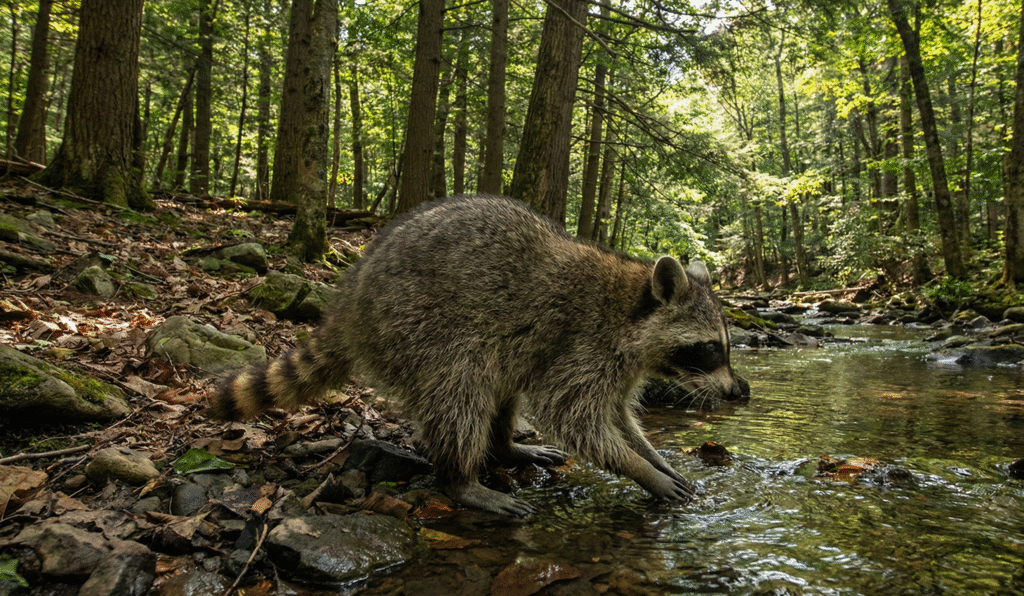
A Quick Overview of Raccoons
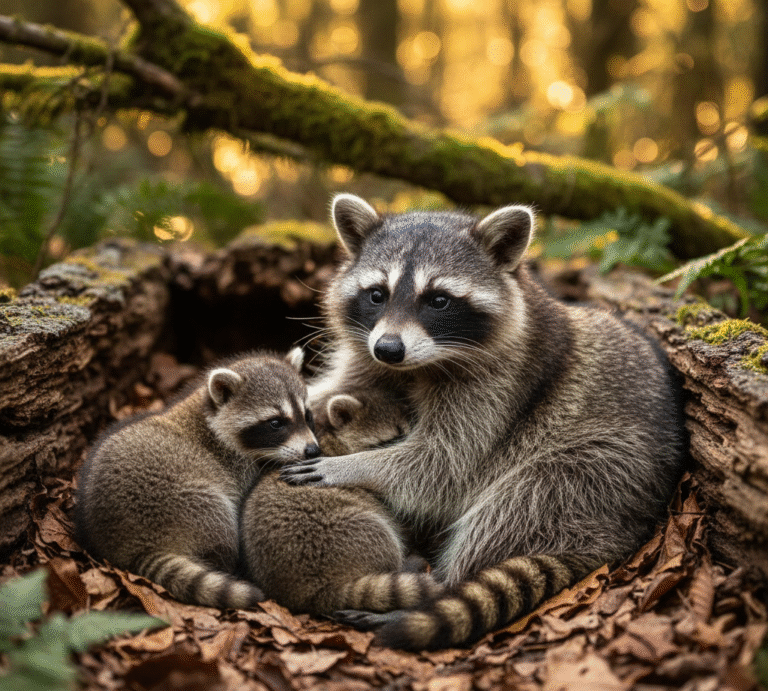
Raccoons (Procyon lotor) are incredibly intelligent mammals native to North America. Known for their agile paws, masked faces, and curious personalities, raccoons are natural problem-solvers capable of opening doors, latches, containers, and even windows. Their high intelligence also means they need constant enrichment; without it, they become destructive out of boredom.
They are omnivores with a varied diet, skilled climbers, and mostly nocturnal. Although adorable, raccoons remain wild animals—their behavior can be unpredictable, especially as they mature. They form strong bonds when hand-raised but may still bite, scratch, or defend themselves when stressed. Understanding their natural instincts is essential before attempting to care for them in any environment.
Is Owning a Pet Raccoon Legal?
Before considering a pet raccoon, the first and most important step is understanding the laws where you live. Raccoons are wild animals, and in many places, keeping them as pets is tightly regulated—or completely prohibited.
United States
In the U.S., raccoon ownership varies widely by state:
- Fully illegal: Many states, including California, Colorado, New York, and Hawaii, do not allow raccoons to be kept as pets under any circumstances.
- Permit required: States like Arkansas, Florida, or Texas may allow a pet raccoon but require special wildlife permits or proof of legal sourcing.
- Limited legality: Some states allow raccoon ownership but only if the animal was bred in captivity and not taken from the wild.
- Restrictions on transport: Even if raccoons for sale are legal in your state, transporting them across state lines may violate federal wildlife laws.
Canada
In Canada, laws also differ by province:
- Provinces such as Ontario have strict rules that generally prohibit private raccoon ownership.
- Others may allow raccoon care only under wildlife rehabilitation licenses.
UK, EU, and Other Regions
In much of Europe, raccoons are considered invasive species. As a result:
- Many EU countries ban ownership of raccoons entirely.
- Even previously legal pet raccoons may not be bred or sold due to protection and conservation laws.
What About Raccoon Adoption?
If you’re thinking about raccoon adoption, you must ensure it’s done legally and ethically. Many wildlife sanctuaries and rehabilitation centers allow temporary fostering, but permanent adoption is often not permitted unless you have:
- A wildlife rehab license
- Proof that the raccoon cannot survive in the wild
- Legal documentation from the authorities
- Never adopt a raccoon taken directly from the wild—this is illegal in most places and extremely dangerous for both you and the animal.
Legal Concerns With “Raccoons for Sale”
Be cautious when you see listings for raccoons for sale online. In many regions, these sales are illegal, and buying from unlicensed sellers can lead to:
- Fines
- Confiscation of the animal
- Legal charges
- Exposure to diseases such as rabies or parasites
Always verify that the breeder or seller is licensed and that keeping a pet raccoon is lawful in your area.
Raccoon Dogs vs Raccoons
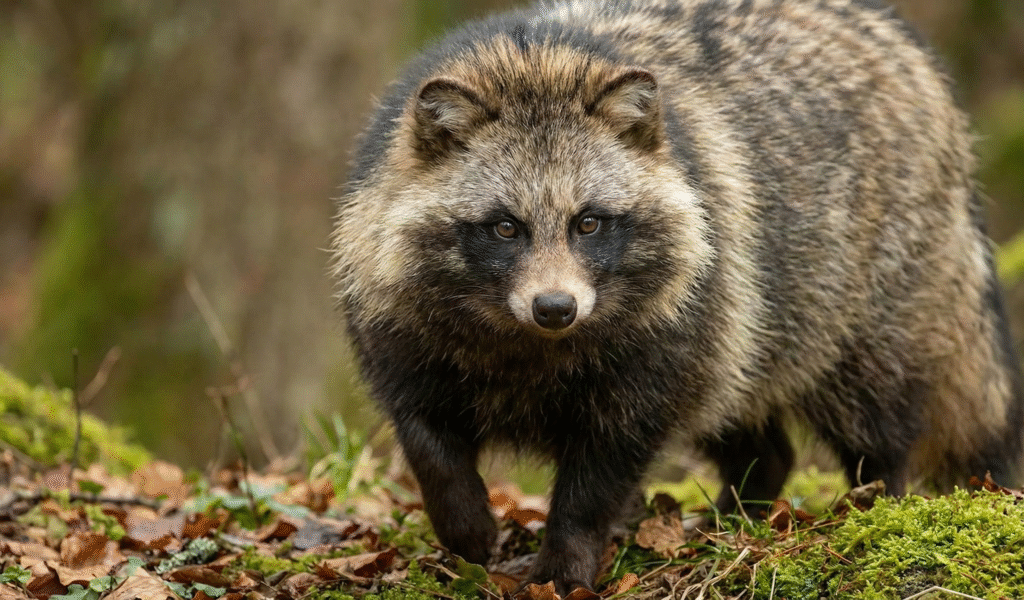
Many people confuse raccoon dogs with raccoons because they share similar markings, especially the dark “mask” around the eyes. However, they are completely different animals.
What Are Raccoon Dogs?
Raccoon dogs (Nyctereutes procyonoides) are native to East Asia and belong to the canine family, the same family as dogs, wolves, and foxes. Despite their name and appearance, raccoon dogs are not related to raccoons at all.
They are:
- More closely related to foxes
- Shy and less interactive
- Not suitable as pets
- Often illegal to own because they are considered invasive in parts of Europe
What Are Raccoons?
Raccoons (Procyon lotor) are North American mammals known for their intelligence, climbing skills, and extremely dexterous paws. A pet raccoon, if legal and ethically obtained, can be social, playful, and very curious. But they also require demanding care, constant enrichment, and secure housing.
Why the Confusion Matters
When searching for information about raccoons, raccoon dogs vs raccoons is an important distinction:
- Raccoon dogs behave more like wild foxes and are not suitable for domestic environments.
- Raccoons, although still wild animals, can occasionally be raised in captivity under strict legal and ethical conditions.
- Buying a raccoon dog thinking it’s the same as a pet raccoon can lead to legal problems and dangerous misunderstandings.
If you’re researching raccoon care, always make sure you’re reading about real raccoons, not raccoon dogs.
Can Raccoons Live With Other Pets?
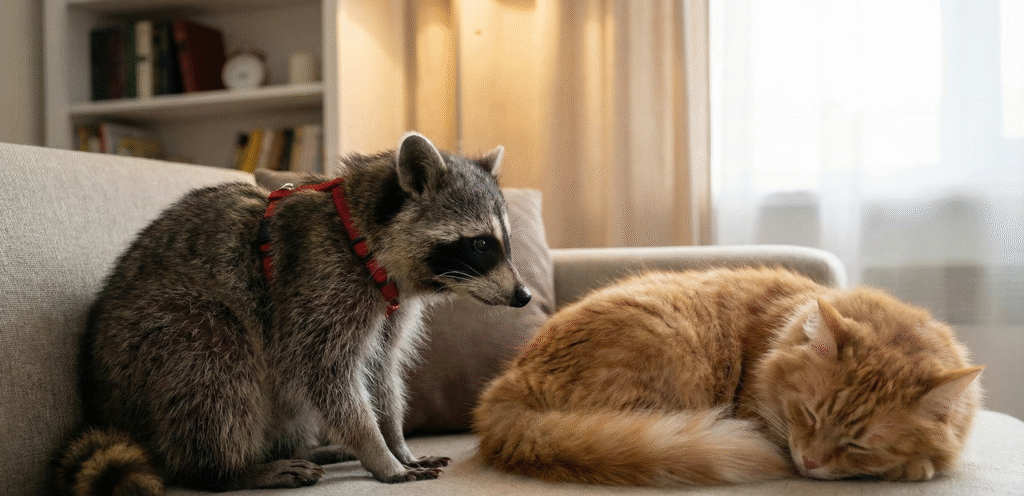
Many people wonder whether cats and raccoons, or raccoons and dogs, can safely live under the same roof. The answer is yes “sometimes” but only under strict supervision and the right conditions.
Raccoons and Cats
Cats and raccoons can occasionally coexist peacefully, especially if they grow up together. However:
- Raccoons are stronger than they appear.
- Their “play” can be rough and may unintentionally injure a cat.
- A stressed or territorial raccoon may bite or scratch.
- Cats may also react aggressively if they feel threatened.
- If you must keep a pet raccoon:
- Start with separate rooms.
- Allow slow, controlled introductions.
- Never ever leave cat–raccoon interactions unsupervised.
Raccoons and Dogs
Coexisting with dogs can be even more challenging:
- Dogs may see raccoons as prey.
- Raccoons may see dogs as threats.
- Both animals can become territorial.
- Some breeds (like hunting or herding dogs) are not good matches for a raccoon under any circumstances.
Smaller Pets
Raccoons should not be housed near:
- Birds
- Hamsters
- Rabbits
- Reptiles
- Guinea pigs
Their strong instincts and curious paws make smaller pets unsafe around them.
General Tips for Multi-Pet Homes
If you must care for a raccoon temporarily:
- Keep all interactions supervised.
- Provide escape routes for smaller animals.
- Do not let the raccoon roam freely with other pets unsupervised.
- Use gates, enclosures, or separate rooms to prevent accidents.
- Remember: even the friendliest pet raccoon is still a wild animal with natural instincts that can surface unpredictably.
What People Online Say About Owning a Pet Raccoon
- “Baby raccoons are adorable… until they grow up.”
Many people who raised baby raccoons say the same thing: they’re sweet at first, clingy, playful, then puberty hits and everything changes. - “Mine was like a super-smart, hyperactive dog… until he escaped.”
One owner described their pet raccoon as incredibly loving and curious, but said it eventually slipped out the door and returned to the wild. - “They destroy everything.”
Multiple Reddit threads mention ripped furniture, chewed wires, opened fridges, and raccoons figuring out how to unlock doors. - “They can turn aggressive without warning.”
Even “socialized” raccoons sometimes scratch or bite when startled or overstimulated. Owners warn: don’t mistake tame for domesticated. - “Finding a vet willing to treat a raccoon is nearly impossible.”
Many exotic-pet vets refuse to treat raccoons due to legal issues, rabies concerns, or lack of specialized knowledge. - “You can’t just cage them.. they get depressed.”
People emphasize the need for constant enrichment, climbing spaces, toys, and attention. Bored raccoons become destructive or stressed.
Final Thoughts
- Raccoons are fascinating, intelligent animals, but that doesn’t automatically make them good pets.
- Even people who truly love their pet raccoon often admit that caring for one is extremely hard, emotionally draining, and expensive.
- Most Reddit and Quora users come to the same conclusion:
“Raccoons belong in the wild, not in a typical home.” - If someone ends up with an orphaned raccoon and must care for it temporarily, they need real dedication, legal awareness, and the right setup.
- For most people who admire raccoons, the healthiest and safest option is to support wildlife rescue centers or simply appreciate raccoons from a distance.
- And if you ever think about adopting a pet raccoon, remember the advice repeated across forums:
“Think with your heart, but also with reality.”