Looking for affordable pets that won’t put a huge strain on your budget? Owning a pet can be incredibly rewarding, but food, housing, veterinary care, grooming, and supplies can quickly add up. The good news is that you don’t necessarily need to spend a fortune to enjoy the companionship of an animal.
Some pets have relatively inexpensive food and housing requirements, while others need much more space, specialized equipment, or frequent veterinary care. Choosing the right animal for your lifestyle and budget is therefore just as important as the initial purchase or adoption cost.
In this guide, we’ll look at some of the cheapest pets to own, including small pets, quiet pets, and animals that can be suitable for people looking for a low-cost pet.
What Makes a Pet Affordable?
Before choosing one of the most affordable pets, it’s important to look beyond the price of buying or adopting the animal.
A genuinely budget-friendly pet usually has:
- Affordable food requirements
- Reasonably inexpensive housing or enclosure needs
- Low grooming costs
- Manageable veterinary expenses
- Supplies that don’t need to be replaced frequently
- A suitable lifespan for your budget and lifestyle
Remember that cheap pets aren’t necessarily free pets. Every animal deserves proper food, appropriate housing, enrichment, and veterinary care.
With that in mind, here are some pets worth considering.
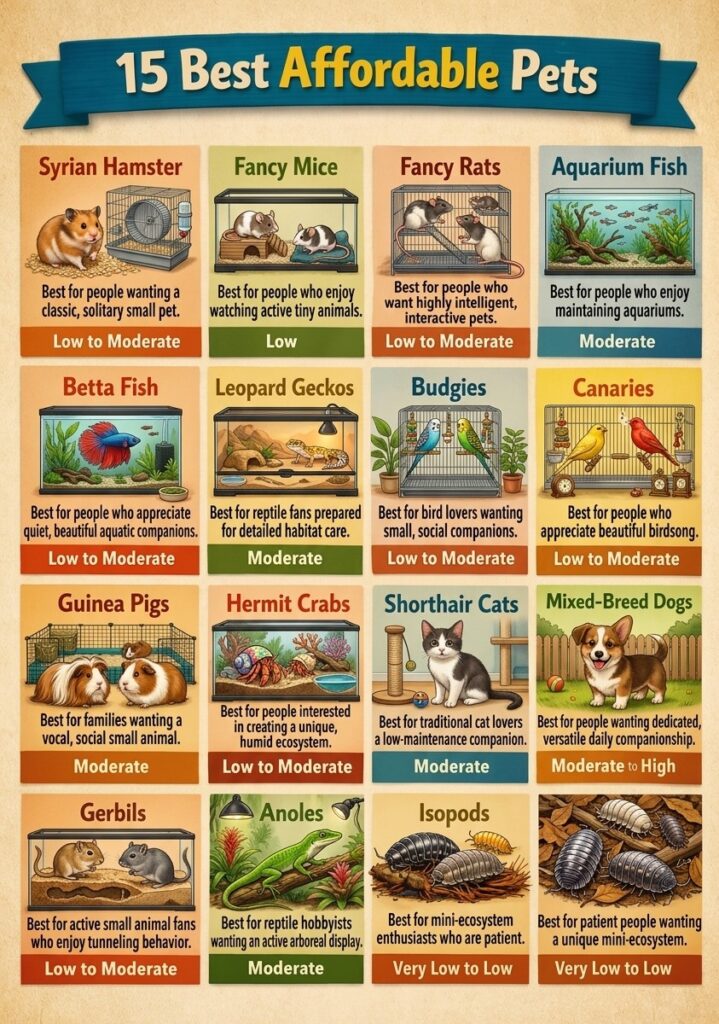
1. Hamsters
Hamsters are often considered one of the more affordable pets for beginners. They are small, don’t require outdoor exercise, and their food requirements are relatively modest.
However, don’t assume that because a hamster is tiny, its enclosure can be tiny too. A hamster still needs a spacious, secure enclosure, suitable bedding, a safe exercise wheel, hiding places, and enrichment.
Hamsters are also nocturnal, which means they may be most active when you’re getting ready for bed.
Best for: People looking for a small, independent companion.
Cost level: Low to moderate
2. Mice
Pet mice can be another option for people searching for cheap pets to own. They are tiny, don’t require large quantities of food, and can be fascinating to watch as they explore and interact with their environment.
Their enclosure needs regular cleaning, and they need appropriate bedding, nesting material, hiding places, and enrichment.
Mice are social animals, so their social needs should be considered when planning your budget and setup.
Best for: People who enjoy watching small animals rather than having a highly interactive pet.
Cost level: Low
3. Rats
Rats may not be the first animals people think of when searching for affordable pets, but they can make wonderful companions.
They are intelligent, social, curious, and capable of forming strong bonds with their owners. Their food costs are generally manageable, although they need a properly sized enclosure and plenty of enrichment.
Because rats are social animals, they generally should not be kept alone. That means your budget should account for more than one animal.
Best for: People who want an inexpensive small pet that is also interactive and intelligent.
Cost level: Low to moderate
4. Fish
Fish are among the best affordable pets for people looking for a budget-friendly companion, particularly if you choose a suitable beginner species and set up the aquarium correctly.
One important point, however, is that fish are not automatically cheap pets. The initial aquarium setup can cost more than expected because you’ll need a tank, filtration, lighting, substrate, water-treatment products, and other equipment.
Once the aquarium is properly established, ongoing costs can be relatively manageable.
Best for: People who enjoy observing animals and want a quiet pet.
Cost level: Moderate upfront, potentially low ongoing
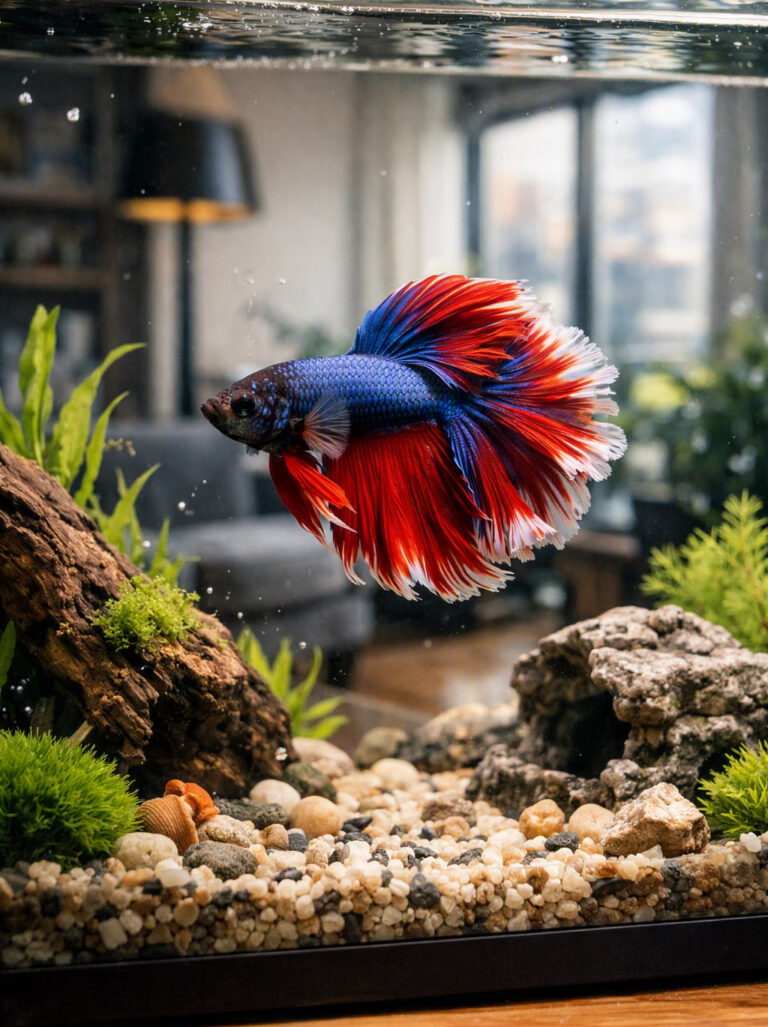
5. Betta Fish
If you want a smaller aquarium setup, a betta fish may be worth considering.
Bettas are popular because they are relatively small and don’t require the same amount of space as many larger fish. They still need a properly maintained aquarium, filtration, suitable temperature, and regular water care.
A small decorative bowl is not an adequate substitute for a proper aquarium.
Best for: People looking for a quiet pet that doesn’t require physical interaction.
Cost level: Low to moderate
6. Leopard Geckos
Leopard geckos are popular among people interested in reptiles and can be relatively manageable once their enclosure is properly established.
Their ongoing food requirements can be reasonable, but the initial setup requires an appropriate enclosure, heating, hides, substrate, lighting as appropriate, and temperature monitoring.
They also have a long potential lifespan, so adopting one is a long-term commitment.
Best for: People who want a quiet reptile and are prepared to maintain a specialized habitat.
Cost level: Moderate
7. Budgies
Budgies are small, colorful birds that can be relatively affordable compared with larger companion birds.
They don’t need the enormous cages required by larger parrots, although their cage should still provide adequate room for movement and enrichment.
Food, toys, cage maintenance, and veterinary care all need to be included in your budget. Budgies are also social and intelligent, so they need regular interaction and stimulation.
Best for: People who want a small, active, social bird.
Cost level: Low to moderate
8. Canaries
Canaries are another option for people searching for low-cost pets that don’t require a huge amount of space.
They are particularly appealing if you enjoy listening to birds rather than constantly handling them. A proper cage, nutritious diet, enrichment, and veterinary care are still necessary.
Canaries are generally better suited to owners who are happy to observe and care for their pet rather than expecting a cuddly companion.
Best for: People who enjoy birdsong and quieter companionship.
Cost level: Low to moderate
9. Guinea Pigs
Guinea pigs can be relatively affordable to acquire, but they shouldn’t automatically be placed in the “cheap and affordable pets” category.
They need a spacious enclosure, unlimited grass hay, fresh vegetables, appropriate pellets, bedding, enrichment, and veterinary care. They are also social animals and generally do best with compatible guinea pig companionship.
Their ongoing food and housing requirements can therefore be higher than those of some smaller pets.
Best for: Families or adults who want a social, gentle small animal and can commit to regular care.
Cost level: Moderate
10. Hermit Crabs
Hermit crabs are sometimes marketed as inexpensive, easy pets, but proper care requires more than simply putting one in a small container.
They need an appropriately sized habitat, suitable substrate, humidity and temperature control, hiding places, climbing opportunities, food, and access to appropriate water.
The initial setup can therefore cost more than the animal itself.
Best for: People interested in observing unusual animals and maintaining a habitat.
Cost level: Low to moderate
11. Domestic Short-Haired Cats
Cats aren’t necessarily the cheapest pets, but adopting an adult domestic short-haired cat can sometimes be more affordable than purchasing a specialized breed.
Short-haired cats generally require less grooming than long-haired breeds, which can help reduce maintenance costs.
However, cats still require quality food, litter, scratching equipment, routine veterinary care, vaccinations, parasite prevention, and emergency savings.
Best for: People who want a traditional companion animal and can afford long-term care.
Cost level: Moderate
12. Small Mixed-Breed Dogs
Dogs are generally not considered cheap pets, but adoption can be a more budget-friendly option than purchasing a puppy from a breeder.
A small adult mixed-breed dog may also have lower food costs than a large dog. However, veterinary care, training, grooming, toys, food, preventative medications, and other expenses can make dogs considerably more expensive than many small pets.
So while a dog can be affordable for some households, it shouldn’t be chosen solely because of its initial adoption fee.
Best for: People who have enough time and money for daily companionship and long-term care.
Cost level: Moderate to high
13. Gerbils
Gerbils are small rodents that can be interesting and entertaining pets. They are active, curious, and naturally enjoy digging and exploring.
Their food requirements are relatively modest, but their habitat needs to be designed around their natural behaviors. Deep bedding and opportunities to burrow are particularly important.
As with other social rodents, their social needs should be considered before bringing them home.
Best for: People who enjoy observing active small animals.
Cost level: Low to moderate
14. Anoles
For reptile enthusiasts, anoles can be an option worth researching. They are small and don’t consume large quantities of food.
However, their enclosure needs to provide appropriate temperature, humidity, lighting, climbing opportunities, and hiding areas. This makes them less straightforward than some beginner guides suggest.
Best for: People interested in reptiles who are willing to learn about habitat requirements.
Cost level: Moderate
15. Isopods
If you’re looking for something genuinely unusual, isopods can be an interesting choice.
These tiny invertebrates can be kept in relatively small habitats when properly designed and are popular among people interested in bioactive enclosures. Their food requirements can also be very inexpensive.
They’re obviously not a traditional cuddly companion, but they can be fascinating to observe.
Best for: Hobbyists who enjoy unusual animals and miniature ecosystems.
Cost level: Very low to low
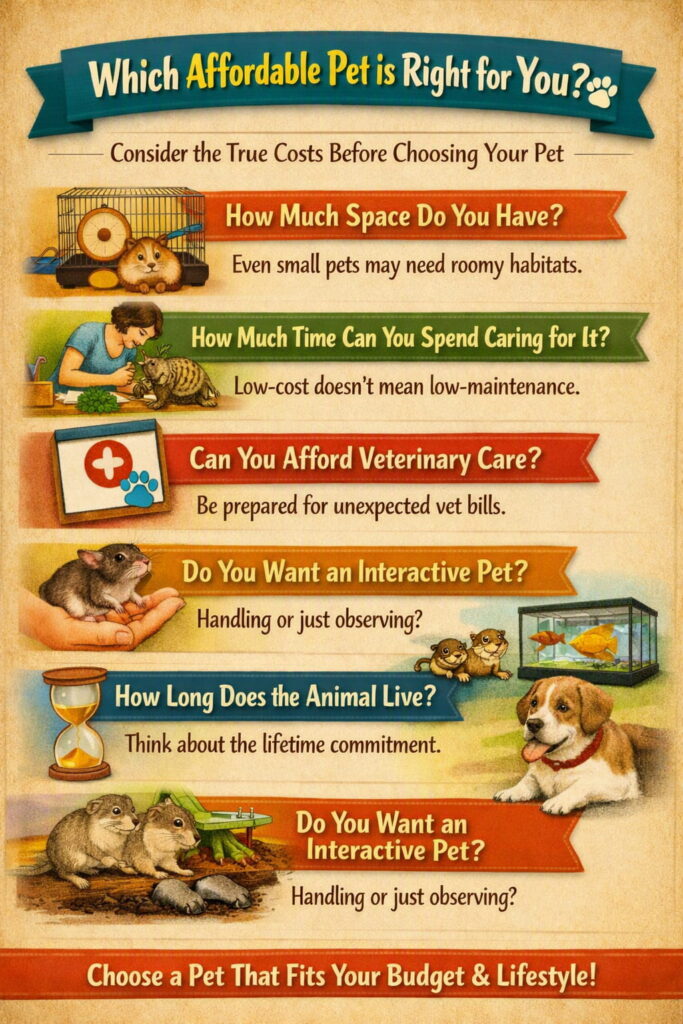
Which Affordable Pet Is Right for You?
The cheapest pet to own isn’t necessarily the animal with the lowest purchase price. Instead, consider the total cost of caring for the animal throughout its life.
For example, a small reptile may cost little to feed but require an expensive enclosure and specialized equipment. A bird may be inexpensive to purchase but require toys, enrichment, and veterinary care. A hamster may be inexpensive compared with a dog, but you’ll still need to invest in an appropriately sized enclosure and regular supplies.
Think about these questions before choosing:
How much space do you have?
Some animals need surprisingly large habitats despite their small size. Make sure you can provide enough space before bringing a pet home.
How much time can you spend caring for it?
A low-cost pet isn’t necessarily a low-maintenance pet. Some animals need daily cleaning, feeding, social interaction, or habitat maintenance.
Can you afford veterinary care?
Unexpected veterinary bills can be one of the biggest costs of pet ownership. It’s important to have an emergency fund or another plan for unexpected expenses.
Do you want an interactive pet?
If you want an animal that enjoys handling and interaction, your choices will be different from someone who simply wants a pet to observe.
How long does the animal live?
A pet can be a commitment lasting several years or even decades. Consider the lifetime cost rather than just the first few months.
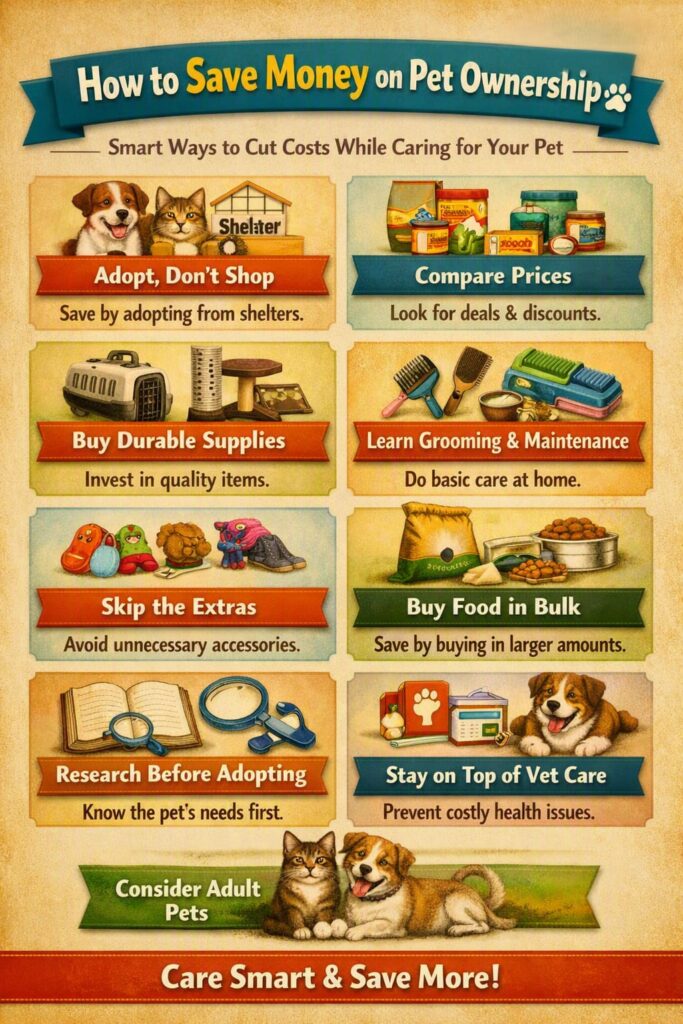
How to Save Money on Pet Ownership
You don’t have to sacrifice good care to keep your pet budget under control.
Here are a few practical ways to reduce unnecessary expenses:
- Adopt rather than automatically buying from a breeder.
- Compare prices for food and essential supplies.
- Buy durable equipment instead of constantly replacing cheap items.
- Learn basic grooming and habitat maintenance when appropriate.
- Avoid buying unnecessary accessories simply because they’re marketed for pets.
- Purchase food in appropriate larger quantities when it makes financial sense.
- Research the animal’s needs before bringing it home.
- Keep up with preventative veterinary care to help avoid more expensive problems later.
- Consider adopting an adult animal whose personality and size are already established.
Are Cheap Pets Really Cheaper?
Not always.
The phrase affordable pets can be misleading because the initial price of an animal is only one part of ownership. A pet that costs $20 to acquire could eventually cost hundreds or thousands of dollars in food, housing, medical care, and other supplies.
That’s why it’s better to think in terms of overall cost of ownership.
A responsible pet owner should be able to provide appropriate food, housing, enrichment, and veterinary care regardless of how inexpensive the animal was to acquire.
Conclusion
If you’re searching for affordable pets, there are plenty of animals that can fit a modest budget. Hamsters, mice, rats, certain fish, budgies, canaries, gerbils, and even some unusual pets can have relatively manageable ongoing costs when their needs are properly understood.
However, the best budget-friendly pet is the one you can comfortably care for throughout its entire life. Before choosing an animal, research its housing, diet, veterinary needs, lifespan, and daily care requirements.
After all, the goal isn’t simply to find the cheapest pet to own, it’s to find a companion whose needs fit both your lifestyle and your budget.
Frequently Asked Questions About Affordable Pets
What is the most affordable pet to own?
Some small animals, such as certain rodents and invertebrates, can have relatively low ongoing costs. However, the total cost depends on housing, food, veterinary care, and the animal’s lifespan.
What is the cheapest pet for a child?
There isn’t one universally cheapest pet for children. Small animals such as gerbils or guinea pigs may be appealing, but adults should always be responsible for the animal’s care and expenses.
What are the cheapest pets that are cuddly?
If interaction and handling are important, rats can be an interesting option because they are intelligent and social. Guinea pigs can also enjoy gentle handling, although their housing and food requirements can be more substantial.
What are the best low-cost pets for apartments?
Small pets such as hamsters, gerbils, mice, some fish, and certain reptiles can work in apartments when their habitat requirements are properly met. Noise, odor, enclosure size, and local housing rules should all be considered.
Are reptiles affordable pets?
Some reptiles can have manageable ongoing food costs, but their initial setup can be expensive. Heating, lighting, humidity control, enclosures, and specialized veterinary care can add significantly to the total cost.
Are fish cheap pets?
Fish can have relatively low ongoing costs, but aquarium equipment can make the initial setup expensive. Proper filtration, water quality, temperature, and tank size are essential for healthy fish.
What is the cheapest pet that doesn’t need much attention?
Some pets, such as certain fish, hamsters, and invertebrates, can be more independent than dogs or highly social mammals. However, every pet still requires regular care and a suitable environment.
Are affordable pets also low maintenance?
Not necessarily. Affordable pets and low-maintenance pets are two different things. A pet can be inexpensive to feed but require substantial daily habitat maintenance, while another may cost more but require less hands-on care.
How can I make pet ownership more affordable?
Research the animal before adopting, budget for routine and emergency veterinary care, compare essential supplies, avoid unnecessary purchases, and consider adoption. Most importantly, don’t choose an animal whose basic needs are beyond your budget.
What should I consider before buying a cheap pet?
Look at the animal’s complete lifetime needs rather than its purchase price. Consider food, enclosure, enrichment, veterinary care, lifespan, space requirements, and the amount of time you’ll need to spend caring for it.